



The National Nuclear Security Administration operates and oversees some of the nation’s most sensitive national security facilities. Protecting these sites and the people who work at them is a core responsibility that NNSA takes seriously every day.
As unmanned aircraft systems (UAS), commonly known as drones, become more widely available and accessible, unauthorized drone activity near NNSA sites poses a growing security concern. NNSA has established a comprehensive counter unmanned aircraft systems (CUAS) program to detect, monitor, and respond to unauthorized drone activity at its facilities in accordance with federal law.
“As threats evolve, so do we. Dominating NNSA airspace to protect our national security and deliver peace through atomic strength is a no-fail mission.”
– Lewis E. Monroe III, Associate Administrator and Chief, Defense Nuclear Security, NNSA
NNSA’s CUAS Program
NNSA’s CUAS program is a key layer of the agency’s integrated security posture. Established under the direction of the NNSA Administrator and administered through the Office of Defense Nuclear Security, the program coordinates detection, assessment, and response activities, including neutralization, across all NNSA laboratories, plants, and sites.
The program is one component of a broader, integrated approach to protecting the agency’s workforce, facilities, and national security mission from evolving threats. The agency continuously assesses emerging UAS technologies, invests in next-generation capabilities, supports efforts to expand legal authorities for airspace protection, and pursues prosecution of those who violate controlled airspace. These measures safeguard both NNSA personnel and the communities surrounding each facility.
NNSA maintains continuous monitoring of its controlled airspace. Unauthorized drone activity is identified and responded to in coordination with appropriate law enforcement and national security partners. NNSA’s approach integrates multiple detection and response capabilities that are customized to the unique conditions of each laboratory, plant, and site across the Nuclear Security Enterprise.
When potential UAS activity is detected within NNSA-controlled airspace, the agency’s security systems work to assess the situation. These systems are equipped to analyze the nature, origin, and intent of the UAS, enabling security personnel to determine whether the activity is unauthorized, potentially hostile, or the result of inadvertent incursion, such as hobbyists unaware of airspace restrictions. NNSA will relentlessly track each UAS situation until it is resolved.
NNSA’s CUAS platform response capabilities encompass a multi-layered approach to countering unauthorized drones trespassing within controlled airspace. When a potential threat is detected, sophisticated tracking systems are deployed to monitor the drone’s movements, assess its trajectory, and identify its point of origin.
If the situation escalates or if the drone is deemed a credible threat to sensitive operations or materials, NNSA systems are equipped to take control of the unauthorized drone. This can involve employing advanced electronic countermeasures to disrupt the drone’s command and control signals, allowing security teams to safely land or redirect the device away from critical areas.
If necessary, NNSA is authorized to use force to neutralize threats to controlled airspace. This may include physically disabling or destroying the UAS to prevent it from compromising site security or endangering personnel and assets.
NNSA works closely with federal, state, and local law enforcement to address airspace violations. Lawful enforcement actions are taken in accordance with established security procedures and applicable federal and state statutes.
The program coordinates with federal, state, and local law enforcement and interagency partners to ensure a whole-of-government approach to airspace security at all NNSA laboratories, plants, and sites.
What Drone Operators Need to Know
NNSA laboratories, plants, and sites are federally protected facilities. The airspace above these locations is controlled. Drone operators, both recreational and commercial, are legally required to understand and comply with all airspace restrictions.
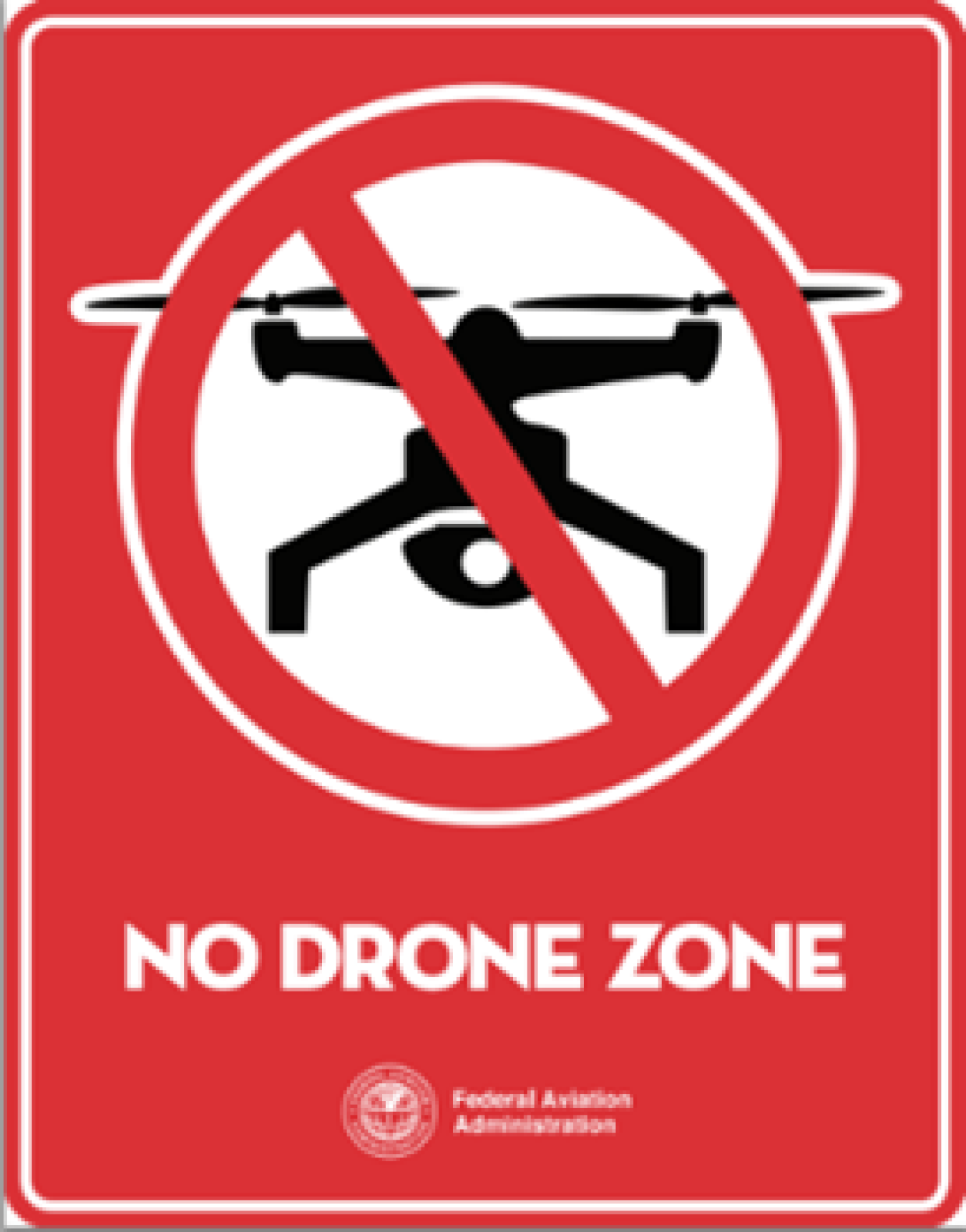
Unauthorized Drone Activity Is Illegal
Flying a UAS over or near an NNSA facility without authorization is a violation of federal law (Title 14 Code of Federal Regulations [CFR] Part 73 and Title 14 CFR Part 99.7). Unauthorized drones entering controlled airspace will be detected and may be subject to enforcement action, including drone damage, destruction, or confiscation.
NNSA works closely with federal, state, and local law enforcement partners to investigate and prosecute these violations.
Sites and Coverage
NNSA’s Office of Defense Nuclear Security deploys CUAS platforms across high-security labs, plants, and sites within the Nuclear Security Enterprise. All NNSA facilities with sensitive nuclear materials or operations are covered by the Federal Aviation Administration designated “No Drone Zone” restrictions.