



Tim Walsh's Bold New Vision for EM
Office of Environmental Management
March 17, 2026 Estimated Read Time min
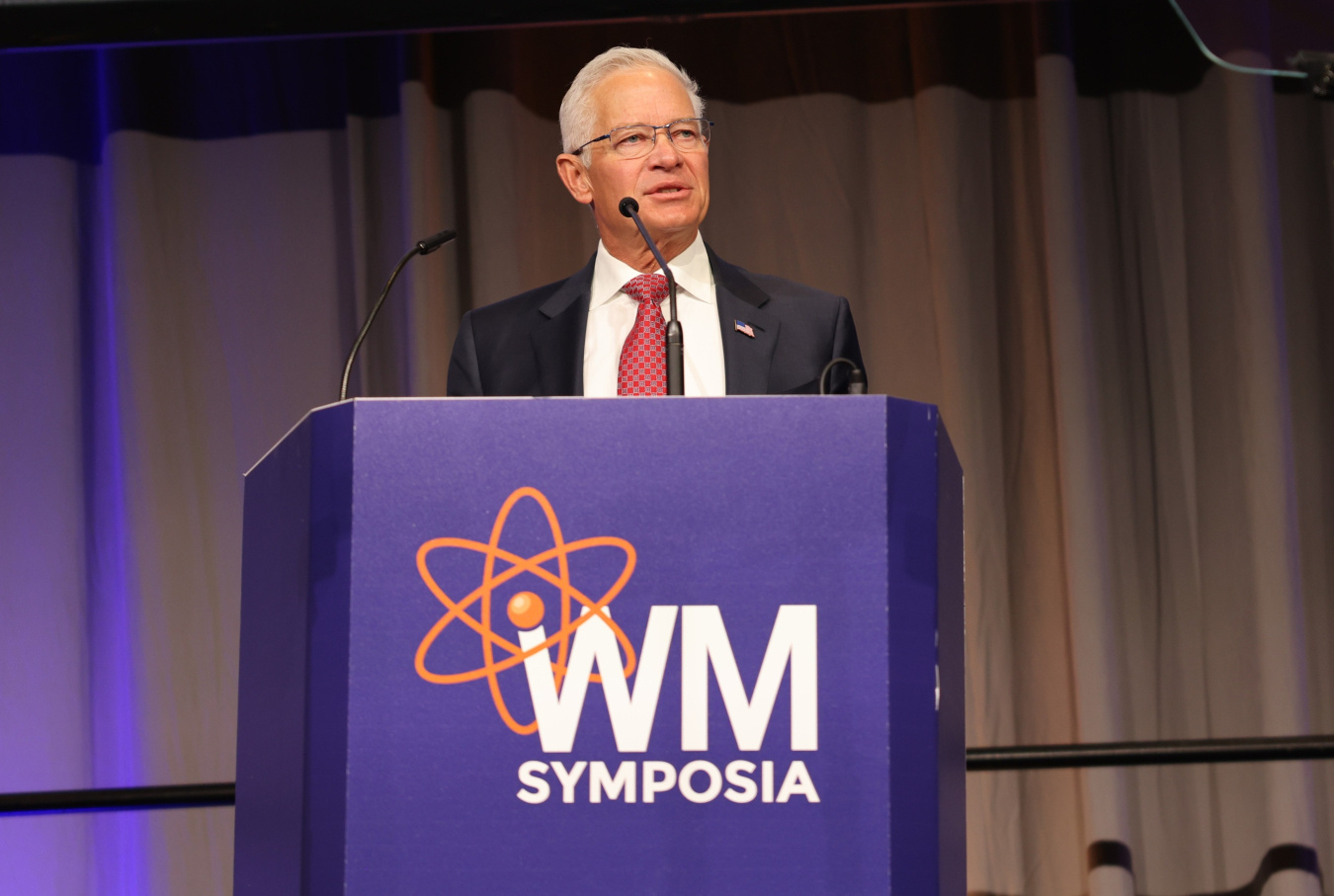
U.S. Department of Energy Office of Environmental Management Assistant Secretary Tim Walsh delivers plenary remarks at the Waste Management Symposia.
PHOENIX – The Office of Environmental Management (EM) participated in the 52nd annual Waste Management Symposia (WMS) from March 8-12 where Assistant Secretary Tim Walsh introduced an inspiring new vision for EM.
Throughout the symposia Assistant Secretary Walsh and other EM leaders highlighted how the cleanup program is aligning with a broader all-of-government strategy to deliver affordable, reliable, and secure energy while advancing America’s leadership in artificial intelligence (AI).
The WMS brought together over 2500 participants from 900 organizations representing 30 countries. Experts convened to share knowledge on radioactive materials, decommissioning nuclear facilities and innovative solutions to increase worker safety and project efficiency. Hanford was the featured site, and Finland was highlighted as the featured country.
EM led numerous panels and roundtable discussions that covered a wide range of priorities and initiatives ranging from uranium enrichment to support advanced nuclear reactors to streamlining process for more cost-effective project completion through efficiencies.
Assistant Secretary Walsh took stage Monday morning to kick off the conference. Addressing attendees, he described a renewed focus on accelerating cleanup progress while transforming former weapons production sites into economic and energy assets. “We aren’t just managing the past; we are powering the future.”
Assistant Secretary Walsh highlighted EM’s essential role in U.S. Department of Energy (DOE) Secretary Wright’s three-pillared vision: modernizing America’s nuclear deterrent, igniting U.S. innovation, and restoring affordable, reliable and secure energy. Central to this vision is the Genesis Mission, a nationwide effort to use AI and advanced computing to accelerate American scientific breakthroughs. Savannah River National Laboratory, EM’s sole sponsored national laboratory, plays a critical role in this DOE priority.
"Our innovative partnerships are bringing together the brightest minds America has to offer to win the global AI race,” Assistant Secretary Walsh said.
He outlined EM’s approach to evaluating each cleanup site potential by 2040, aiming to transform cleanup sites into hubs for nuclear energy, advanced manufacturing, and AI infrastructure — laying the foundation for lasting long-term economic opportunity and leadership in the energy and technology sectors.
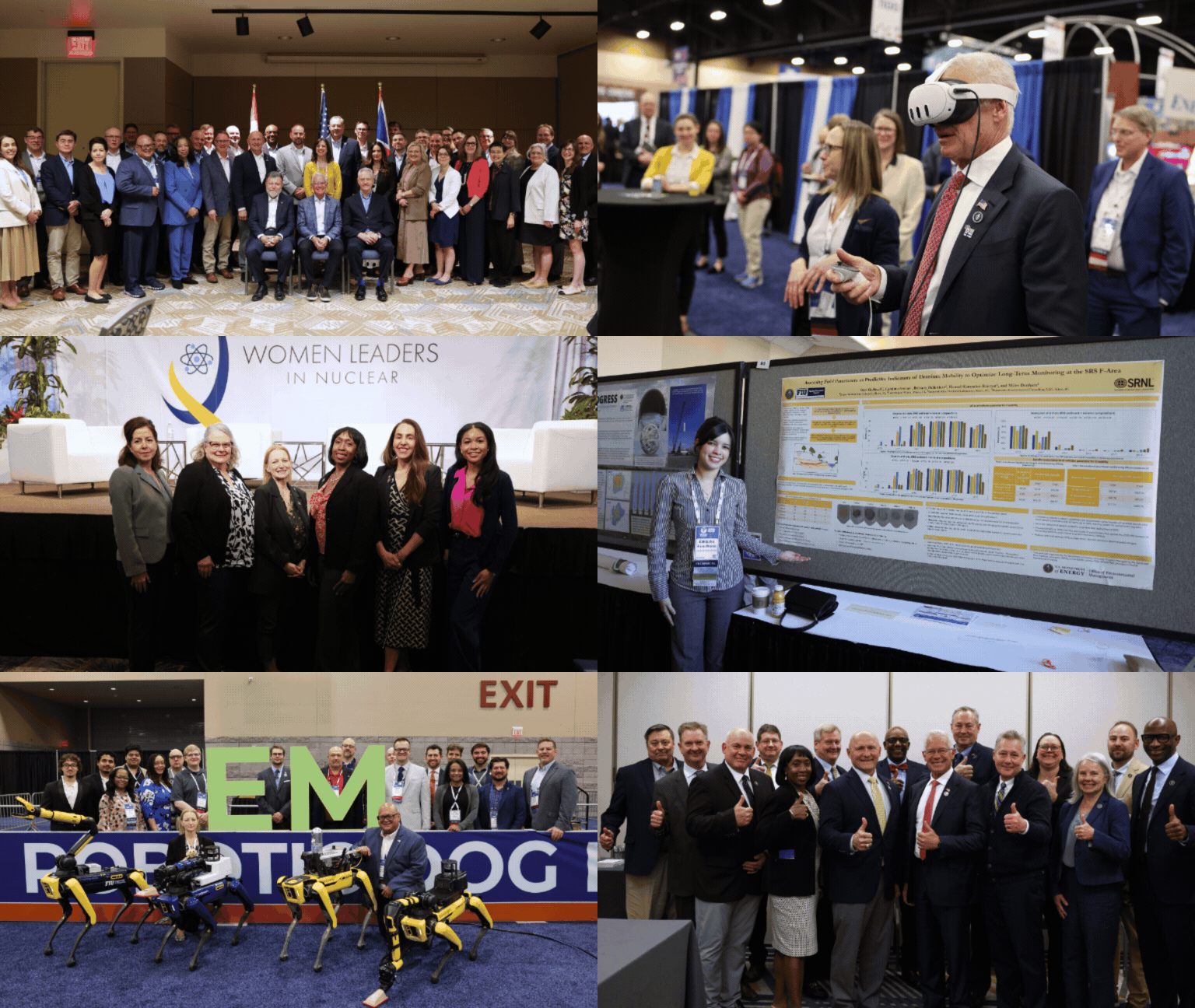
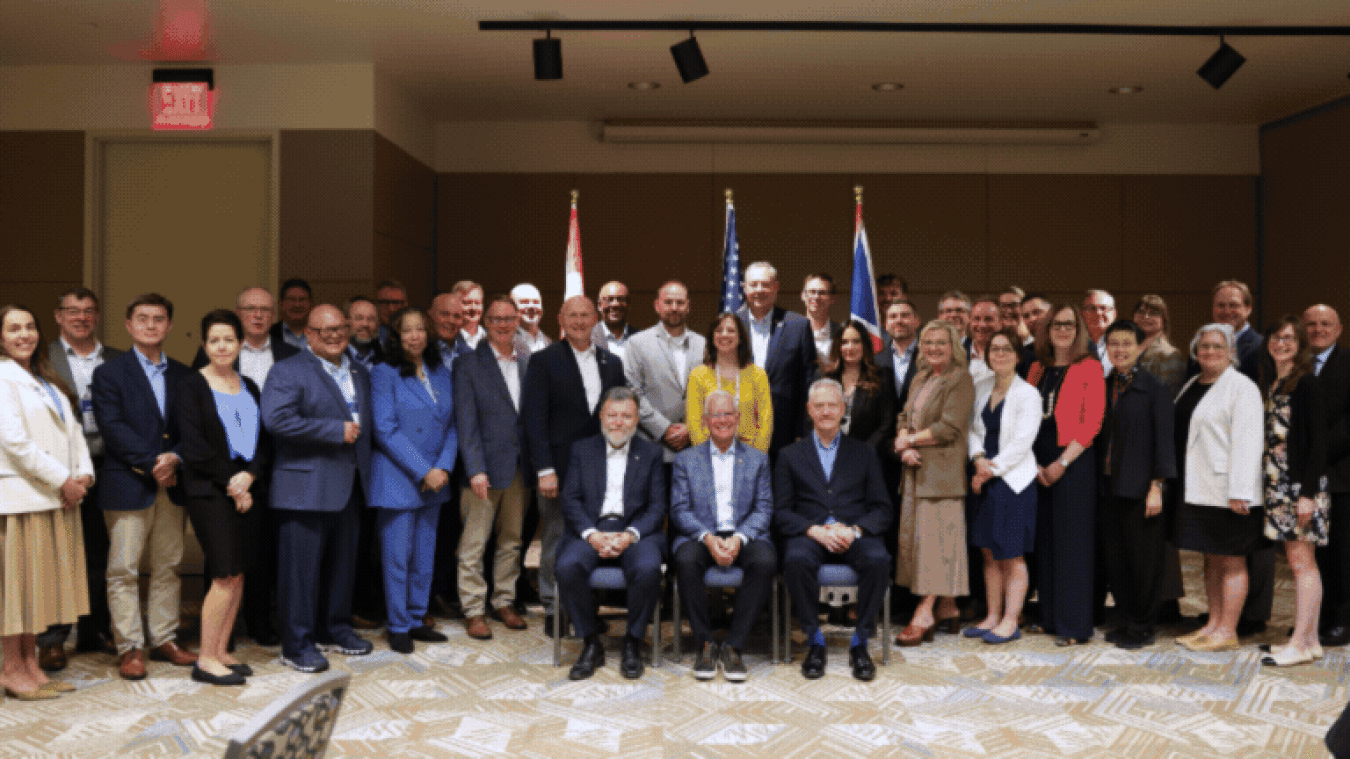
The 2026 Waste Management Symposia demonstrated EM’s commitment to safeguarding the environment and protecting human health while shaping the future of American energy and innovation.
Assistant Secretary Walsh pointed to major accomplishments set for completion by year 2040, including completing radioactive tank waste treatment at Savannah River and Idaho, demolishing additional former gaseous diffusion plants at Portsmouth and Paducah, and redeveloping portions of those sites for new energy infrastructure.
At the Hanford Site in Washington state, DOE’s largest and most complex cleanup project, Assistant Secretary Walsh said the department is evaluating a dual glass-plus-grout approach to treat low-activity tank waste more efficiently.
“We will save tens of billions of dollars, if not more, by taking a dual ‘glass-plus-grout’ approach,” Assistant Secretary Walsh said, adding the strategy could allow most of the mission to be completed by 2040 while meeting legal obligations.
EM plans to achieve these objectives by simplifying operations, boosting efficiency, using AI technology, cutting out repetitive tasks, reinforcing accountability, and applying scientific cleanup methods to help avoid delays.
“We are evolving into a future-focused organization laser-focused on outcomes,” Assistant Secretary Walsh said. “Our core mission is to protect the environment and reduce risks to human health, and to do that we need to move with urgency.”
Redevelopment of former cleanup sites will create long-term economic opportunities for surrounding communities while helping meet the nation’s growing demand for power.
“Where there is energy, there is prosperity,” Assistant Secretary Walsh said.
To receive the latest news and updates about the Office of Environmental Management, submit your e-mail address.