



Twenty teams competed in the 2007 Build Challenge in Washington D.C., starting assembly on their houses on Oct. 3.
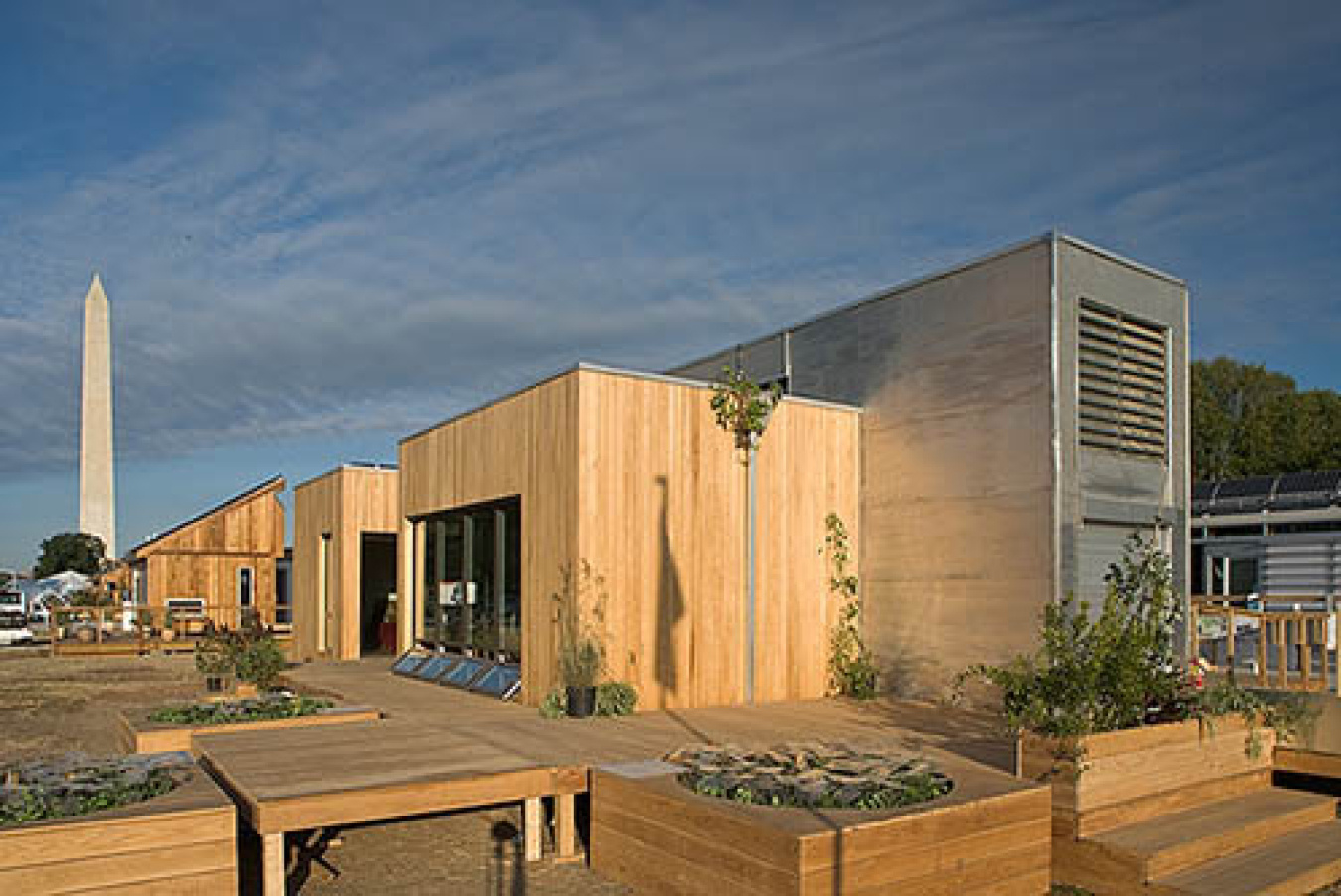
Much like adding a new "plug and play" device to a computer, the Carnegie Mellon home can be upgraded with smaller or larger rooms. All the rooms are arranged around the home's central core, which contains all the home's mechanical systems. Connections to mechanical supports are installed in the core and are easily accessible and adjustable. A "greenscape" composed of plants was added to provide insulation. It literally grows from the land, up the walls, and onto the roof, where the plants keep the home cool in summer.
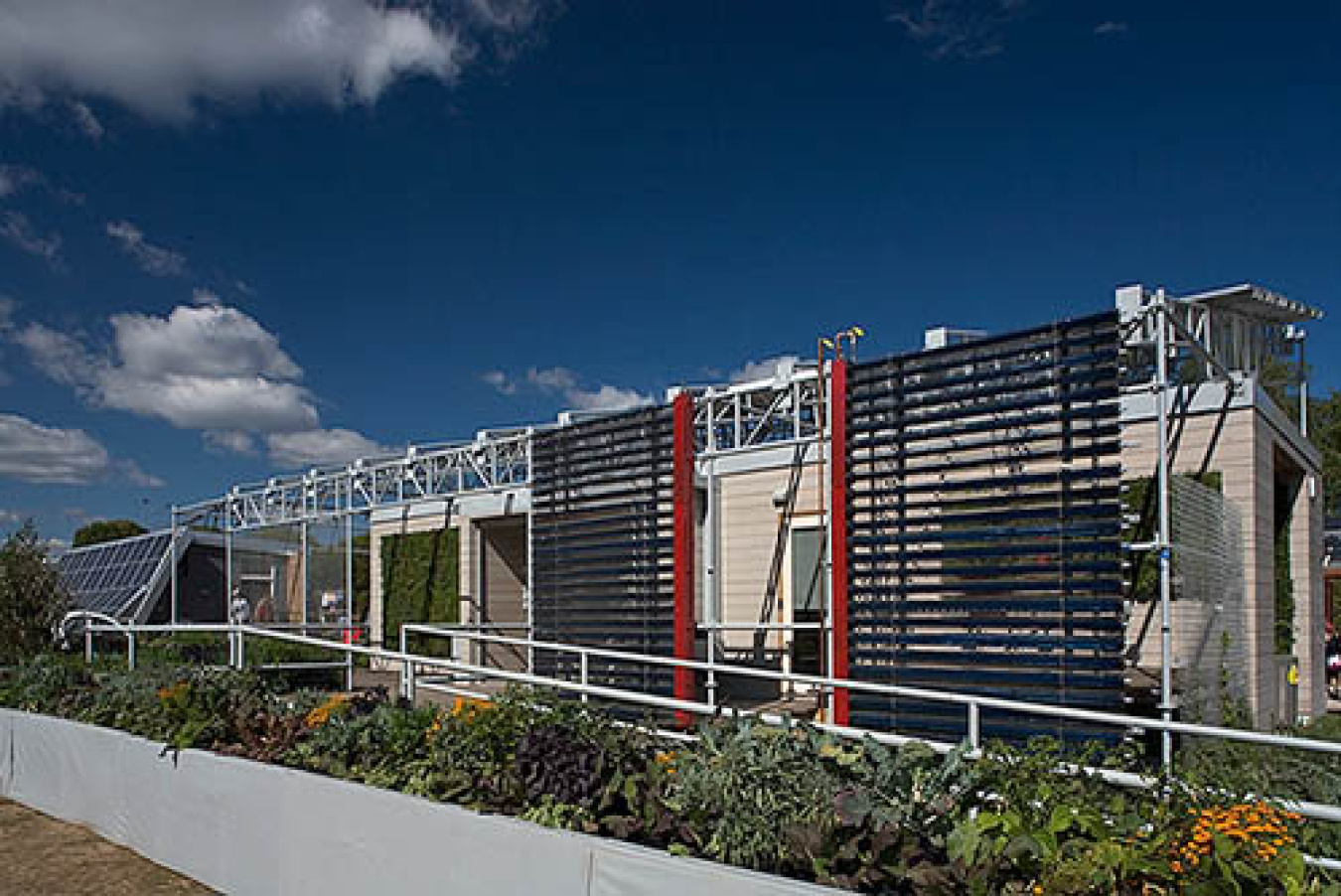
Cornell's organizational strategy is reflected in the unique construction of a "Light Canopy," which is adapted to their house. The Light Canopy's streamlined framework of steel trusses serves as a support for evacuated tubes for water heating and a series of vegetated screens that provide shade in the summer. This framework allows homeowners a great deal of flexibility in how they integrate energy systems because it can be set up independently of an existing structure. For example, they can add, remove, and rearrange components without having to modify the house. Raised flooring allows ductwork and wiring to be easily upgraded.
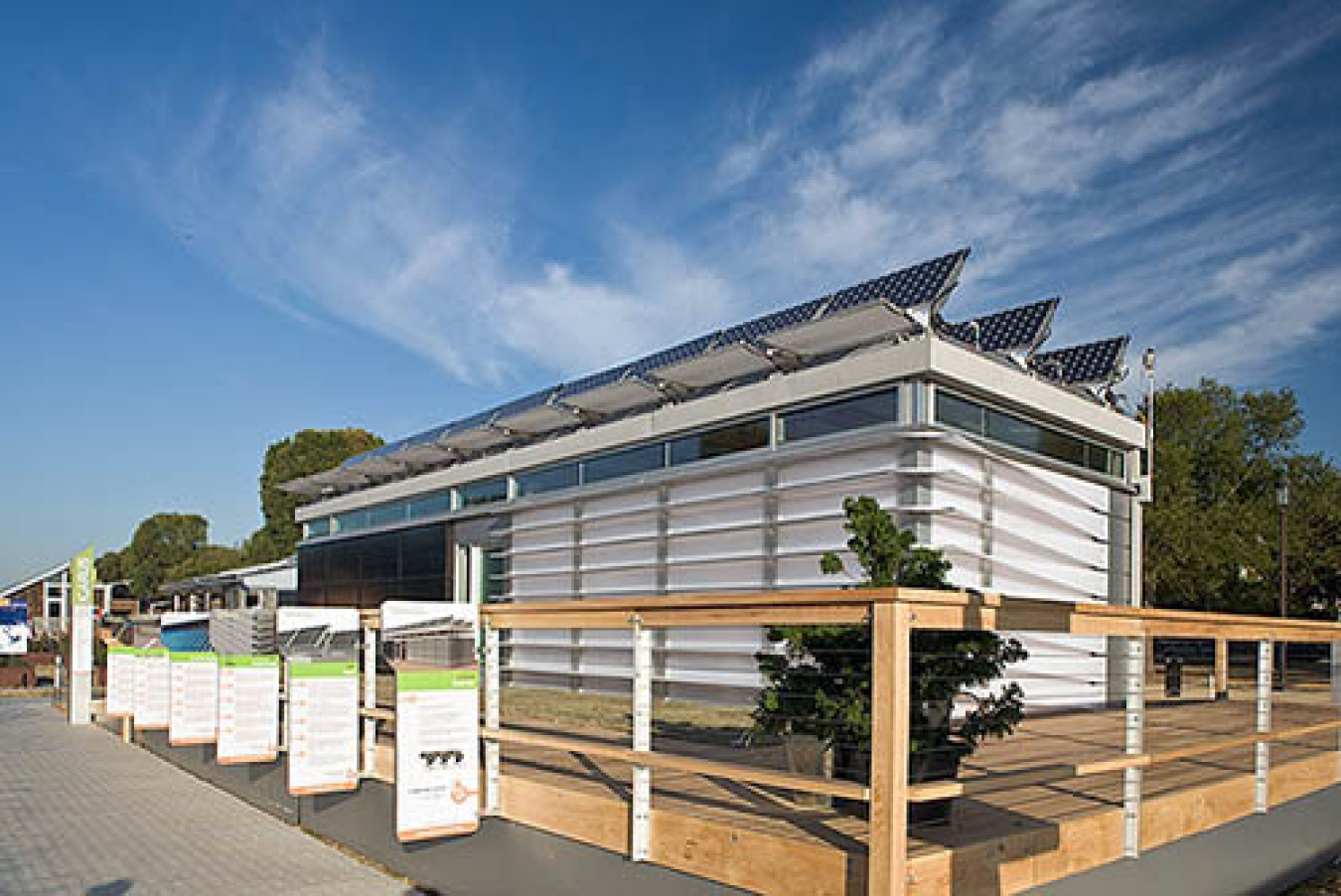
The light-filled Georgia Tech house features both state-of-the-art technologies and well-established ones, such as the clerestory, a row of clear windows above the walls of the house. The approach is most obvious in the use of translucent walls, made of two sheets of polycarbonate that enclose an aerogel filler. Aerogel, sometimes referred to as "solid smoke," is the lightest solid known. The material is an excellent insulator and is translucent, allowing filtered light to enter the home.
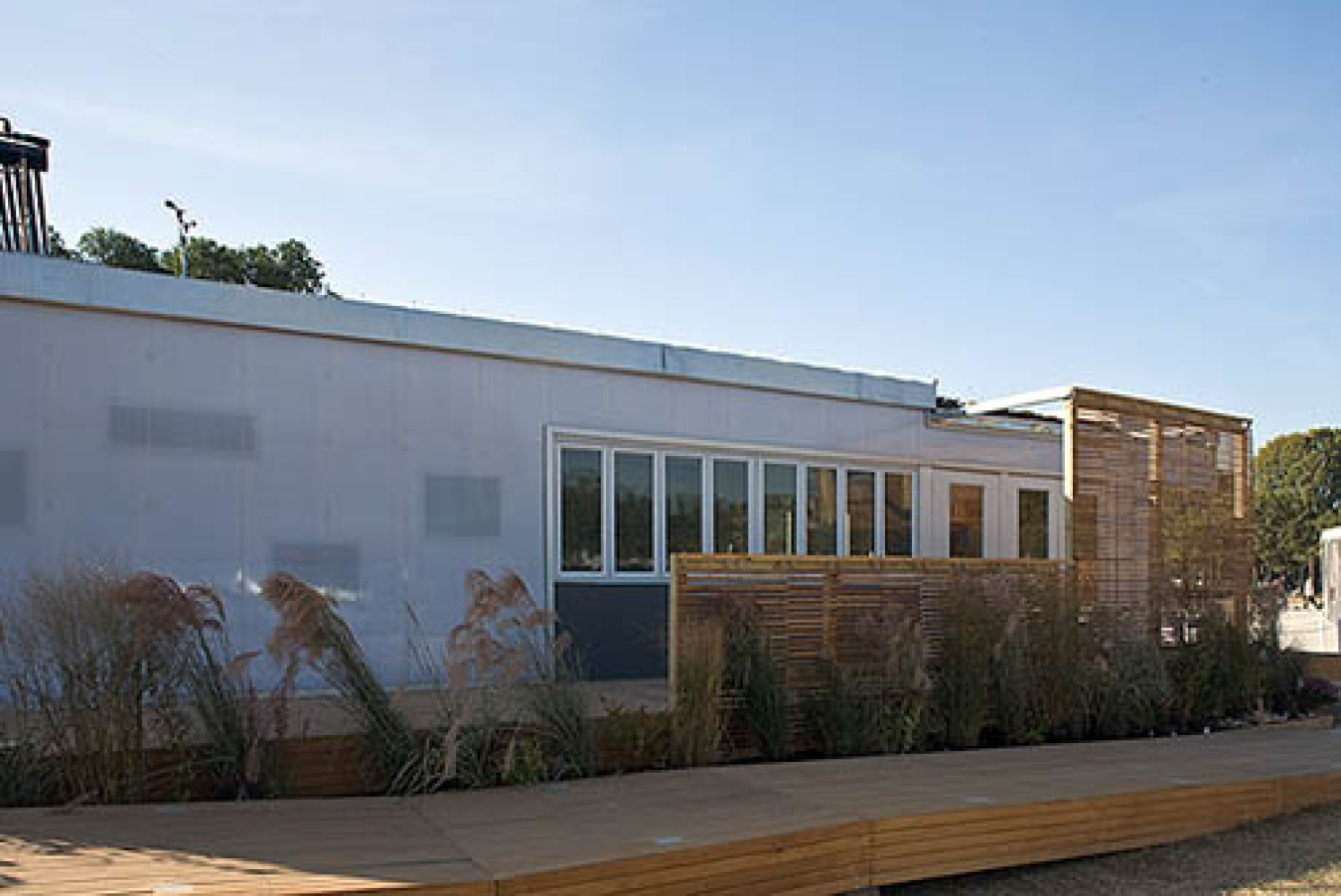
The Kansas home is truly mobile, fitting largely on one truck, setting back up in hours, and taking only eight days to build in the first place. The home's extensive use of structural insulated panels makes it very "low labor." The narrow shape is ideal for showing off its efficiency and energy features. The centrifugal clothes dryer uses a fraction of the energy of a conventional heated dryer. An induction cooktop heats only the cookware and the food inside it, never getting hot to the touch.
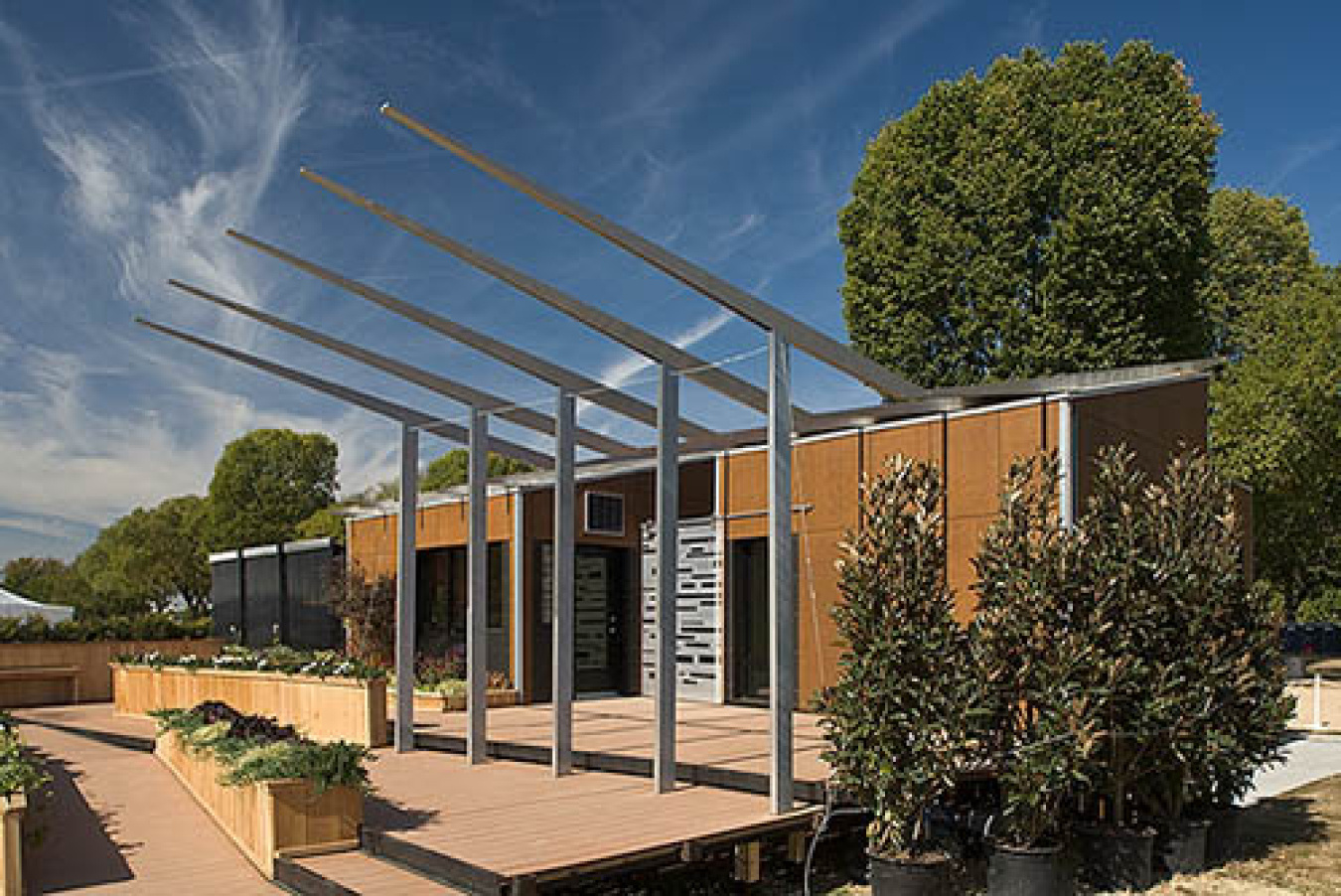
The Lawrence Tech house was the first entry for the school. It features thermal collectors extending from its west side. The house draws on locally sourced materials, such as decking material made of a composite of rice hulls and polymer. The project also has the strong backing of the school, and most important, the school's alumni. A special campaign sparked the interest of the school's alumni and yielded significant funding for the team.
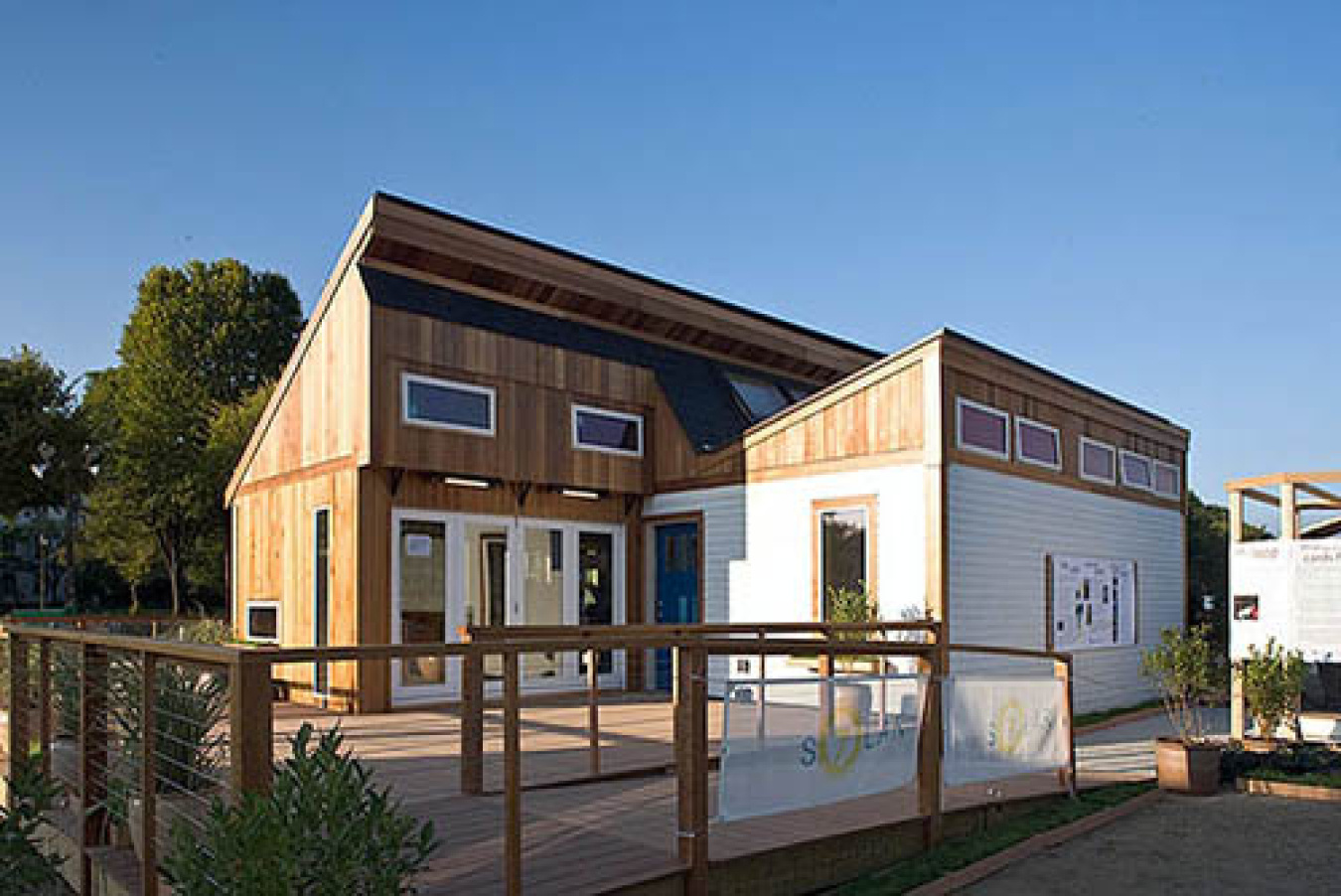
The MIT home was designed after analyzing all past competition homes and a series of six homes built at the university beginning in the 1930s. A translucent Trombe wall provides an attractive facade while passively capturing heat energy from the sun. The team sought to make minimization statements wherever possible—employing a small battery footprint, complete waste mitigation, and maximum use of passive design.
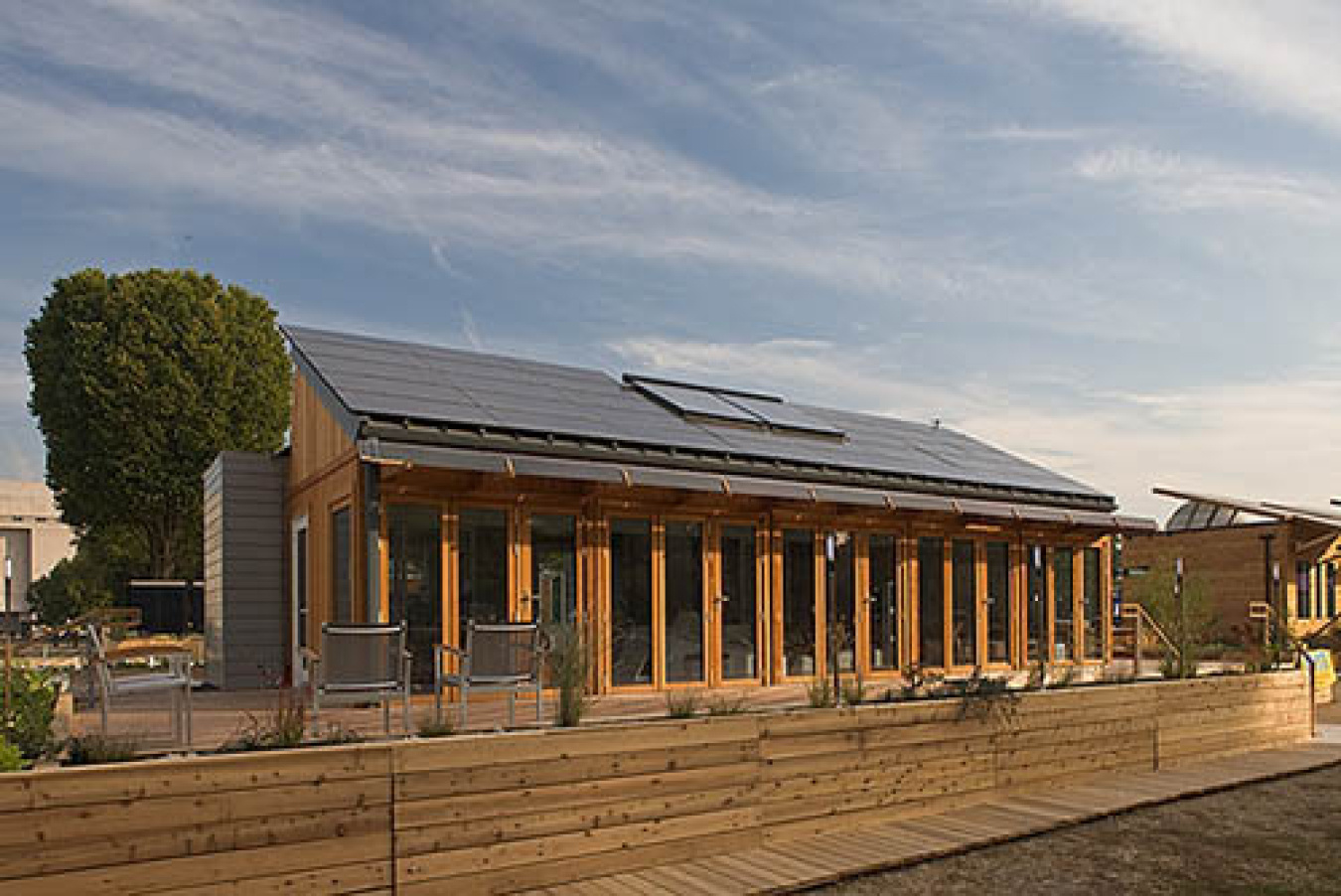
If you close your eyes, you can imagine the New York Institute of Technology house on a beach. The entire south wall, a key feature of the home, opens to the beach, breezes, and natural light. On the roof, an evacuated-tube thermal system collects energy for water heating and space heating. A geothermal heat pump uses the roof pond as a heat source to provide extra heating. Another layer of integration is the home automation system or "smart house" feature. This system allows people to get real-time data on energy use. The home automation system serves as an educational tool by giving the public a user-friendly way to view a home's energy use.
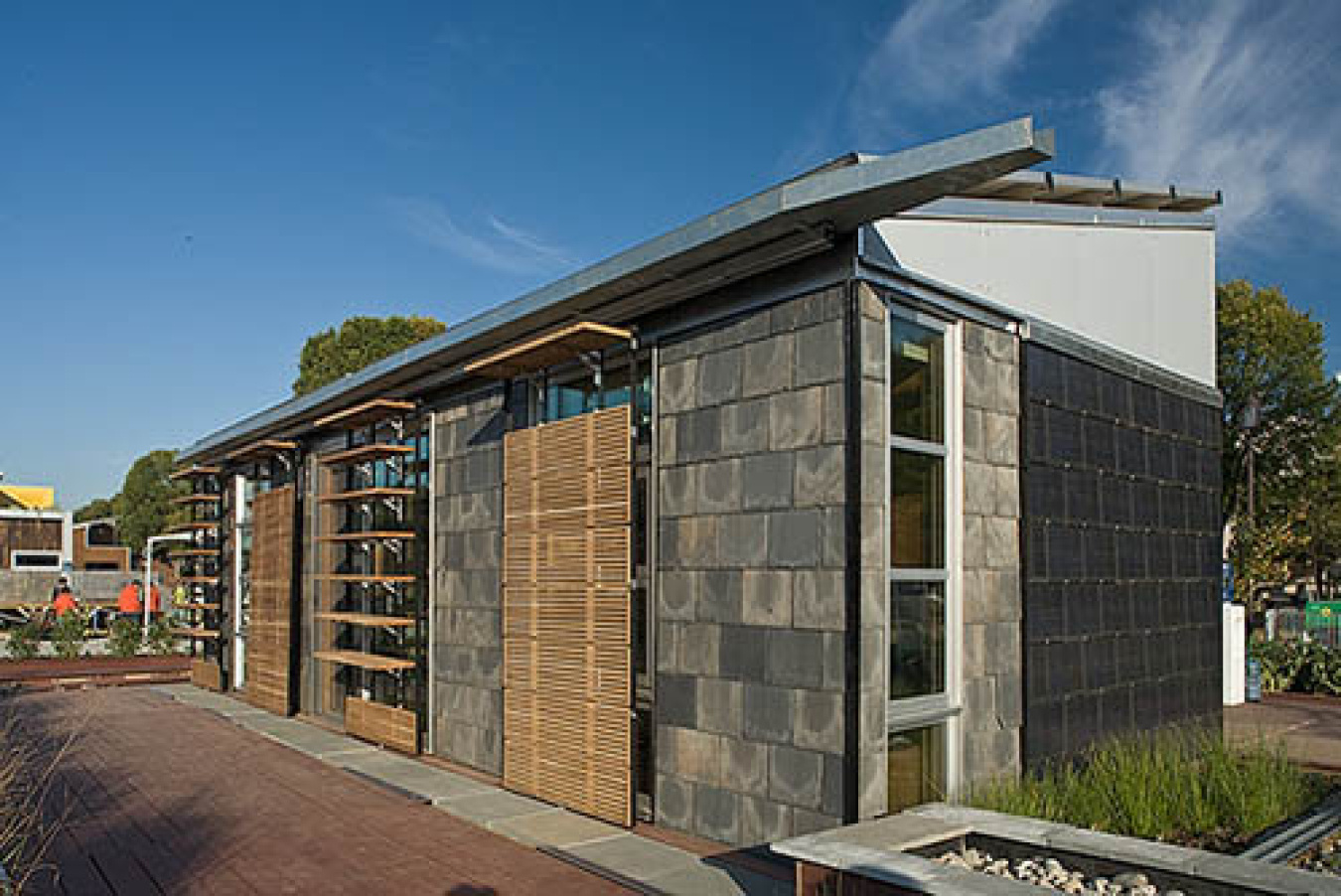
The Penn State students were inspired by the challenge of the competition’s Market Viability contest and decided to build two homes to test themselves and their market concept. The competition home is called MorningStar Pennsylvania. After the exhibition, it will serve as a research lab and educational residence on the Penn State campus. An "Energy Dashboard" monitors and displays energy consumption and production to teach the inhabitants about how they are "spending" their energy. A curtain wall system with LED lighting glows in different colors depending on weather forecasts. Pennsylvania bluestone and reclaimed slate shingles provide thermal mass.
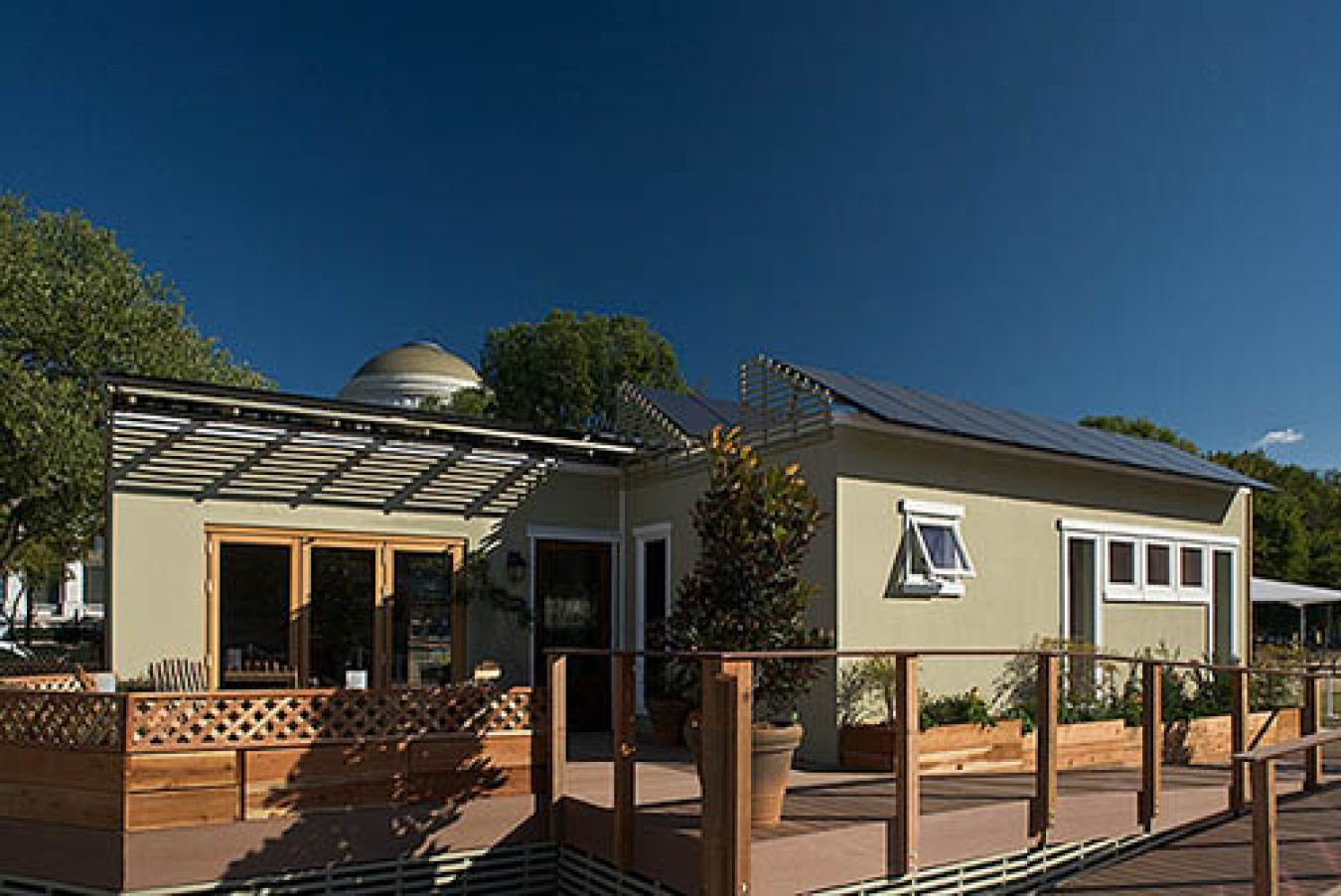
“Design with purpose.” This succinct philosophy guided the Santa Clara University team in its quest to build a house that is functional, elegant, intelligent, and innovative. With a flip of a switch, the glass darkens to block sunlight or lightens to let it in, depending on the temperature desired inside the house. The house was built to operate off the utility grid. However, when it returns to campus, the house can easily be connected to the grid using an appropriate inverter.
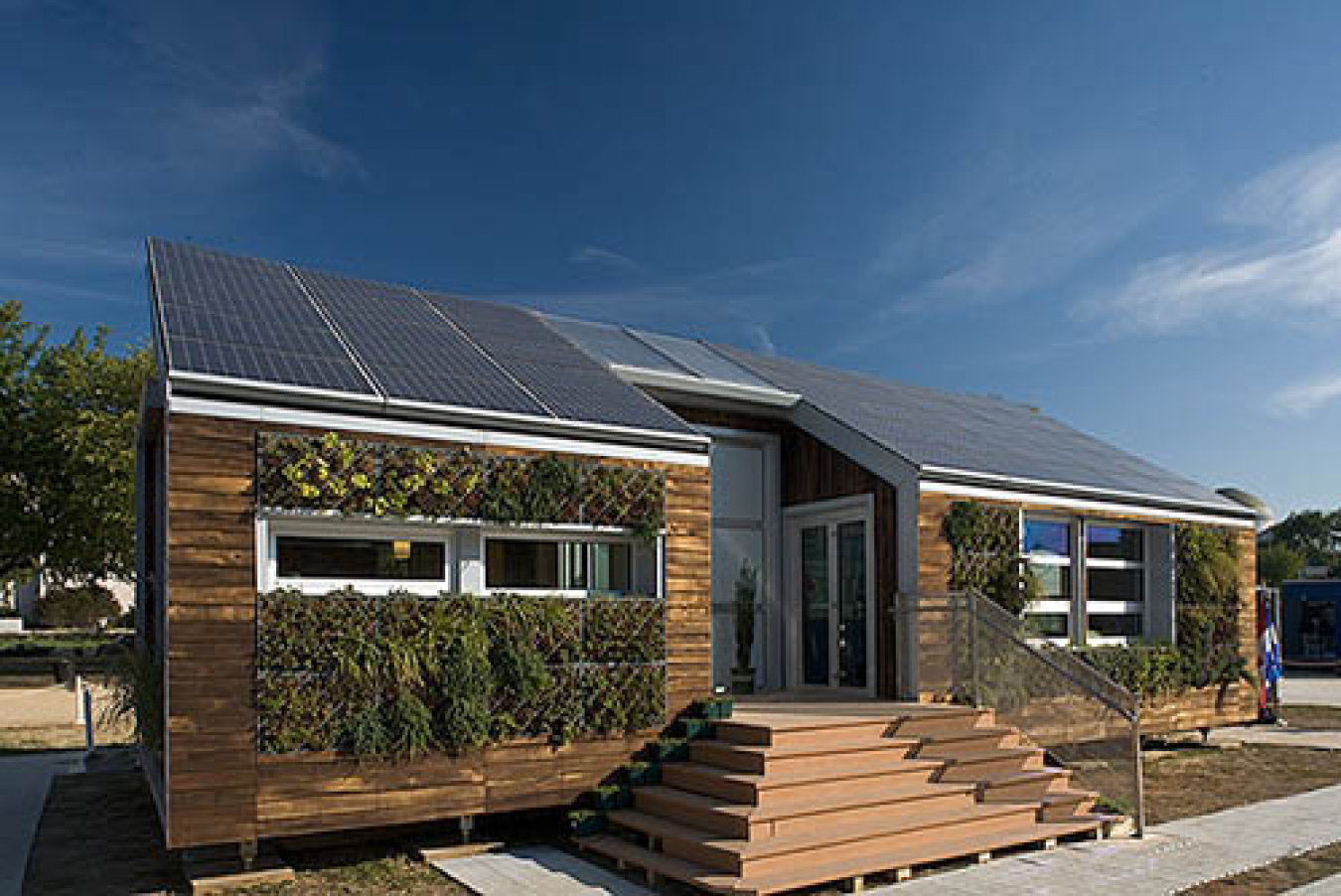
In the Team Montréal house, a green roof and a green wall reduce energy used for cooling and add insulation as well as rainwater recovery. The building envelope starts with a special structural steel frame that is easy to assemble and disassemble. The walls are "clipped" directly to the steel frame and are insulated with polyurethane made from soybeans and recycled plastic to trap heat inside the home. Windows are triple glazed and have automated shading to further trap heat. A unique feature of the home is the use of artificial intelligence for temperature control and energy use.
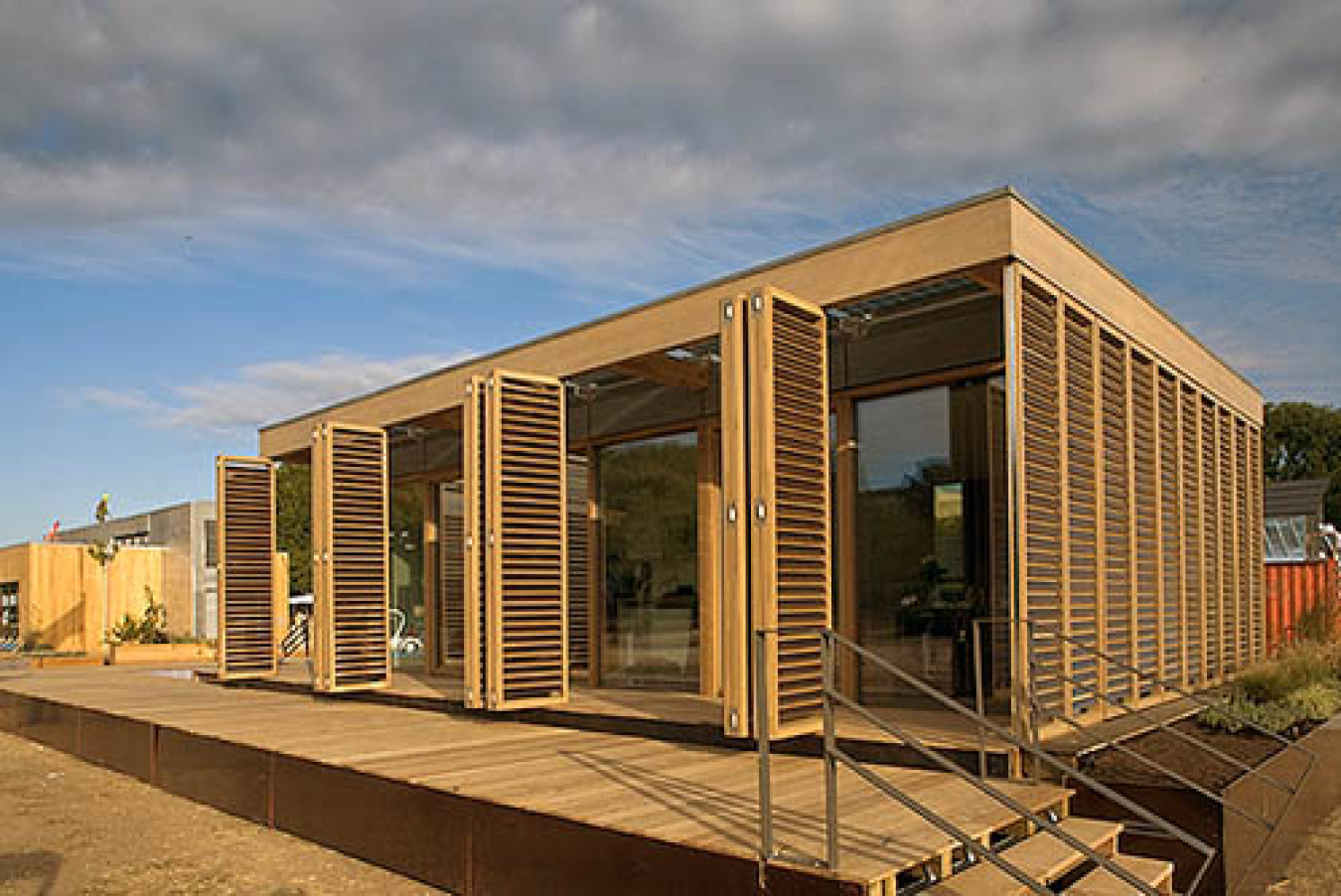
The design for the team's house appears simple, with an exterior of oak and glass, but the low-tech appearance hides many high-tech devices. "Made in Germany" is a phrase that applies well to the entry from the Technische Universitat Darmstadt, because the team wants to present the German way of building, showcasing German technologies and materials in their house, including German oak.
The emphasis on "Made in Germany" products and technologies is apparent in the team's collaboration with German companies and manufacturers, such as Bosch, which provided three-month internships for two Darmstadt students. That arrangement provided a test bed for the students to study the performance of the systems that will provide hot water and climate control for the house.
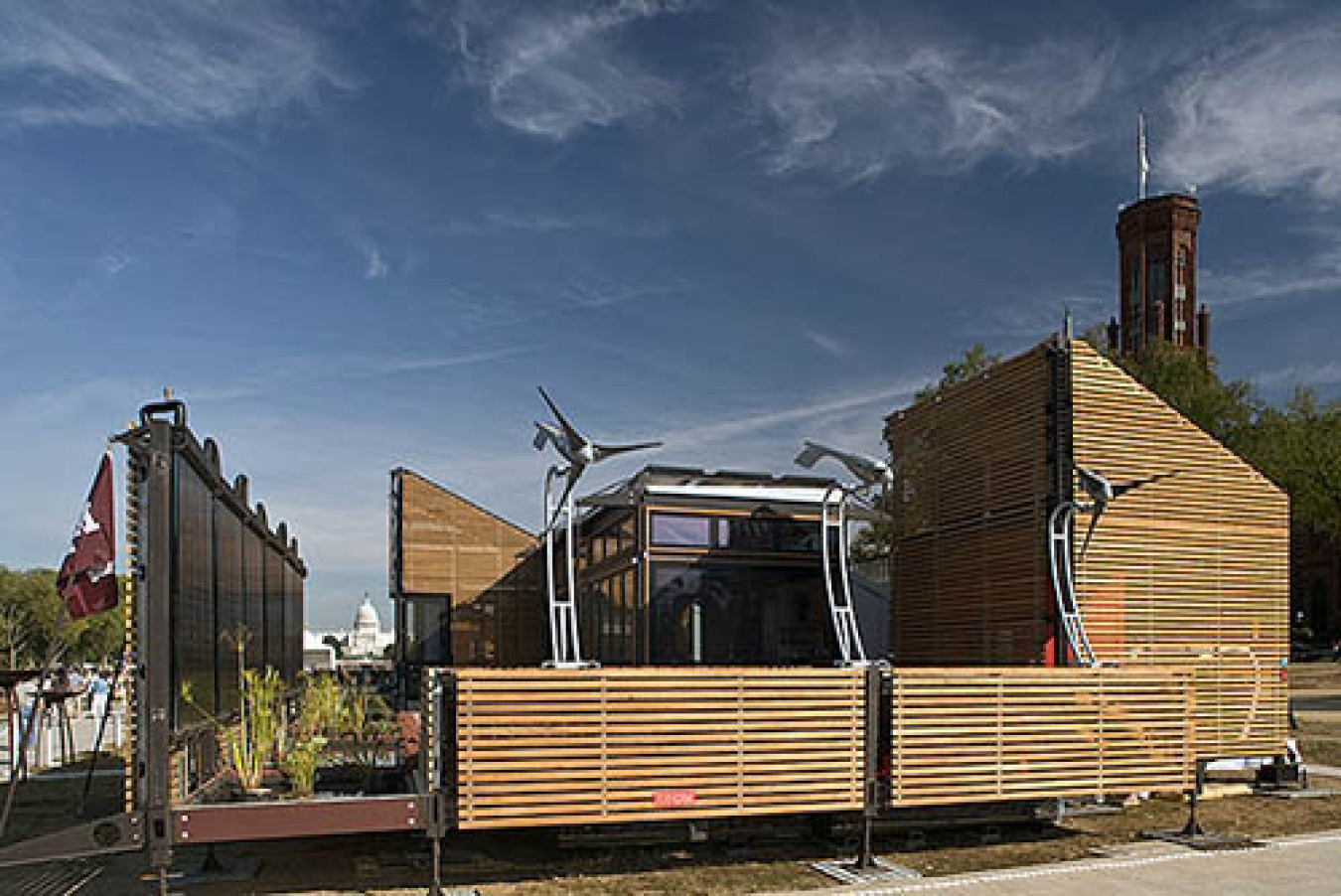
The Texas A&M home is made of interchangeable "groWalls," some of which contain all the utilities needed for kitchen, bath, or living rooms. Another distinctive feature of the Texas A&M home is that it is like an animal with two skeletons. An inner skeleton of steel columns and beams provides the basic structure to which a skin of groWall units and structural insulated panels attaches. Then there is an outer skeleton of cables set 2 ft (0.6 m) to 3 ft (0.9 m) apart from the walls—if a hurricane is forecast “armor” can be placed on this shell. Lighting features paper-thin, bendable CeeLite light-emitting capacitors (as opposed to diodes) that can be cut into any shape. The "healthy home" landscaping includes a reflecting pool—complete with fish—plus a wetland to treat the pool water and even a "bat tower" to provide fertilizer and get rid of insects.
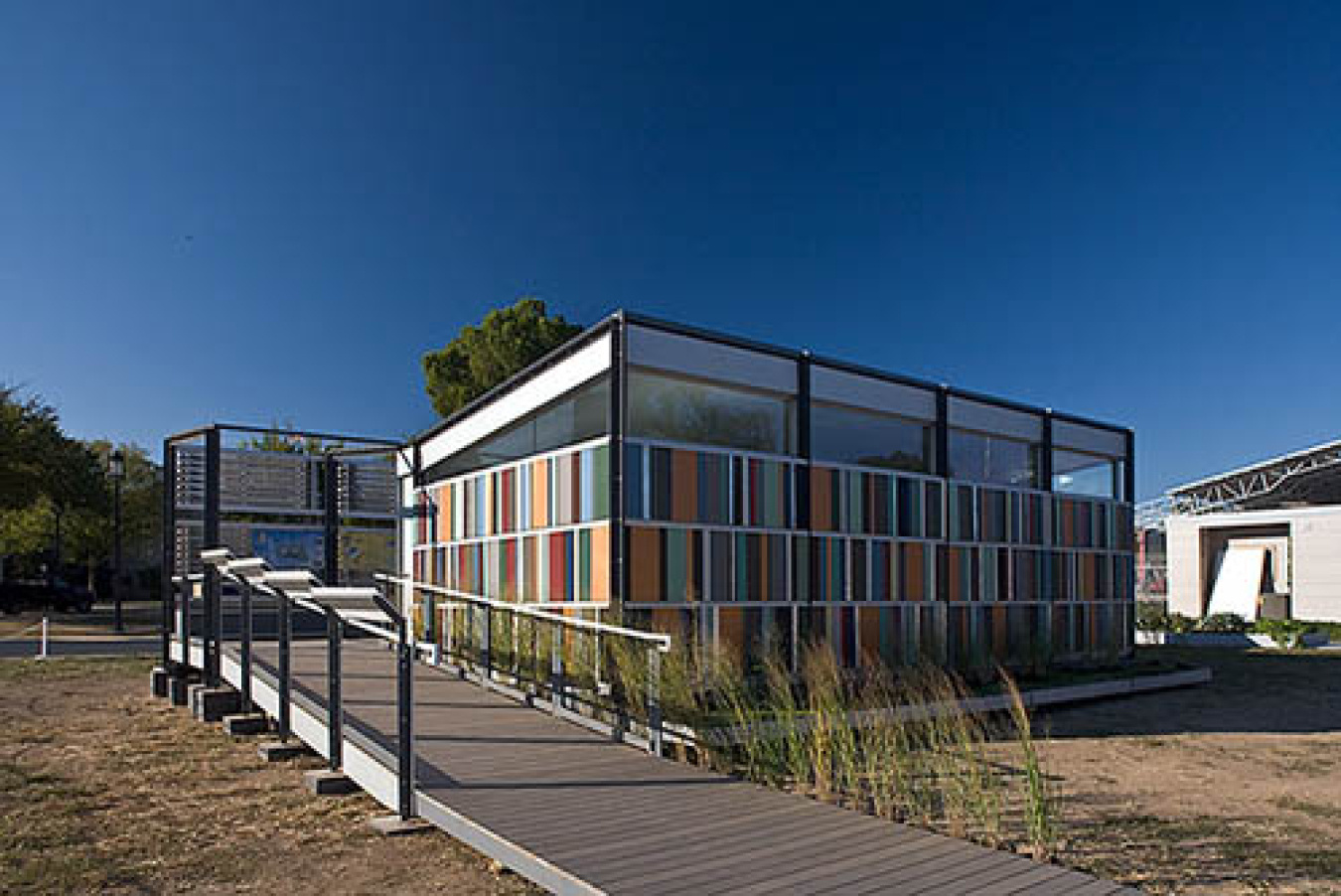
The main living area of the University of Cincinnati’s home is a single airy space that has no walls to divide cooking, eating, and dining areas. Innovative walls, however, are key to the home's inventive design. The living space is particularly airy because the whole south-facing wall separating it from the home's courtyard is glass. That glass wall also lets in warming sunlight in the winter and provides great daylighting. The wall's specially produced triple-pane glass maintains excellent insulation, and louvered shades keep out unwanted summer heating.
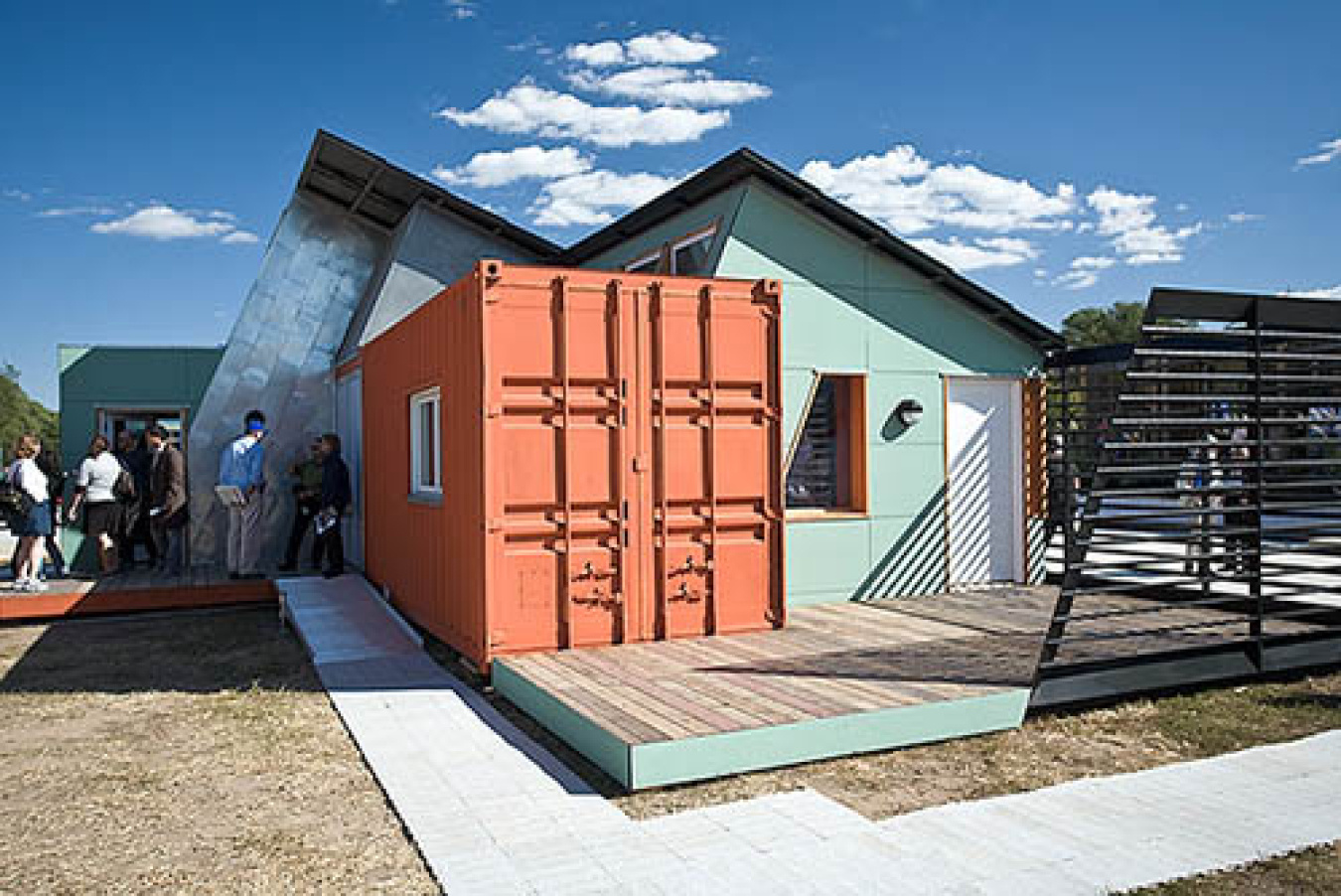
When you're the two-time champion at the Build Challenge, you have two ways to go: either try to perfect your previous entry to maximize your winning potential or take another approach altogether. Never ones to take the easy route, the team from the University of Colorado at Boulder is striking out in a new direction, with a focus on creating a marketable house. Because the Colorado team considers the competition’s size guidelines too limiting, they've actually designed a much larger house, at 2,100 ft2 (196 m2). To make this work in the competition, the 700-ft2(65-m2) central core of the house works as a home in its own right and will be built and brought to the competition in October. Decking around the house will demonstrate the outline of the full house.
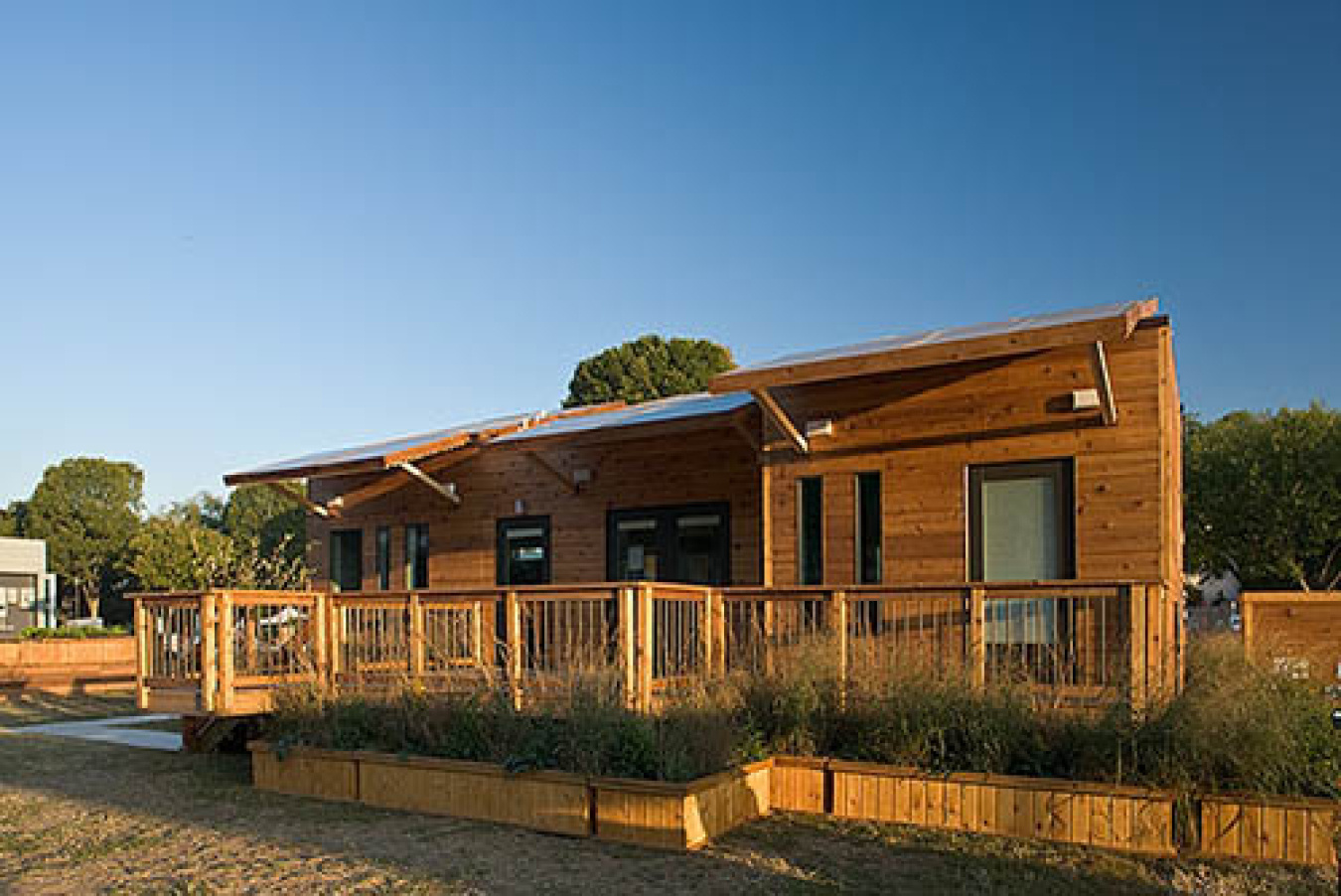
University of Illinois team members feel they've designed and built a marketable prototype—a house that's attractive and comfortable, too. When the unpredictable Midwest climate interfered with building their house outdoors, the University of Illinois team simply built it in a warehouse. The team's approach to lighting was also carefully conceived. Placement of windows and doors for daylighting was designed in parallel with the artificial lighting plan. They are using dimmable fluorescent lights and LED bulbs for task lighting.
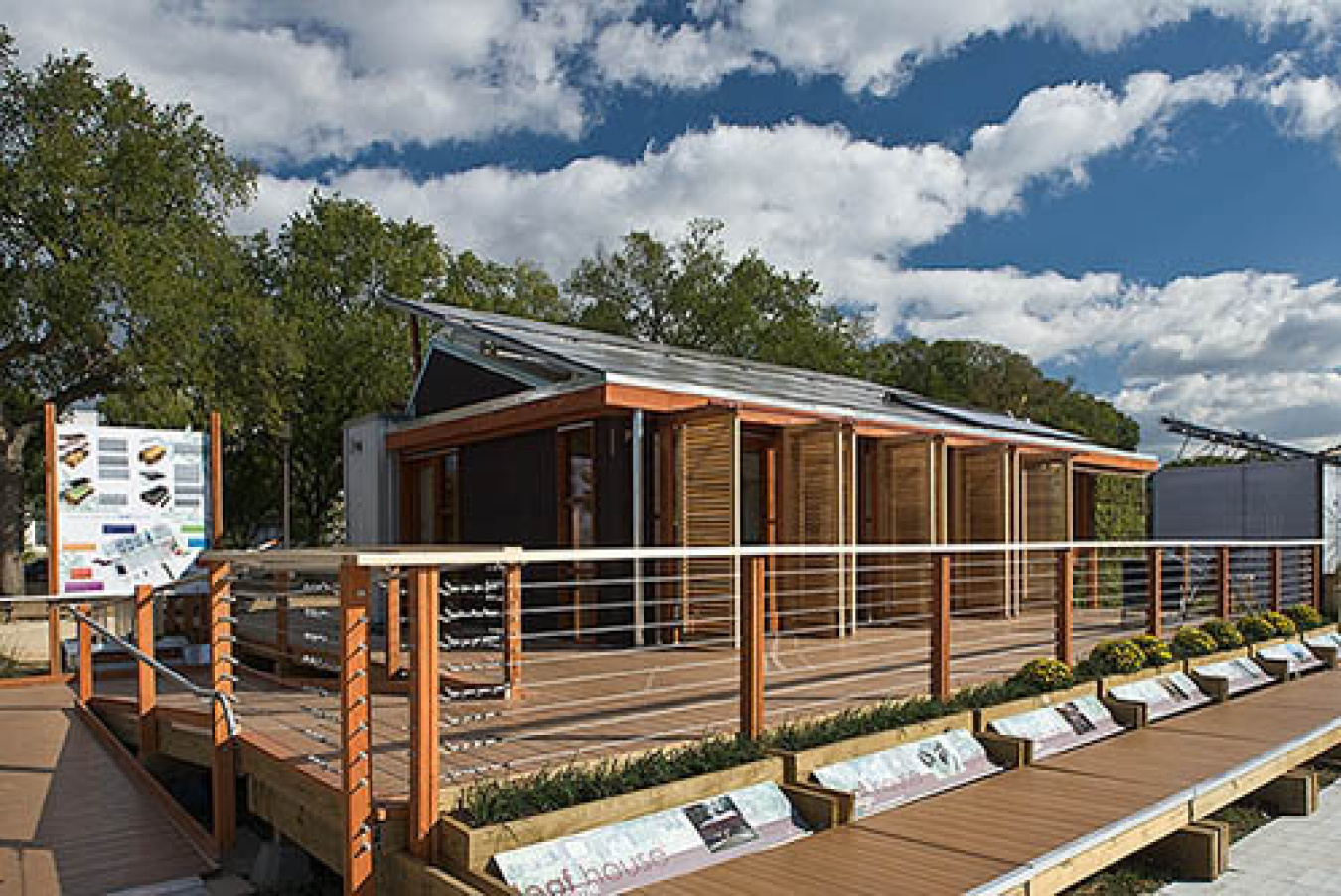
True to its name, Maryland's LEAFHouse is designed to bring light and the feeling of nature into the house. Translucent skylights traverse the length of the house. Inside the "LEAFHouse," at the ridge of the ceiling, exposed steel supports "branch out" from a wooden spine. This, along with a large expanse of glass, brings light and the feeling of nature into the house. Architecturally speaking, there's a strong connection between the exterior and interior of the house, with a green wall of plants on the south side. Team members are particularly proud of their smart-house system called SHAC (for Smart House Adaptive Control). Two undergraduate computer engineering majors built a sensor network to bring the comfort level of the home to the ideal. The network monitors humidity, temperature, light, and whether the doors are open or closed—it's a web-enabled system that can even factor in weather forecasts.
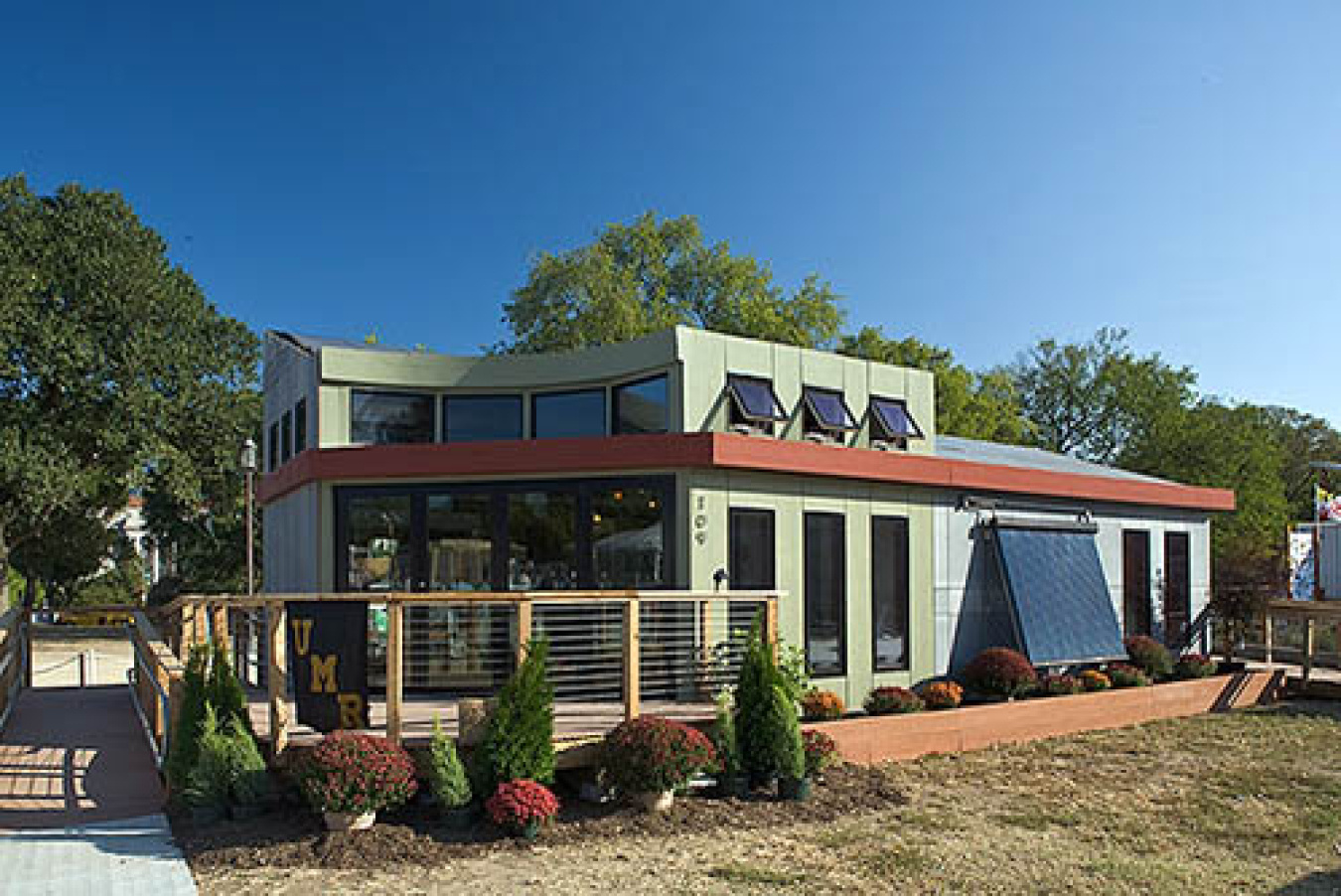
The Missouri-Rolla team designed their house to be an economical option for people. They believe an average middle-class family should be able to afford it. Integral to this is a home automation system with indoor and outdoor sensors that control air-conditioning, lighting, and windows. The house takes advantage of natural light by incorporating many south-facing windows. The exterior is finished in PaperStone rain screen, which is UV resistant, easy to install, available in a multitude of colors, and 100% recyclable. Countertops are 50% recycled materials, and the floors are eucalyptus, which is harder and more resilient than bamboo flooring.
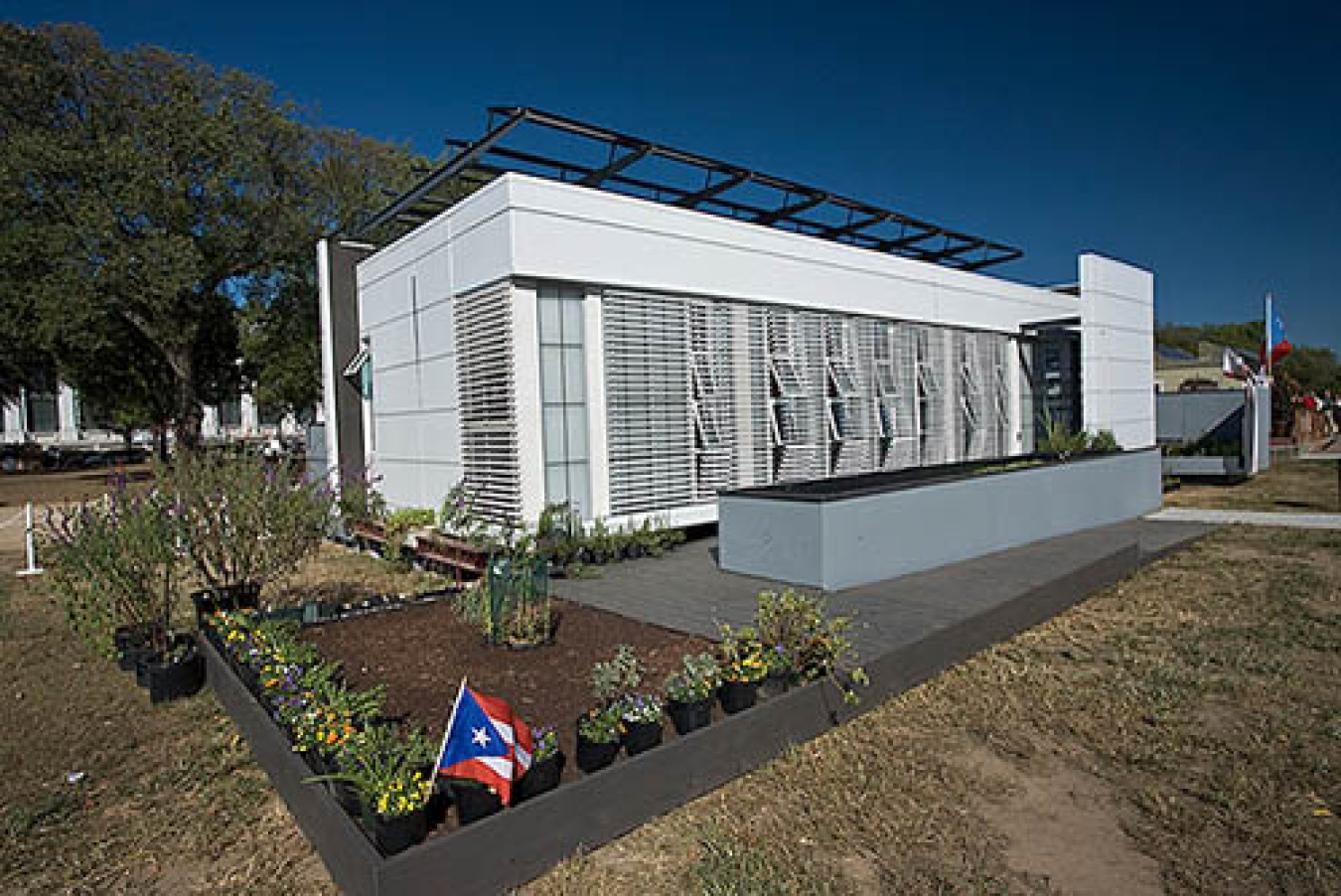
The Puerto Rico students designed their house as a dwelling that can adapt to any environment it might occupy. The team took its inspiration from a single cell. The simplest unit of a living organism, the cell produces energy, recycles waste, adapts to changing conditions, functions independently, and communicates with other cells. This is also an apt description of Puerto Rico's house. The house was built using lightweight materials and divided and shipped in two pieces. One half incorporates all the electrical equipment and the other half the water components.
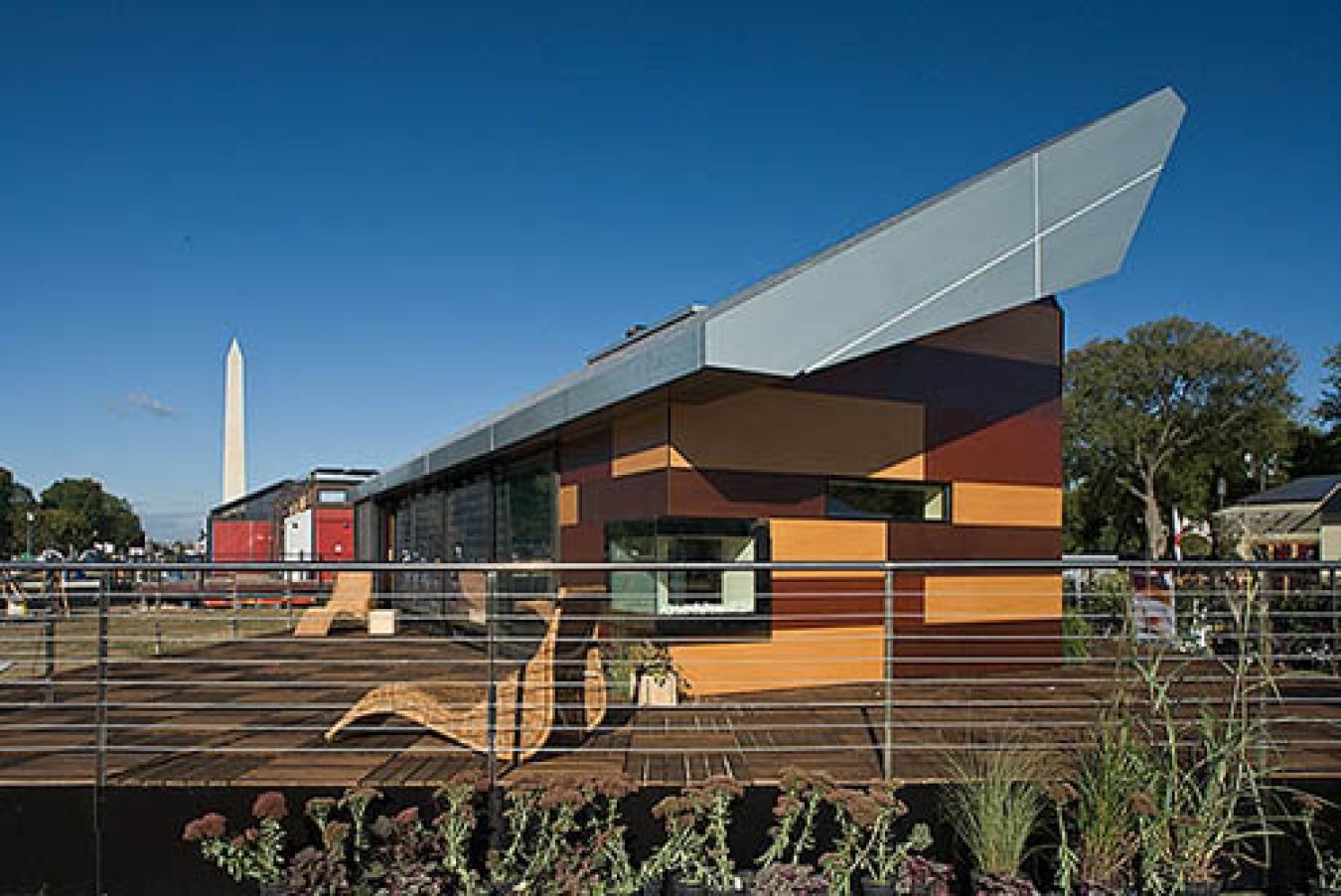
The Madrid team aimed for a highly efficient house, using light construction materials and manufactured-building techniques. The house incorporates water-saving technology and solid-state lighting. Electrochromic windows (which darken or lighten to either block or let in the sun's rays), a double envelope, and phase-change gels in the foundation help regulate the temperature. The home's south side can be opened directly to an ample outdoor deck that has seating and vegetation.
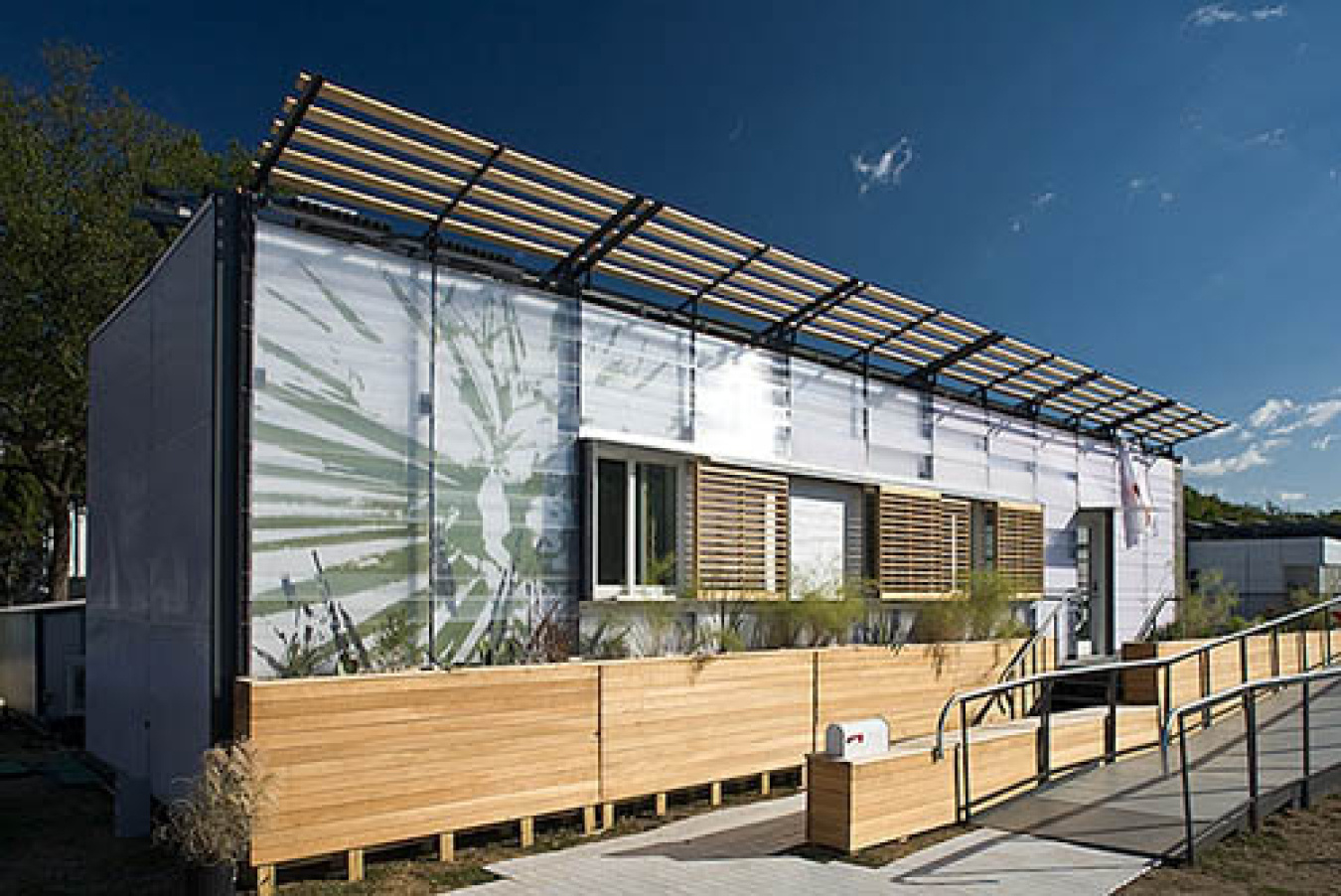
The University of Texas at Austin home features south-facing windows with louvered screens that block sunlight during the summer yet allow more warm sunlight inside during the winter when the sun is lower in the sky. While collectors on the roof heat water for the home, the excess heat from the hot water system warms a hot tub outside. Interior materials are Texas-influenced to create an inviting interior. Although the home is high tech, the students used standard materials found in most home improvement stores.