




Redefining the modern American town. Nestled among agricultural fields and adjacent to a large film studio, the Town at Trilith (just outside of Fayetteville, Georgia) is one of the largest geothermal residential communities in the United States. Trilith boasts 750 completed homes on 235 acres that are both heated and cooled by individual geothermal systems. Photo from Trilith
Fast Facts
Location: Fayetteville, Georgia
Size:
- 235-acre community with 350 completed single-family homes, 750 at full build out
- Homes heated and cooled by geothermal typically range from 350–5,000 square feet, with options for larger custom-built homes
A Modern American Town
Just under 30 miles from the bustling city of Atlanta, Georgia, is the Town at Trilith, a walkable new urbanist community of residential housing and mixed-use project space that is home to creatives, artists, storytellers, and others.
Though surrounded by Georgian wildlife, Trilith embraces modern urban design with restaurants and shops frequented not only by locals but also by visiting actors and film industry professionals who come to film at the nearby movie studio. Another modern amenity available to the residents of Trilith is that each of the 750 single-family homes in the community uses a geothermal heat pump (GHP) system for heating and cooling, with minimal maintenance and far less noise than traditional HVAC systems.
Geothermal by Design
Based on experiences with geothermal at his personal residence, the founder of the Town at Trilith knew that the technology could play a key role in heating and cooling for the new development’s residents. In fact, the Town at Trilith set their own building standards for the development that far exceed local codes in terms of energy efficiency and comfort. With multiple builders operating on the site, these building standards ensured that roofs, walls, windows, etc. for each house are extremely tight. Taking these building science principles into consideration ensured a high-quality building envelope that seamlessly integrated with the geothermal heat pumps.
Another important step in the process was ensuring the development team—from contractors to designers to architects—understood geothermal best practices. This upfront planning and coordination led to successful installations because the systems had been planned for every step of the way, including housing the heat pump units indoors (in mechanical closets, crawl spaces, basements, etc.). Housing the equipment indoors can extend the life expectancy of the system by years and removes the noise from outdoor air conditioning units.
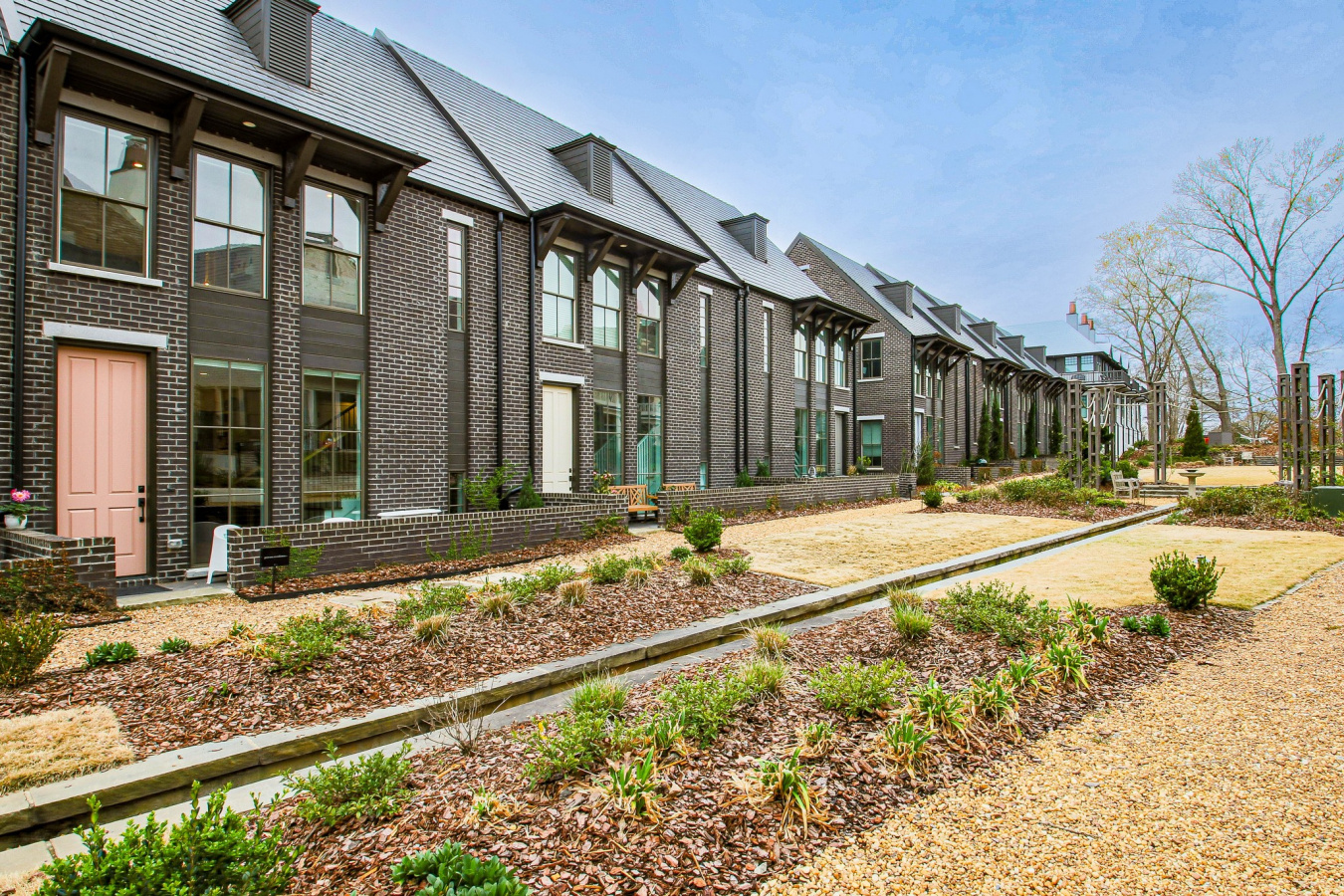
The townhomes in the Town at Trilith don’t have any visible or noisy outdoor air conditioning units—which can be a nuisance in dense living environments—thanks to the geothermal heating and cooling systems. Photo by Trilith
Unique Features:
- One of the largest residential geothermal communities in the United States
- Located adjacent to largest purpose-built film studio in the US
- Residents include actors, directors, and writers, among others
Better in 100 Years
Committed to being “better in 100 years” by “getting it right now,” Trilith developers considered geothermal as a fundamental part of the entire building envelope. Each newly constructed home, which can range from a 350-ft2 micro home to a large custom home, features a geothermal heat pump system that heats and cools more efficiently than conventional methods.
By installing heat pumps connected to pipes that circulate water between the heat pump and boreholes, the heat pump can exchange energy with the moderate temperatures of the soil underground. This allows the heat pumps to provide heating and cooling and create an efficient climate-controlled environment, even in the hottest of Georgia’s outdoor conditions.
“Trilith is designed as a walking community with large amounts of green space. One of the most important things about choosing geothermal is that there are no noisy or unsightly outdoor condensers. Aside from the energy savings and lower bills, residents really appreciate the quiet that geothermal heat pumps provide.”
Tiffany Summers, Trilith Development
Contacts:
For questions about this case study, contact Tiffany Summers at Tiffany@trilith.com.
For any website technical issues or general questions about geothermal heat pumps, contact DOE.Geothermal@ee.doe.gov.
Printable Version
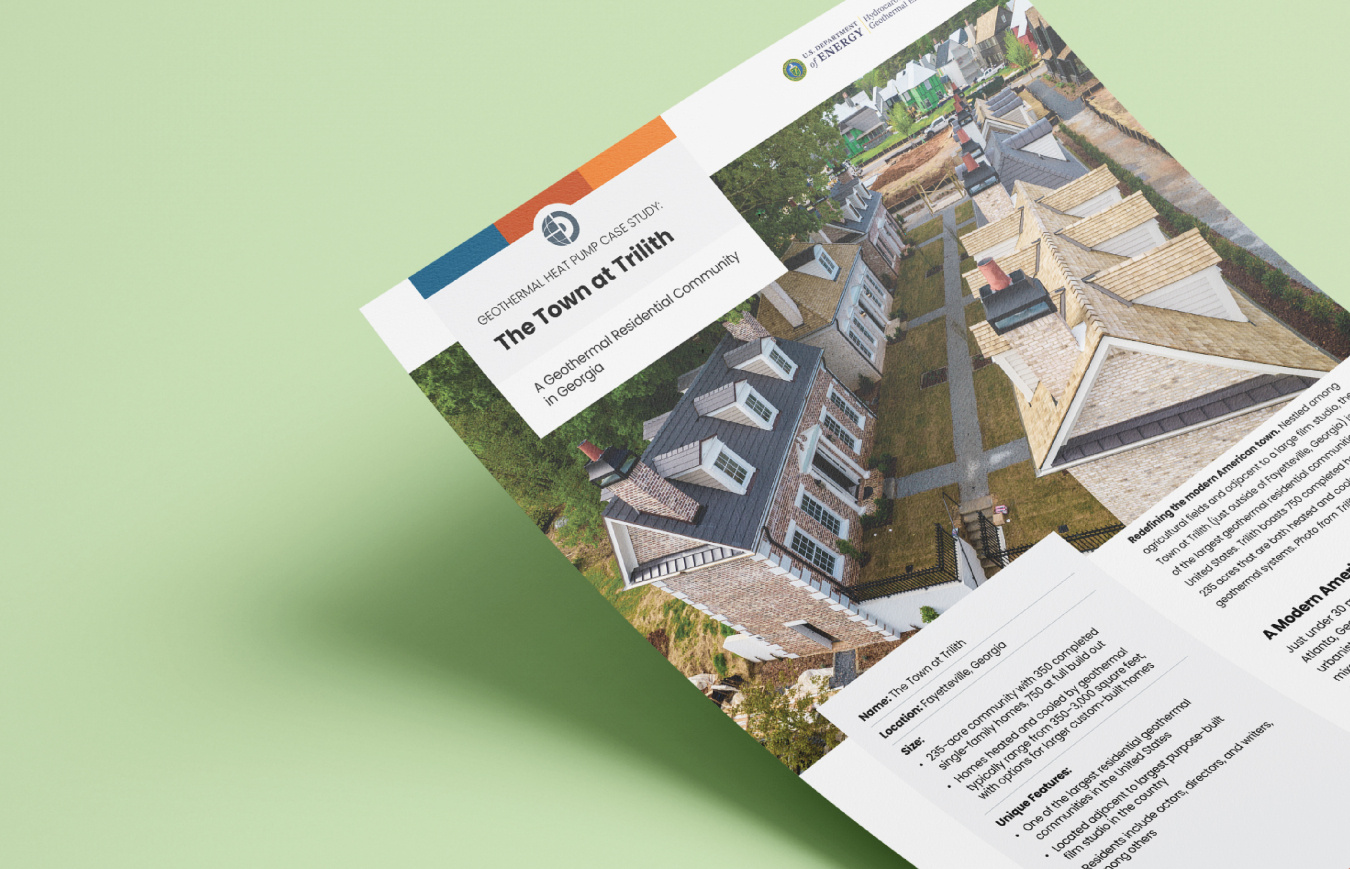
Download the printable The Town at Trilith case study or visit the Geothermal Heat Pump Case Studies page to see more examples of geothermal heat pumps in action.