



Approach
In early 2024, the U.S. Department of Agriculture (USDA) and U.S. Department of Energy (DOE) held American Farms, Rural Benefits virtual listening sessions to better understand the impact of renewable energy development on farmers and rural communities. Based on feedback, USDA and DOE recommitted to working together and developed an approach to addressing the needs of farmers and community priorities while also enabling a greater diversity of energy options.
The plan includes:
- Developing new resources and platforms to share information for farmers and local leaders on DOE’s renewable energy siting website and [on USDA’s forthcoming clean energy website].
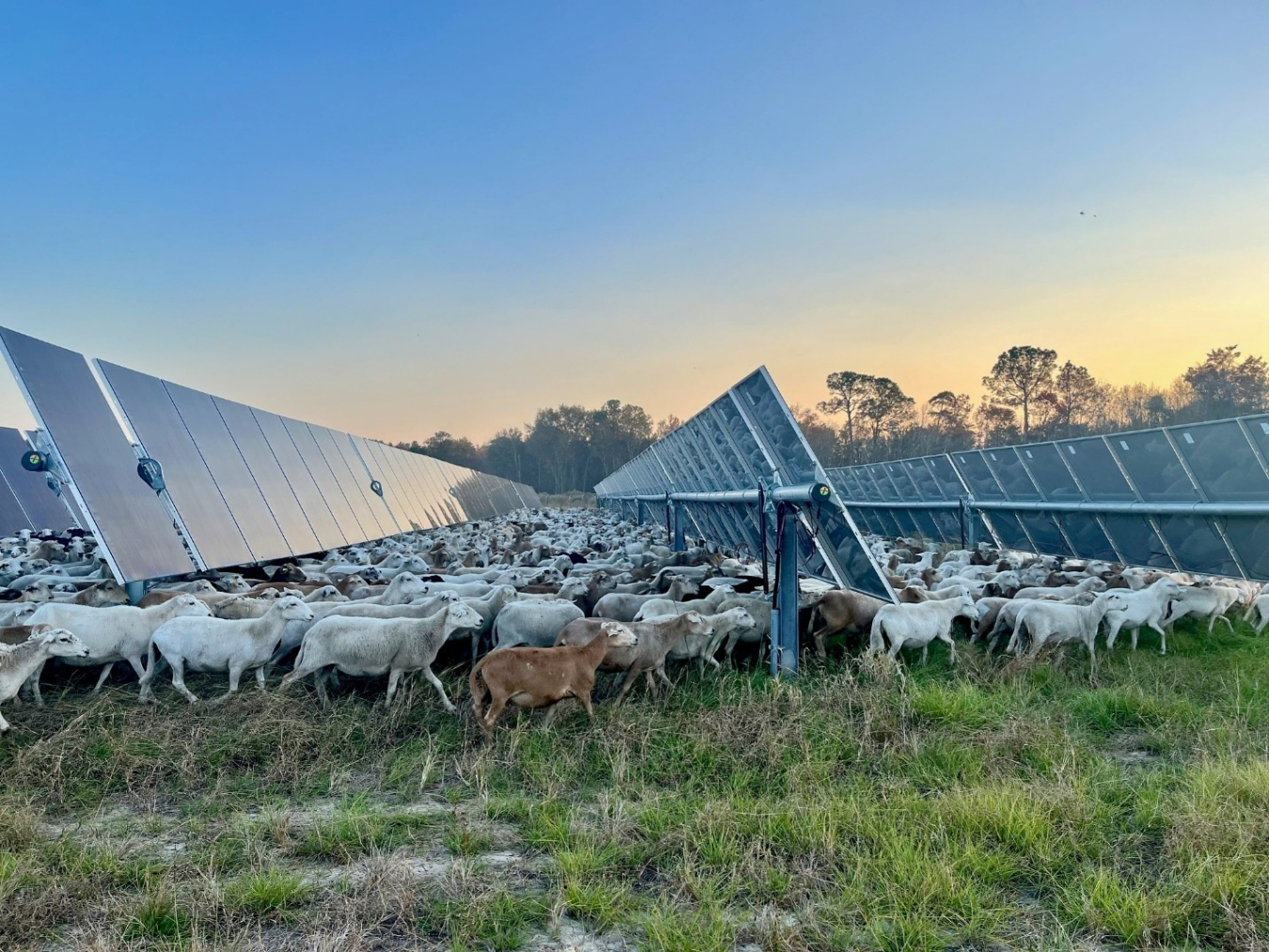
- Expanding existing programs and starting new ones to support farmland conservation, energy choice, and the dual use of land for both farming and solar energy production, also known as agrivoltaics.
- Listening to stakeholders and applying insights to new programs and future research efforts.
Initiatives
Aligning federal funds with local support and local benefits
- Rural electric cooperatives receiving funding through USDA’s Empowering Rural America (New ERA) program must submit a plan with letters of support from local organizations, including one from the local government. This ensures projects align with community needs and encourage collaboration.
Promoting agricultural benefits at utility-scale projects
- The Farmer Benefit Plan encourages New ERA program awardees to work with farmers to include agricultural benefits like building silos, using less-productive land for solar or wind projects, or offering reduced electricity rates to local farmers. View examples of Farmer Benefit Plans.
Sharing public information on land and farmer revenue
- The USDA Economic Research Service (ERS) has studied how much income farmers earn from renewable energy projects. For example, they found that farmers in areas that produce wind energy earn on average $17,303 per year. ERS is working to improve its research by tracking farmers’ energy revenue by tracking payments by technology type (solar, wind, etc.).
- DOE is funding research on the economic impacts of large-scale renewable energy on land ownership, farmer revenue, and neighboring property values. Learn more about this research on large-scale solar siting.
Expanding research on agrivoltaics
- USDA and DOE are collaborating on agrivoltaics research and development in various agricultural operations including livestock, specialty crops, and commodity crops on small, mid-sized and large farms and ranches. Research examines the social, economic, and operational impacts of agrivoltaics on farmers, rural communities, and rural electric cooperatives. Learn more about DOE’s agrivoltaics research.
- The DOE national laboratories and USDA agencies, including the National Institute of Food and Agriculture (NIFA) and the Agricultural Research Service (ARS), are expanding solar and agricultural integration research and technical assistance to stakeholders
- DOE’s American-Made Large Animal and Solar System Operations (LASSO) Prize offers $8 million in funding for projects that combine solar energy and cattle grazing. Submit a phase 1 application by March 6, 2025.
Additional programs
- Wind projects for farmers: The RAISE initiative helps farmers cut costs and increase income through smaller-scale renewable energy projects and underutilized technologies, such as on-site wind. In 2024, USDA set a goal of helping individual farmers nationwide acquire smaller-scale wind projects within 5 years using USDA’s Rural Energy for America Program (REAP).
Resources
Conservation Considerations for Solar Farms Guide
- This USDA guide provides natural resource conservation principles and practices for all phases of a utility-scale solar project to protect farmland’s agricultural production potential, that may be voluntarily adopted by stakeholders. A high-level summary of conservation considerations for solar farms is also available.
Farmer’s Guide to Solar Energy
- USDA and DOE are collaborating on the Farmer's Guide to Going Solar, which helps answer common questions that farmers may have about going solar and agrivoltaics.
Innovative Site Preparation and Impact Reductions on the Environment (InSPIRE)
- NREL’s InSPIRE project is the largest, longest-running, and most comprehensive agrivoltaics research effort in the world. The website includes a repository of agrivoltaics research, a map of existing agrivoltaic installations, and a financial calculator to aid decisionmakers.
Summary of Listening Sessions
- The listening sessions, facilitated by Rural Utilities Service Administrator Andrew Berke and DOE Acting Deputy Assistant Secretary for Renewable Energy Dr. Becca Jones-Albertus, were attended by over 800 people representing all 50 states. Sessions were held for agricultural producers, energy enterprises, state and local government officials, and the general public.
- While rural communities generally support the transition to renewable energy, a range of stakeholders, including local government officials, farmers, cooperatives, and members of the public, expressed concern about the impacts of renewable energy development on rural communities. Many stakeholders expressed their support for renewable energy while also raising concerns about ecological, cultural, and economic values. These concerns include loss of prime farmland, increased farmland rental rates (particularly for tenant farmers), loss of rented acres when absentee landowners lease to renewables projects, and lack of local input on siting decisions. Some stakeholders requested that solar development be prioritized on rooftops and non-prime farmland; others expressed concerns that avoiding the use of farmland will significantly delay the clean energy transition; and others conveyed concerns that large-scale renewable energy development is exacerbating other types of farmland conversion and causing adverse environmental impacts.
- Farmers adopting distributed generation and those who have leased their lands for large-scale renewable energy infrastructure expressed positive experiences, such as improved financial stability, which allows their family farms to survive and even expand. Several farmers supported the right to make their own decisions about farming and energy generation on their lands. Through revenue created by renewable energy projects, some farmers were able to put their farms on more solid financial footing and invest in new opportunities. Their experiences demonstrate the benefits of integrating clean energy into agricultural operations.
- Dual-use agrivoltaics—which combines solar and agriculture—is a promising practice. In all sessions, speakers discussed the possibility of siting energy infrastructure on disturbed lands (e.g., brownfields, mine lands), developed areas (e.g., solar parking lots), marginal farmland, or land with dual uses (e.g., agrivoltaics, canal solar). Agrivoltaics received a lot of support. Some solar developers believe it is ready for widespread adoption, but most have no experience developing dual-use systems. The primary barrier to identify widespread adoption of agrivoltaics is the increased cost associated with raising solar panels to enable farming and livestock grazing. All stakeholders agreed that it is an avenue worthy of further research and investment, and there was broad support for DOE and USDA to continue collaborating on innovative solutions.
- Community members welcome tangible benefits of renewable energy development, but those benefits are not always clearly identified. Farmers and residents of farm communities expressed a desire for rural residents to benefit from renewable energy development. Speakers cited examples of community improvements resulting from new tax revenues, including improvements in schools and roads. However, some stakeholders said it was not always clear what the benefits were or how to obtain them. A range of stakeholders noted that making benefits known to the community requires robust engagement between developers, local authorities, and community members.
- Rural community members expressed concern about the potential loss of local authority to permit large scale renewable energy facilities. Farmers, local government officials, and members of the public emphasized the need for land use decisions to be made at the local level and expressed concern about losing that authority if permitting for renewable energy facilities moves to the state level. Many local officials expressed interest in getting more information about renewable energy so the best decisions could be made for their rural communities.
- Stakeholders expressed broad support for USDA and DOE to provide objective information and tools to inform decisions about large-scale renewable energy permitting. Participants spoke about the need for resources on both physical (e.g., environmental and human health impacts) and economic (e.g., negotiating community benefits agreements) impacts of renewable energy development. Speakers identified model ordinances, planning tools, agency definitions, conservation program guides, and analytical research products on land use issues as potentially useful resources. Several speakers noted that these tools may be particularly needed by disadvantaged groups, including Tribes, and under-resourced state and local government officials.
- While rural communities generally support the transition to renewable energy, a range of stakeholders, including local government officials, farmers, cooperatives, and members of the public, expressed concern about the impacts of renewable energy development on rural communities. Many stakeholders expressed their support for renewable energy while also raising concerns about ecological, cultural, and economic values. These concerns include loss of prime farmland, increased farmland rental rates (particularly for tenant farmers), loss of rented acres when absentee landowners lease to renewables projects, and lack of local input on siting decisions. Some stakeholders requested that solar development be prioritized on rooftops and non-prime farmland; others expressed concerns that avoiding the use of farmland will significantly delay the clean energy transition; and others conveyed concerns that large-scale renewable energy development is exacerbating other types of farmland conversion and causing adverse environmental impacts.