



Utah FORGE begins an extended circulation test to provide answers to geothermal questions.
Geothermal Technologies Office
August 17, 2026 Estimated Read Time min
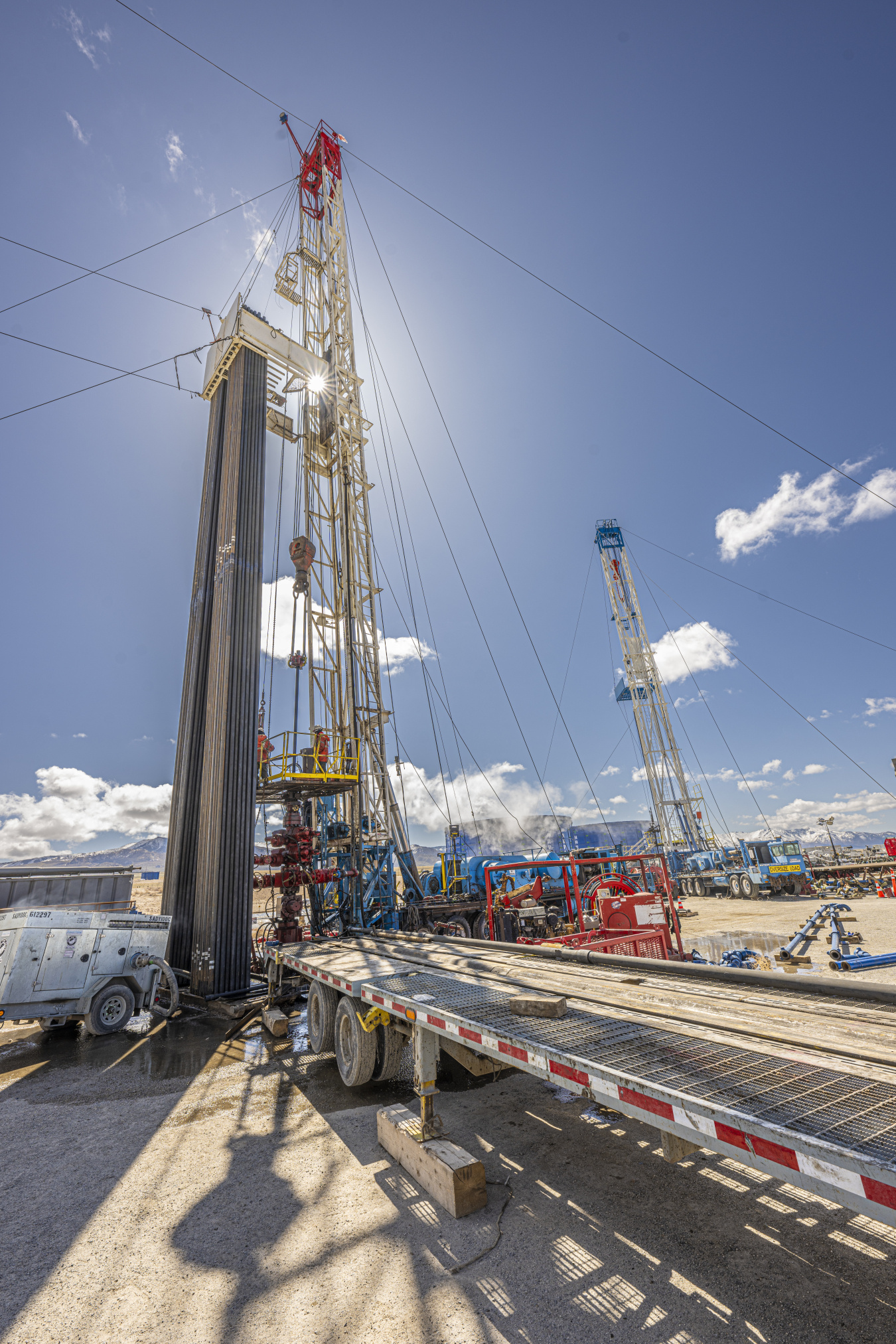
An extended circulation test is a significant feat—to date, only a handful of enhanced geothermal system (EGS) projects worldwide have reached this stage. The Office of Geothermal-funded Frontier Observatory for Research in Geothermal Energy (FORGE) is one of those rare sites, with an extended circulation test that represents the culmination of years of federally funded work and can hold the key to some of the most important steps to advance EGS.
Demonstrating sustained circulation is a critical step that can help to determine the longevity of an EGS reservoir for commercial electricity generation. Utah FORGE is kicking off its circulation test with an initial injection of a few barrels per minute (bpm) but plans to ramp up to 10 bpm over approximately 48 hours to ensure system stability. The system consists of cooler, non-potable water being pumped into the injection well for a period of months and then drawn back to the surface through the production well.
This test builds on a series of successful accomplishments at FORGE. In April 2024, the team successfully stimulated the production and injection wells, creating the fracture network that forms the reservoir. FORGE followed stimulation with a 30-day circulation test in August 2024, with cool water injected at a consistent rate of 10 bpm and produced temperatures of ~370°F. These results provided positive initial indications that significant amounts of heat can be extracted from an EGS reservoir.
Despite this success, a 30-day circulation test cannot provide the same crucial information as an extended circulation test. The ability to observe pressure and production stability, as well as water recovery and heat extraction, provides engineers with realistic operating data needed to determine project economics and design future geothermal power plants with greater confidence. The project may also unveil potential challenges that can only become known after long-term continuous operation.
Alongside the site’s cutting-edge research, publicly available data is a defining feature of FORGE. Made available through the Geothermal Data Repository, these data enable researchers, technology developers, utilities, and geothermal companies to advance geothermal. The data resulting from this extended circulation test could help shape the future of geothermal energy in the United States.
Dr. Kristie McLin, the Principal Investigator of FORGE, notes, “The positive results achieved by the [FORGE] project over the past few years have been very beneficial to the industry...this extended circulation will provide answers to the pressing questions about thermal decline and water loss, allowing geothermal companies to continue growing and to flourish."
Learn more about the Office of Geothermal’s work with enhanced geothermal systems and its commitment to increasing geothermal energy deployment through research, development, and demonstration.