



In a significant milestone for global nuclear security, the United States, partnering with international allies, has completed the removal of all remaining highly enriched uranium from Venezuela’s legacy RV-1 research reactor. June 23, 2026
Office of Environmental Management
June 23, 2026 Estimated Read Time min
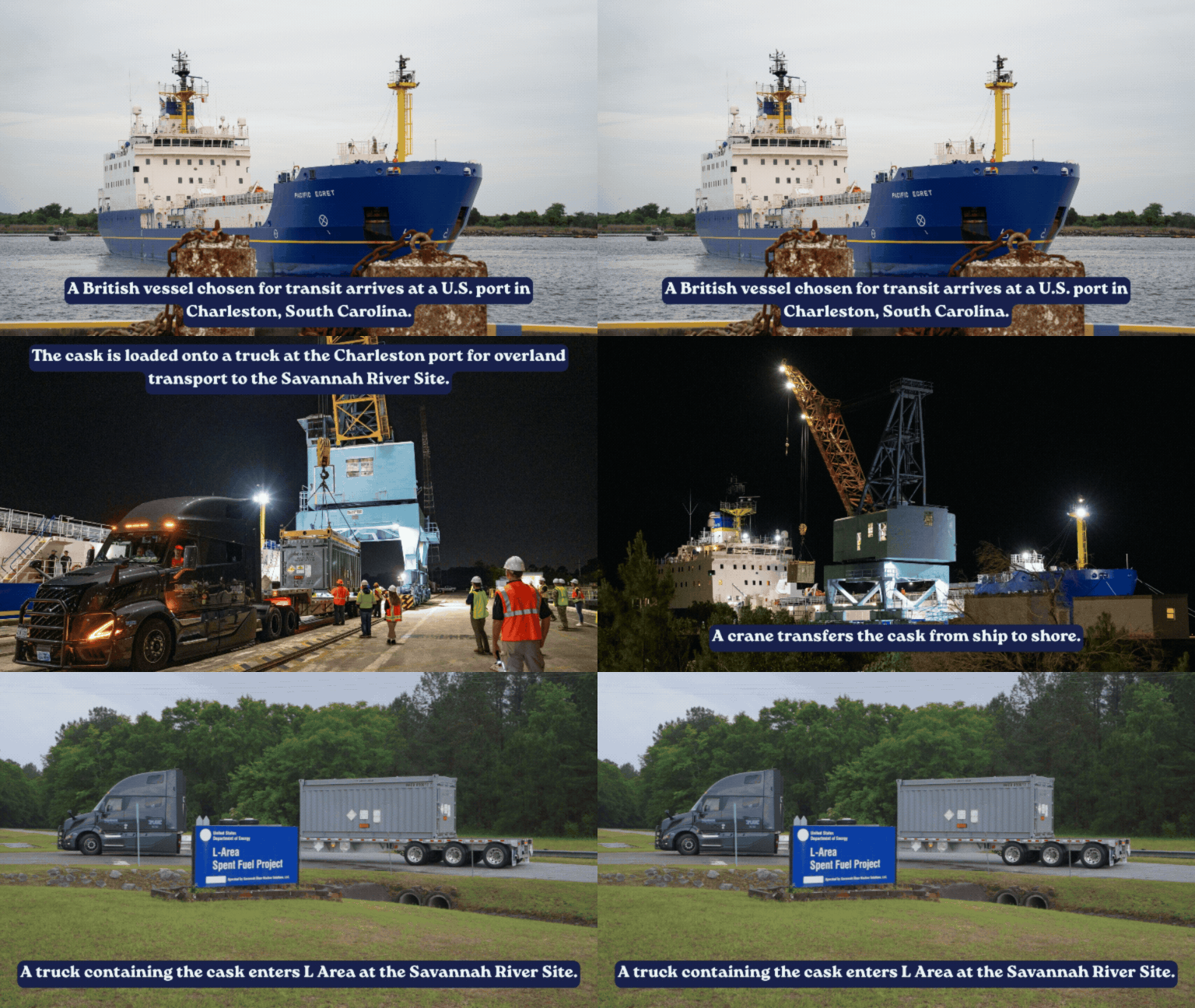
AIKEN, S.C. — In a significant milestone for global nuclear security, the United States, partnering with international allies, has completed the removal of all remaining highly enriched uranium from Venezuela’s legacy RV-1 research reactor.
The U.S. Department of Energy’s National Nuclear Security Administration (NNSA), Office of Environmental Management and Savannah River Site (SRS) were essential to the success of this complex, multi-agency mission.
NNSA's Office of Defense Nuclear Nonproliferation coordinated the operation through its Office of Nuclear Materials Removal and Minimization, whose mission includes reducing risk of nuclear terrorism by eliminating weapons-usable materials worldwide.
SRS, recognized for its expertise in nuclear material management and its longstanding support of NNSA's nonproliferation initiatives, provided technical leadership support, specialized facilities and operational excellence needed to bring the mission to completion.
The RV-1 reactor, constructed in the 1960s under the Atoms for Peace program, supported decades of scientific research before its shutdown in 1991. While most of its used fuel was removed in 1999, the remaining 20 U.K.-origin assemblies, along with two U.S.-origin fuel plates and six coupons, continued to pose a proliferation risk. RV-1 stands for Reactor Venezolano 1.
A team with SRS management and operations contractor Savannah River Nuclear Solutions (SRNS) led a site assessment in Venezuela in March, evaluating equipment, logistics and regulatory requirements.
“We needed to see what equipment we had, what we would need, and whether everything would fit,” said Kiran Karanth, SRNS Fuel Receipts Programs program manager.
The assessment clarified what needed to be completed, identified the necessary collaborators, and established the timeline to ensure all logistical, physical protection, safety, documentation, and regulatory compliance requirements were met on both the U.S. side and in Venezuela.
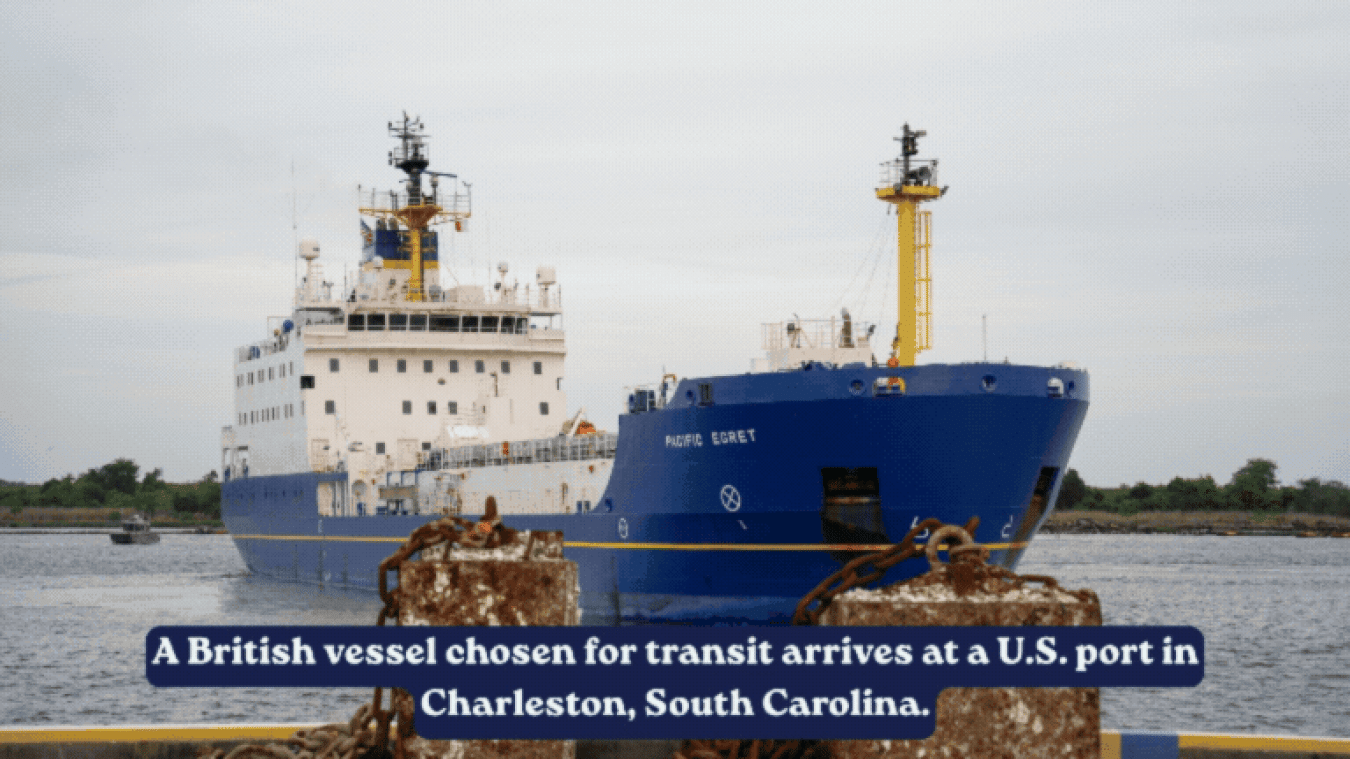
With a British vessel identified for transport, the SRS team rapidly reactivated maintenance activities, retrained operators and prepared specialized equipment to receive the cask upon arrival.
In Venezuela, SRNS personnel supported the cask-loading process, ensured all required radiological surveys were completed, and verified documentation for material acceptance in accordance with site requirements. The cask was then shipped to the U.S., where the SRS Radiological Assistance Program team provided further surveys at the Charleston, South Carolina, port prior to overland transport to SRS.
The cask was received at L Area at SRS and is securely stored. The used fuel will later be sent to the site's H Canyon — the only operating, production-scale, radiologically shielded chemical separations facility in the U.S. — to recover highly enriched uranium from the used nuclear fuel and convert it to high-assay low-enriched uranium to fuel advanced nuclear reactors, supporting America’s energy independence.
“This achievement underscores the dedication and expertise of our team at Savannah River Site,” said SRNS Environmental Management Operations Senior Vice President Janice Lawson. “By working hand in hand with our international partners, we have not only removed a significant nuclear risk but also reaffirmed our commitment to global security and nonproliferation. The safe and secure handling of this material is a testament to the operational excellence and collaborative spirit that define our mission at SRS.”
The successful removal and processing of the highly enriched uranium from Venezuela not only eliminated a significant proliferation risk but also showcased the critical role of SRS in advancing U.S. nuclear security and nonproliferation objectives. SRS continues to serve at the forefront of global efforts to secure nuclear materials and protect future generations.
-Contributor: Katie Gantt
To receive the latest news and updates about the Office of Environmental Management, submit your e-mail address.