



High-frequency sound waves are helping clean components of the Salt Waste Processing Facility at Savannah River Site, delivering faster turnaround times, improved equipment performance and reduced worker exposure.
Office of Environmental Management
September 8, 2026 Estimated Read Time min
AIKEN, S.C. — High-frequency sound waves are helping clean components of the Salt Waste Processing Facility (SWPF) at Savannah River Site (SRS), delivering faster turnaround times, improved equipment performance and reduced worker exposure.
Savannah River Mission Completion (SRMC), the U.S. Department of Energy’s (DOE) Office of Environmental Management (EM) liquid waste contractor at SRS, applies an ultrasonic cleaning process that efficiently and thoroughly cleans the items using the sound waves in a liquid. The sound waves cause rapid formation and collapse of microscopic bubbles in the liquid, which create tiny shock waves that dislodge and remove contaminants from the surfaces of the submerged items.
At SWPF, a key facility in reducing high-level waste in underground tanks at SRS, the tech-savvy cleaning process removes scaling and material buildup from the rotors of disassembled contactors. The rotor is the rotating part inside the contactors, which are key components in the waste separation process at SWPF.
The contactors use centrifugal force to mix and separate process fluids, enabling SWPF to separate highly radioactive contaminants from salt solution. This is critical in reducing the volume of waste requiring treatment at the Defense Waste Processing Facility, where concentrated high-activity waste combines with sludge waste in the immobilization process.
After the contactors are cleaned in the ultrasonic bath at SWPF, they are reassembled and returned to service, reducing downtime and making the facility available sooner to resume processing waste.
“Increased plant availability is key to accelerating the cleanup mission,” said Tony Robinson, DOE-Savannah River’s acting assistant manager for waste disposition.
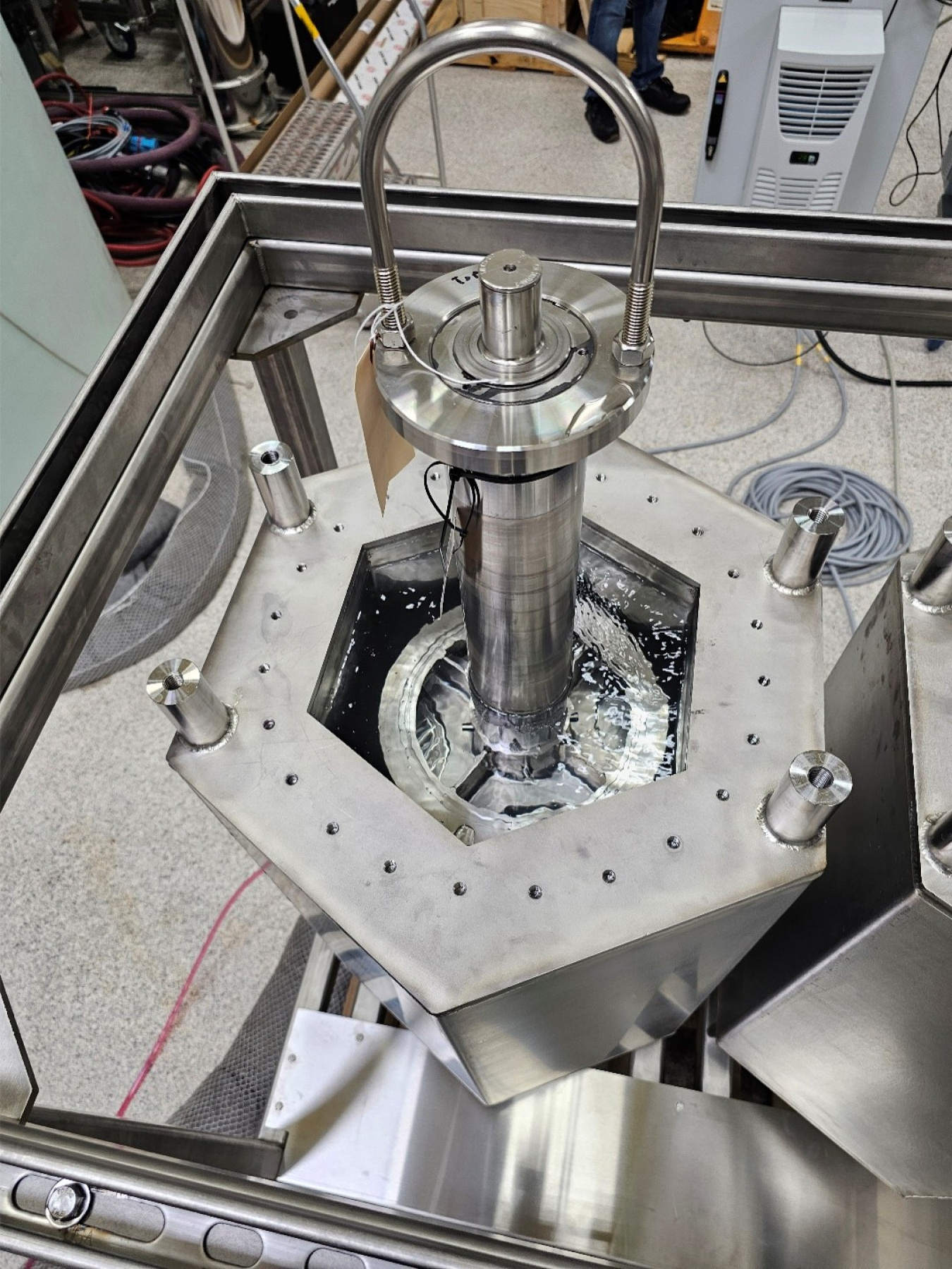
Equipment undergoes an ultrasonic cleaning process that is enhancing employee safety and reducing potential radiation exposure at the Salt Waste Processing Facility at Savannah River Site.
Using the ultrasonic process, SRMC has successfully cleaned and returned to service units that were once difficult to recover, according to Erick Dixon, SWPF’s maintenance engineering manager.
“We have also been able to accelerate the rebuild effort to the point that 20 contactors were turned around in a single month, improving on our rate of approximately eight per month,” Dixon said. “That achievement was a key enabler to maximizing runtime of the plant and supporting 100 percent throughput rates.”
This new way of cleaning supplements a legacy method that relied on extended acid soaks followed by labor-intensive manual cleaning with steam lances and pressure washers. The soak duration alone could range from four days to four weeks. The entire process works to reduce exposure risk and increase employee safety in the critical cleaning process.
SRMC Executive Vice President and Chief Engineer Cliff Conner called the cleaning process a commercial-level innovation that is advancing the liquid waste mission while increasing safety and equipment longevity.
“This is not new technology, but it’s a smart, targeted application of it,” Conner said. “By configuring the commercially available system around our equipment, we’re getting the best performance out of both the cleaning process and the contactors themselves.”
-Contributor: TJ Lundeen
To receive the latest news and updates about the Office of Environmental Management, submit your e-mail address.