



Oak Ridge Office of Environmental Management cleanup crews are removing radioactive materials from Building 3029, a legacy production lab at Oak Ridge National Laboratory. July 7, 2026
Office of Environmental Management
July 7, 2026 Estimated Read Time min
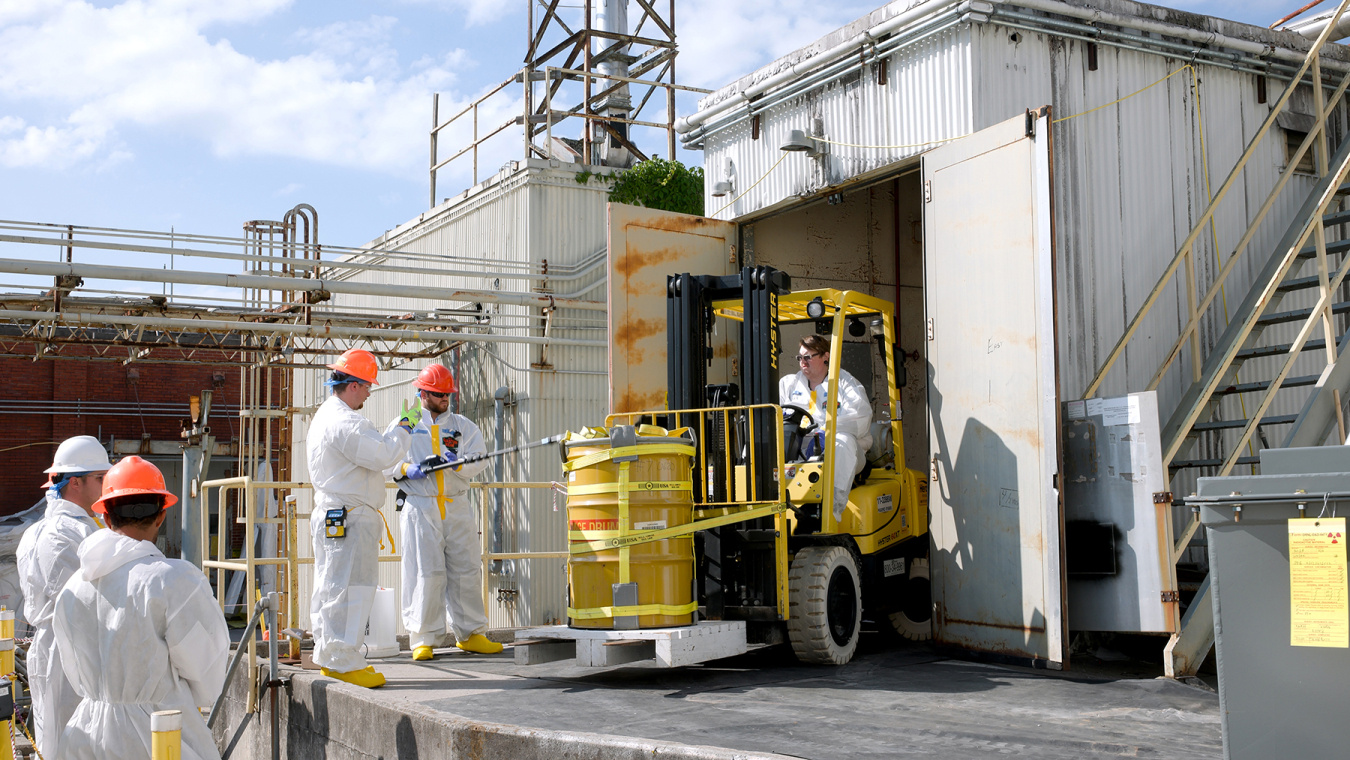
Crews have removed drums containing 10 of the 18 high-dose legacy materials as they work to prepare Building 3029 for demolition.
OAK RIDGE, Tenn. — Oak Ridge Office of Environmental Management (OREM) cleanup crews are removing radioactive materials from Building 3029, a legacy production lab at Oak Ridge National Laboratory (ORNL).
The project represents a major risk-reduction effort in ORNL’s central campus. The work underway is paving the way for future demolition that opens space for important research missions.
Between the late 1940s and early 1960s, workers built eight radioisotope production labs and three storage facilities. The area became known as Isotope Row. For decades, employees at the facilities produced, processed and researched isotopes used in medical, industrial, scientific, and national defense applications.
In 2020, cleanup contractor United Cleanup Oak Ridge (UCOR) began preparing the buildings for demolition. During that process, workers discovered a highly radioactive source inside Isotope Row’s largest facility.
The source was located inside Building 3029’s hot cells. Hot cells are heavily shielded, concrete rooms used to safely contain and manipulate highly radioactive materials.
“Once this unexpected level of radiation was discovered, work was immediately paused to ensure that we had a path forward that would keep the workers and environment safe,” said UCOR Project Manager Zachary Dew.
The team created a careful, step-by-step plan to continue the project safely. Members used radiation-resistant cameras to find and identify the radiation source that they tracked to 18 high-dose legacy materials. The cameras allowed the team to use remote-controlled equipment and long-handled tools to reach the materials from a safe distance.
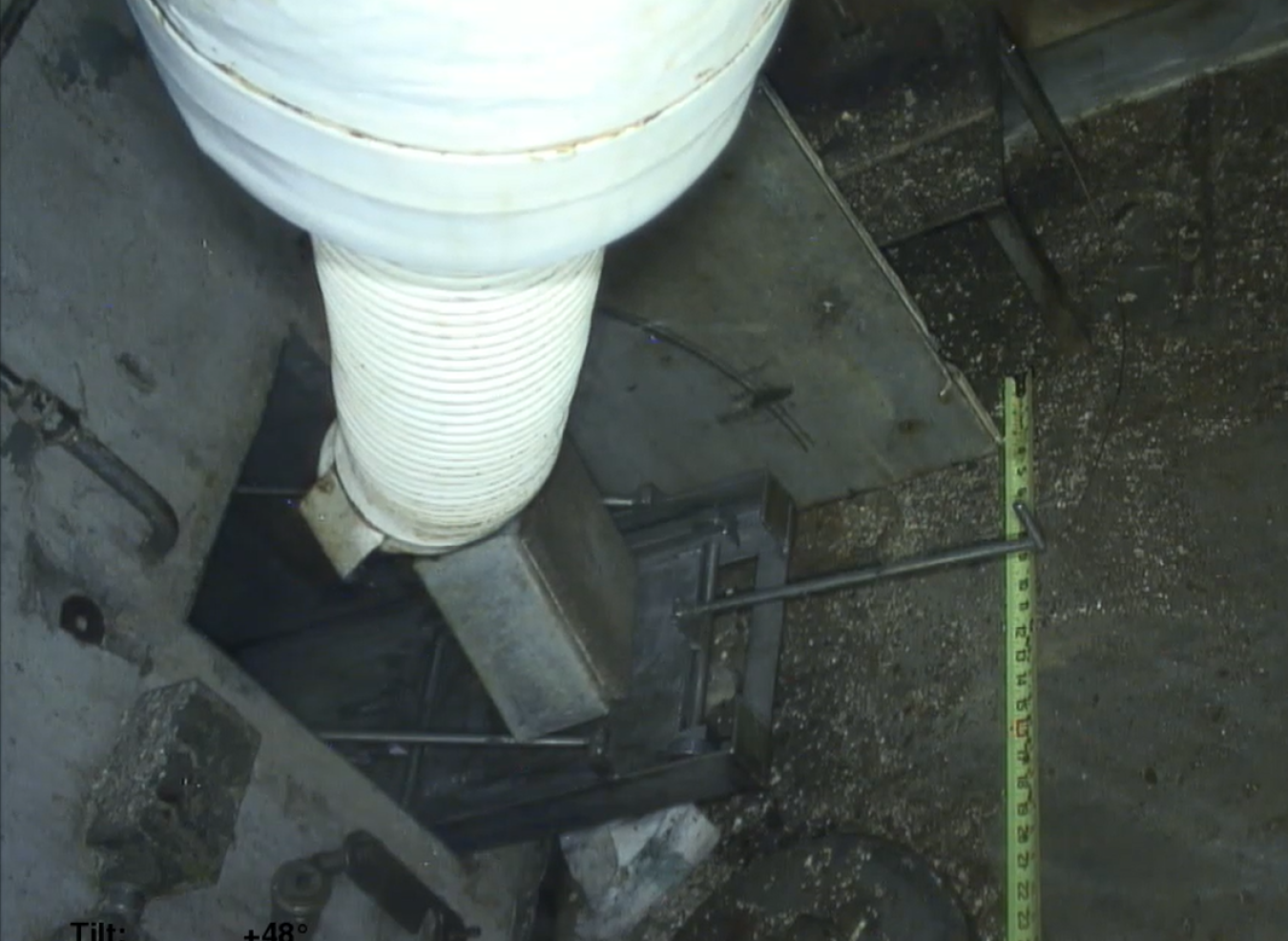
Crews place a legacy high-dose item into a small transfer window to safely move it to a neighboring hot cell for removal.
Now, crews are packaging and removing the items from the hot cell.
To complete this work, the team targets the individual items inside the middle hot cell and transfers the materials to a neighboring cell through a small transfer window to facilitate removal.
Once items are moved to the neighboring cell, workers use remote tools to remove the material and place it into heavily shielded metal drums. The drums are then moved outside and loaded into a secure shipping container.
Crews have successfully removed 10 of the 18 items to date, and will continue removals to prepare the facility for demolition.
“By carefully finding and removing these hazards, the cleanup team is permanently removing risks from ORNL and protecting future demolition crews,” said Acting ORNL Portfolio Federal Project Director Michael Griswold. “This project brings us closer to another project that will help transform and modernize the site.”
–Contributor: Ryan Getsi
To receive the latest news and updates about the Office of Environmental Management, submit your e-mail address.