



RSS

Find news stories and press releases related to hydrogen and fuel cell technologies topics.
Also see the hydrogen and fuel cell newsletters archive for recaps of past news and events and in-depth examinations of happenings from across the DOE hydrogen community.
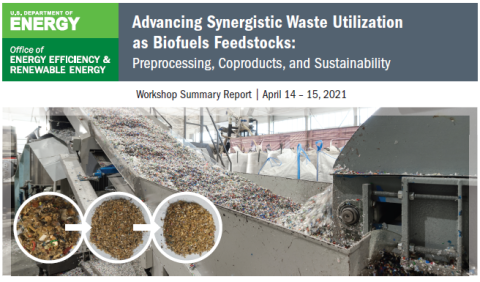
This report summarizes results of a Bioenergy Technologies Office workshop with stakeholders from academia, industry, municipalities, and federal agencies involved in waste management, resource and energy recovery, waste utilization, and renewability.
This report provides an external assessment of BETO’s projects and collects external stakeholder feedback on BETO’s scope, focus, and strategic direction.
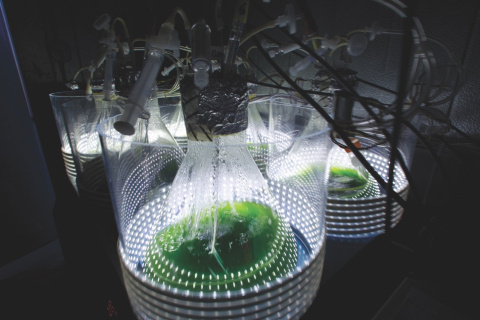
The potential for advancing algal biofuels and bioproducts relies on using algae strains that are best suited for industrial production.
Breakthroughs from the U.S. Department of Energy (DOE) Co-Optimization of Fuels & Engines (Co-Optima) initiative will help rapidly cut emissions, reduce dependence on international petroleum, and contribute to ambitious national goals to reduce emissions on the land, in the air, and across the water.
This report provides a status of BETO R&D efforts at the end of 2020 and discusses technical challenges and barriers facing the bioenergy industry.
The U.S. Department of Energy (DOE) is looking for talented, bright professionals to partner with DOE Hydrogen Program Managers working to achieve the Hydrogen Energy Earthshot goal of $1 per 1 kilogram in 1 decade (“1 1 1”).
Co-processing biomass-derived oil with crude oil in existing refineries is an effective way to stimulate the market for sustainable transportation fuels. With this approach, the fuel produced by co-producing bio-oil and petroleum can still be “dropped in”
PNNL research elevates possibility of co-processing and looks to reduce deployment risks
Upgrading bio-oils with petroleum feedstocks at existing refineries—known as “co-processing”—could offer a fast pathway for lowering the carbon footprint of today’s transportation fuels.
Join the H2IQ Hour on April 27 at 12 p.m. EDT to learn about how concentrated solar power can enable clean hydrogen production goals.