



RSS






Each year, scientists with the Office of Science, at our national laboratories, and supported by the Office of Science at the nation’s colleges and universities, publish thousands of research findings in the scientific literature. About 200 of these are selected annually by their respective program areas in the Office of Science as publication highlights of special note.
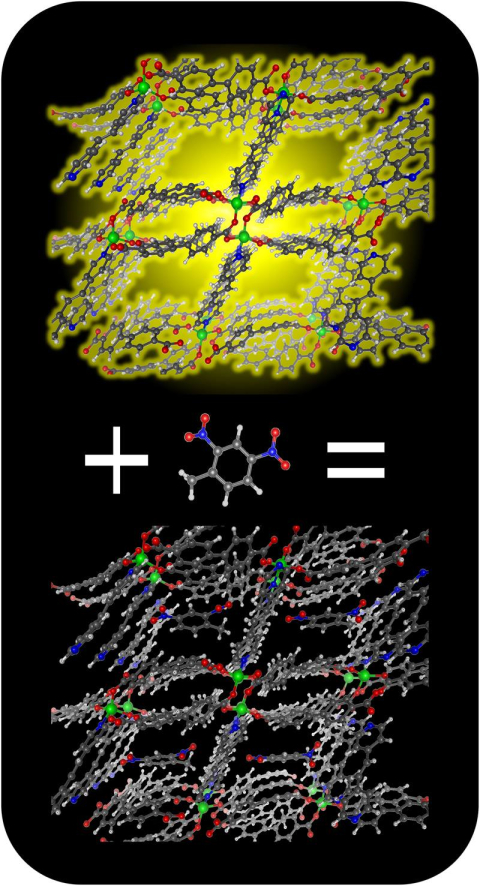
Metal organic framework materials turn fluorescent light signals on or off in the presence of guest molecules.
Computational design of bundled peptide building blocks that can be precisely linked provides new ways to create customized polymers.
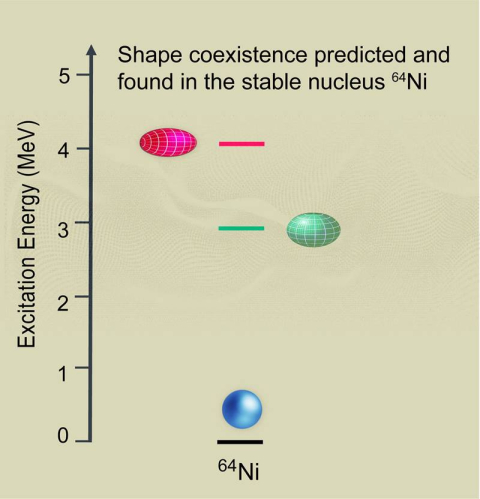
Scientists track down coexistence of multiple shapes in the Nickel-64 nucleus: a spherical ground state and elongated and flattened shapes.
New measurements provide insights for geochronology and reactor design.
Researchers address the challenge of integrating the hot core and the cooler edge of a fusion plasma.
A newly designed X-ray oscillator may enable atomic level precision with intense X-ray pulses.
Nuclear physicists narrow the search for a rare nuclear decay that can explain the origin of matter in the universe.
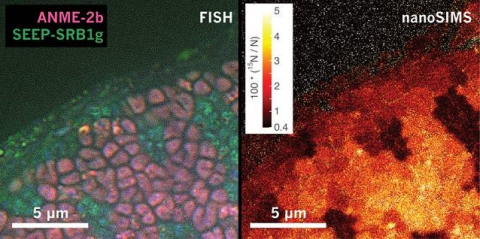
Microbial populations trade places to satisfy their nitrogen nutritional needs.
A new quantitative understanding of how, at what distance, and in what shape zinc oxide nanoparticles come together while separated by liquid.
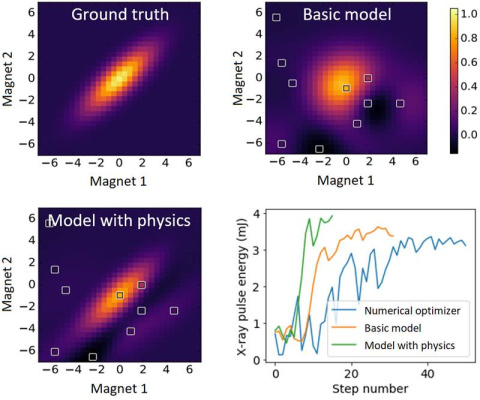
Scientists use a machine learning algorithm to reduce tuning time of a dozen instruments at once.