



RSS
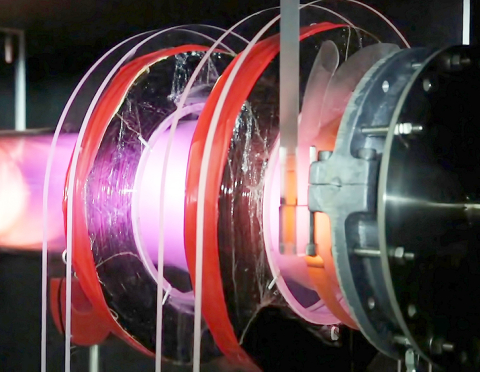
Projects to benefit medicine, industrial applications, and security.
New grants will support scientific advancement.
A team of researchers conducted the first full characterization measurement of an accelerator beam in six dimensions.
A futuristic experiment simulating warmer environmental conditions has shown that peatland vegetation responds to higher temperatures.
A SLAC-Stanford study reveals exactly what it takes for diamond to crystallize around a “seed” cluster of atoms.
Projects seek to make fusion energy feasible.
New projects to further enhance one of the world’s most sophisticated computer models for understanding weather and climate patterns.
Ten projects to advance research in the important and growing field of “ultrafast” science.
Scientists around the world are joining forces to build ITER - a magnetic fusion experiment that holds great promise for limitless energy production.
95 grants will advance national and energy security.