



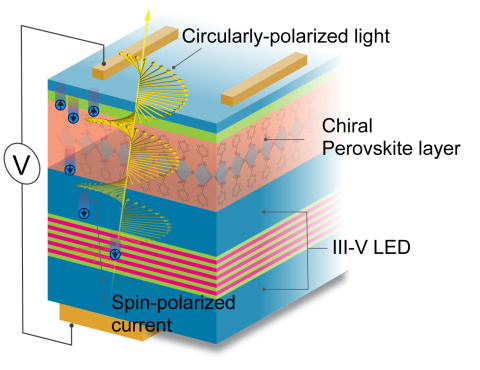
By combining a chiral semiconductor with an LED, scientists controlled the orientation of electron spin.

Researchers used a multimodal approach to determine the metal-substrate interface in a superconducting qubit material.
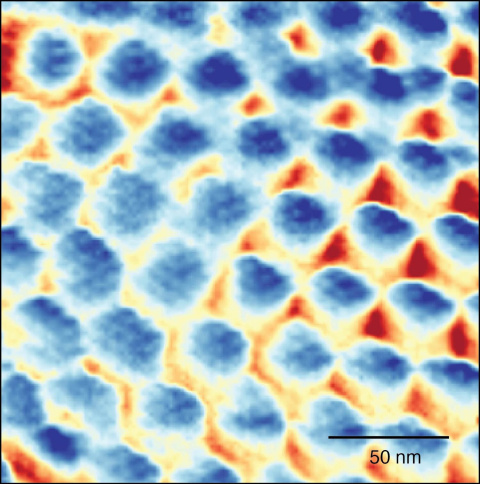
Discovery proves the existence of the mysterious Wigner crystal — an unusual kind of matter made entirely of electrons.
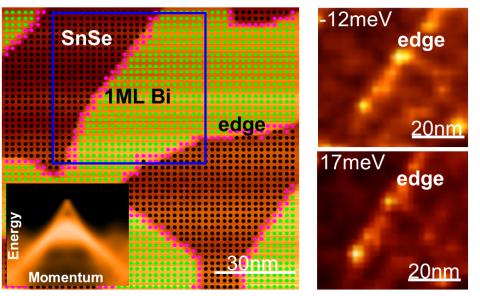
Although scientists conceived of Weyl fermions in 3D, researchers have observed their 2D equivalent in a monolayer film.

Big breakthrough in heavy-element chemistry shatters long-held assumptions about transplutonium elements.
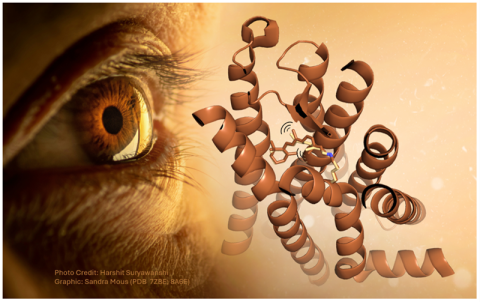
How visual rhodopsin responds to light in one of nature’s fastest reactions.

Special graphite flakes are defying conventional thought in physics by showing that a material can be a superconductor and a magnet at the same time.
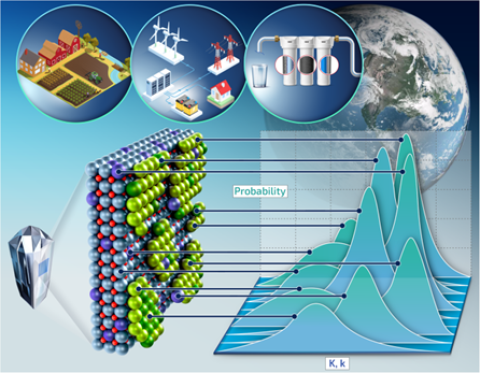
Researchers propose a new approach to modeling adsorption processes that affect how pollutants move through soil, water, and rock.

Automatic speech recognition predicts earthquake fault displacement.
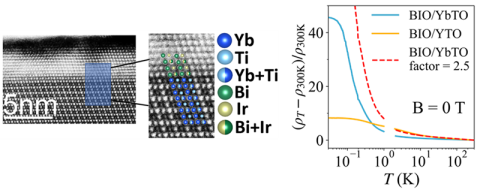
The spin fluctuations of an insulating quantum magnet determine how electricity flows in a nearby metal film.