




Researchers developed and tested an ultrafast sample replenishment system for an X-ray laser oscillator.

Researchers map the variation in materials to the atom level to scale up silicon qubits
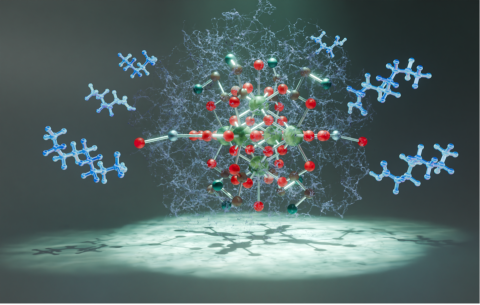
Fluorescent nanosensors enable rapid, one-step detection of dangerous PFAS (per/polyfluoroalkyl) molecules in environmental samples.
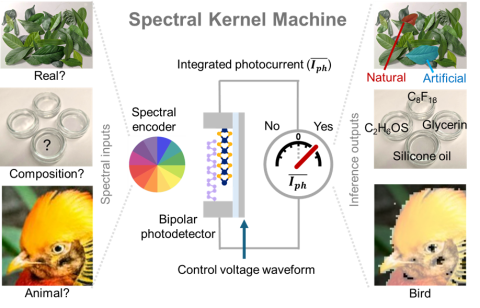
Scientists invented new photodetectors that not only detect but also learn and think based on objects’ optical spectra.
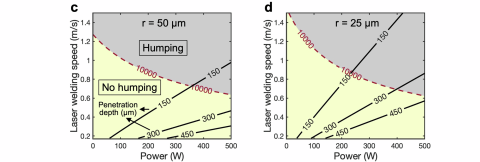
Scientists used powerful X-rays and computer models to uncover what causes surface defects in laser welds—and how to stop them.
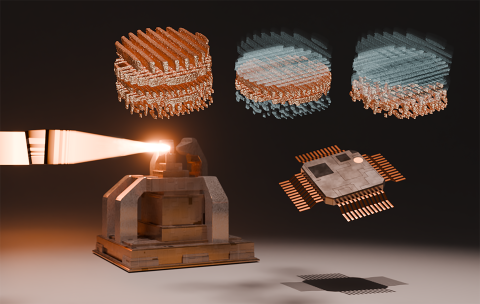
Innovative, high-resolution X-ray microscopy system generates 3D images 20 times faster than the previous system.
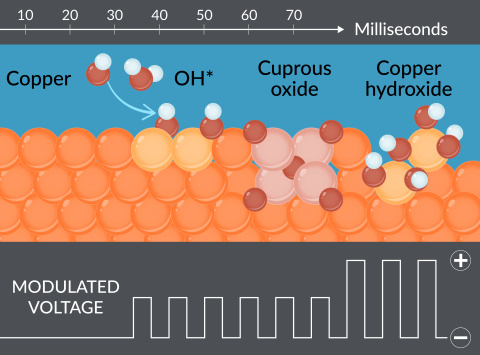
A new technique reveals ultrafast processes in electrode-electrolyte interfaces under operating conditions.

By measuring the delay between when a molecule absorbs a photon from an X-ray and emits an electron, scientists gained insight into how electrons interact.
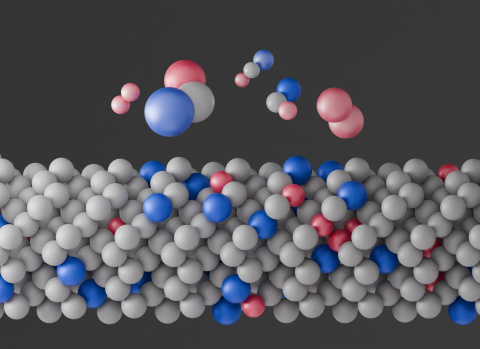
Advanced microscopy reveals motifs of trace atoms in semiconductors, paving the way for new microelectronics designed atom by atom.
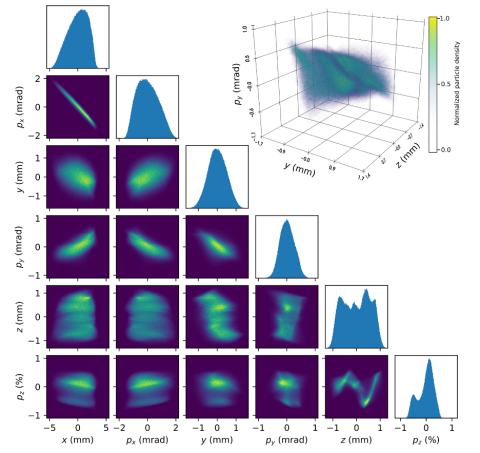
A new technique combining physics and machine learning enables scientists to quickly reconstruct details of particle beams without the need for large datasets.