



Superionic compounds could be key to adopting solid electrolytes in batteries, allowing them to charge faster and more safely.
September 23, 2026 Estimated Read Time min
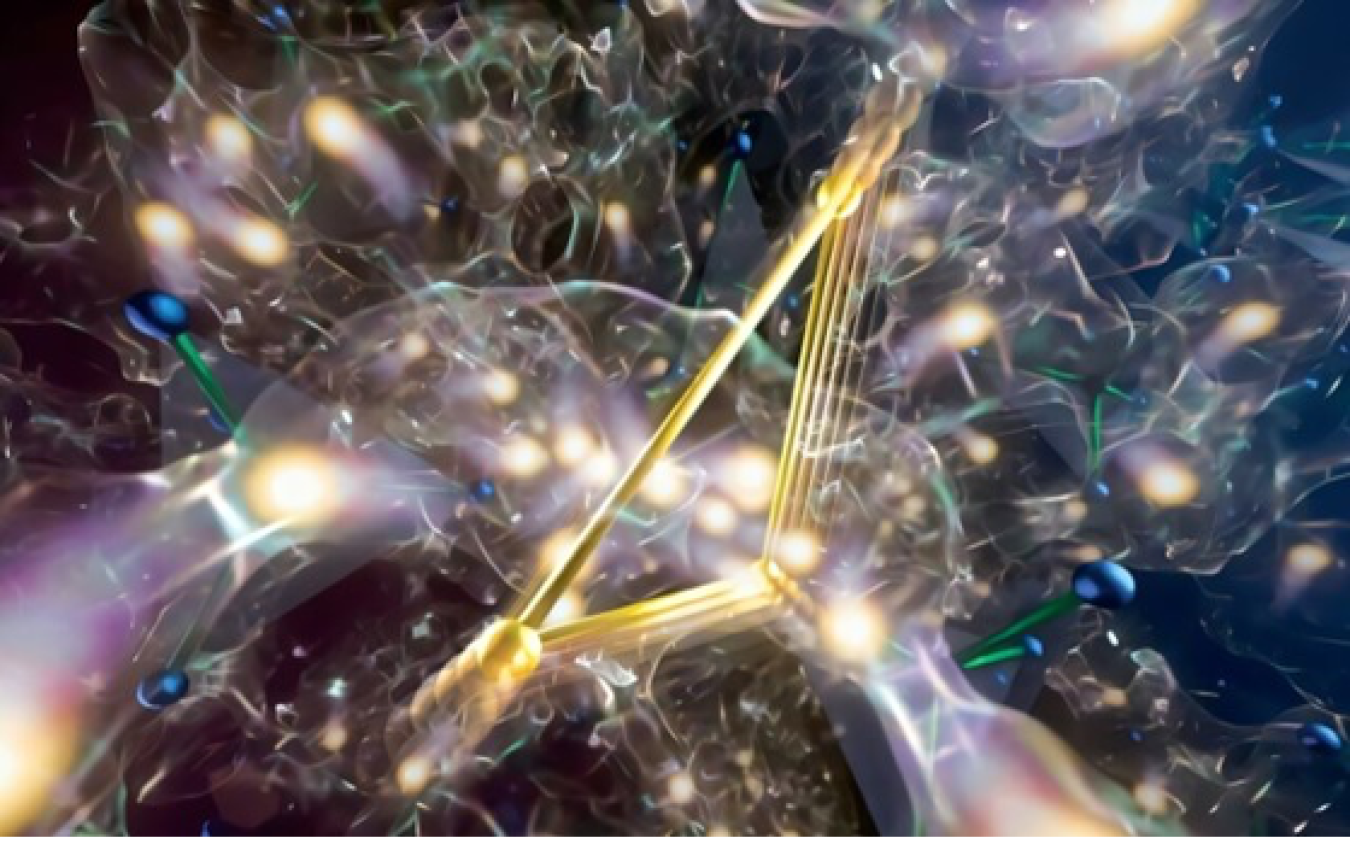
The Science
Battery materials called electrolytes allow ions (charged particles) to move from one end of a battery to the other. This process is necessary for charging and discharging. Superionic conductors (SICs) are materials that are solids, but some of their ions move like liquids. As a result, they conduct electricity very well. One SIC, lithium phosphorus sulfur chloride, is a promising type of solid-state battery material. Using neutron scattering and computer simulations, researchers gained a better understanding of this material’s atomic dynamics. By raising the material to more than 400 K (260 F), they put it in the superionic state where ions act like a liquid. In that state, the scientists found that lithium ions can hop quickly through the material’s crystal structure. The team also documented how specific types of vibrations in the crystal enable ions to jump through vibrating crystal bottlenecks. The scientists discovered that these vibrations enable long-range flow and significant improvements in conductivity.
The Impact
These findings show researchers how to improve ion flow inside a solid-state battery material, which would increase its performance. This information could enable a solid-state battery material that offers very high quantities of mobile ions as well as good chemical and thermal stability. This structure would enable a battery to use solid electrolytes that could perform as well as liquid ones. (Ions move more freely through liquid electrolytes than solid ones.) As such, this change could enable faster and safer battery charging. The ability to tailor SIC materials could also guide researchers in developing and improving other devices, such as fuel cells and computers.
Summary
One class of materials, superionic conductors (SICs), has the properties of both a crystalline and liquid electrolyte. When warmed above a specific temperature, the material remains partly crystalline, but also develops ion flow properties like those of liquids. This study combined machine-learning simulations with inelastic and quasielastic neutron scattering at the Spallation Neutron Source, a DOE Office of Science User Facility at Oak Ridge National Laboratory. The researchers investigated lithium-ion dynamics in the SIC lithium phosphorus sulfur chloride. The team found the crystalline framework facilitated fast, liquid-like hopping of lithium ions between stable crystalline lattice sites. Additionally, they documented significant enhancements in lithium-ion diffusion across a range of temperatures through the dynamic breathing (unified relaxation) of vibrating diffusion bottlenecks. They also observed how the vibrational spectra of mobile lithium ions in Li₆PS₅Cl evolve from a crystal-like to liquid-like phase. The research bridges conventional diffusive and lattice vibrational models. These findings offer important insights into the rapid ionic motion in SICs for potential use in solid electrolyte batteries, fuel cells, and computing systems.
Contacts
Olivier Delaire
Duke University
olivier.delaire@duke.edu
Douglas Abernathy
Oak Ridge National Laboratory
abernathydl@ornl.gov
Funding
The research was partially funded by the National Science Foundation (DMREF project); the U.S. Department of Energy (DOE) Office of Basic Energy Sciences, Division of Materials Sciences and Engineering; and the German Research Foundation. This work used resources at the Spallation Neutron Source and the National Energy Research Scientific Computing Center, both DOE Office of Science User Facilities.
Publications
Ding, J., Gupta, M.K., Rosenbach, C. et al “Liquid-like dynamics in a solid-state lithium electrolyte.” Nature Physics 21, 118–125 (2025). [https://doi.org/10.1038/s41567-024-02707-6]
Related Links
Superionic compound with liquid-like dynamics shows promise as solid-state battery electrolyte.
Science X Network