



This Energy I-Corps team is de-risking future investment in their technology that can give new life to plastics destined for the landfill.
Office of Technology Commercialization
November 10, 2026 Estimated Read Time min
Modern recycling systems can break down and recycle glass, metals, and some plastics. But plastic films, like grocery store bags or shrink wrap, can’t be recycled through conventional recycling systems and can even gum up recycling facility machines if not properly disposed of, increasing costs and waste. But what if you could make use of that material instead by converting it to diesel fuel?
A team of researchers from Iowa State University and Ames National Laboratory are finding out how. Through the U.S. Department of Energy’s (DOE’s) Energy I-Corps program, the team learned how to address some of the technological and commercialization gaps in bringing their patented single-step catalytic conversion technology to market.
“The plastic waste we can address in this process represents extra disposal costs and pollution,” project lead Aaron Sadow said. “This is doing something better than just putting the waste in the landfill—we are recovering the energy in the petroleum originally used to make it.”
Starting out in the National Science Foundation (NSF) I-Corps program, Sadow, a chemistry professor at Iowa State University and senior scientist at Ames National Laboratory, worked with fellow professor Wenyu Huang, along with Iowa State graduate Dr. Akalanka Tennakoon, to develop the technology. They fine-tuned their path to commercialization by conducting customer discovery interviews to identify opportunities in the market and potential pain points for customers.
By joining DOE’s Energy I-Corps, the team hoped to strengthen their approach to commercialization and identify the barriers to adoption.
“By the time we had joined DOE’s Energy I-Corps, we had revised our hypothesis of how to commercialize, changed targets, rethought what a company could look like, and had a startup company ready to market this process,” Sadow said.
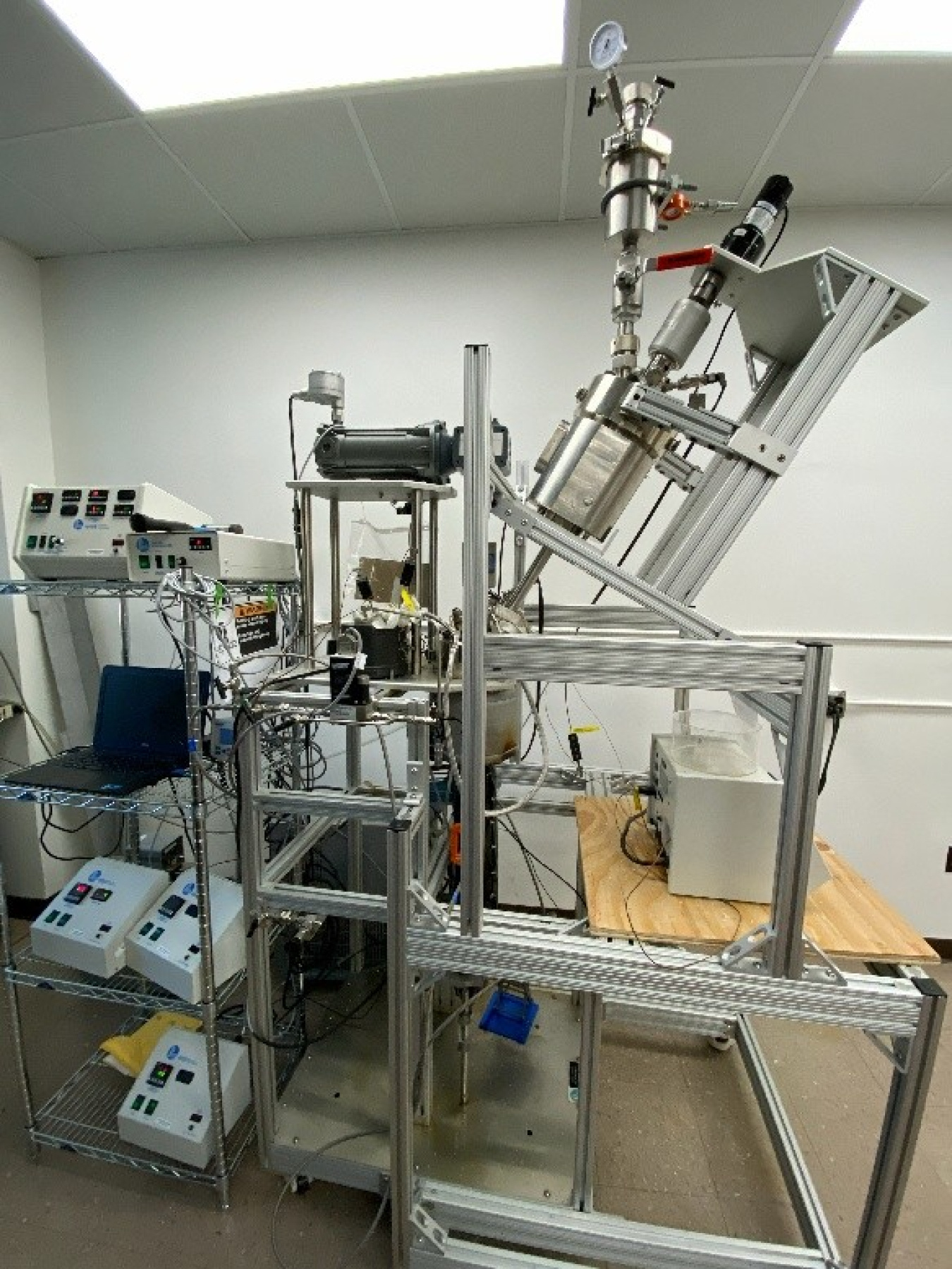
Through the team’s manufacturing process, shredded or pelletized plastic film waste is added to a small reactor. Mixing the plastic with a catalyst and hydrogen gas creates a product that can be distilled into liquid diesel. This diesel is engine-ready with low sulfur and aromatic content, making it more efficient and reducing particulate soot. A plastic manufacturer who needs to dispose of faulty or unusable products or a municipality that needs to handle plastic film it can’t recycle could reduce disposal costs through this method. The resulting fuel is cheaper than purchasing it separately and paying for refinement and transport. This technology could also help power operational equipment, backup generators, or fleet vehicles.
Sadow said the Energy I-Corps program is helping the team overcome the notorious commercialization “valley of death” by conducting the de-risking that potential investors are looking for. To help support market adoption, the team:
- Independently validated fuel quality through ASTM D975 testing and demonstrated compatibility with conventional diesel engines
- Generated real-world performance, emissions, utility consumption, and operating cost data using post-industrial plastic waste from American Packaging Corporation
- Strengthened collaboration among Ames National Laboratory, industry, municipal stakeholders, and potential end users
- Generated data to support future techno-economic analysis, life-cycle assessment, and commercialization
- Reduced technical and commercial risk, advancing deployment of modular plastic-to-diesel production systems.
Building on the results generated by this effort, Sadow’s team has secured additional DOE funding (through the former Bioenergy Technologies Office, now known as the Alternative Fuels and Feedstocks Office) to support the scale-up of the technology and further commercialization activities.
“The funding from DOE will help us build a reactor at 10 times the scale of our current device that could run almost continuously,” Sadow said. “We will be able to run more tests, more troubleshooting, and more de-risking, as well as conduct demonstrations for potential customers or partners.”