



LM collaborates with Nuclear Regulatory Commission, university researchers in flume study
October 20, 2026 Estimated Read Time min
When uranium mining and milling operations, nuclear facilities, or industrial processes generate radioactive waste, safely storing those materials for up to a thousand years is a massive challenge.
One solution is to build an engineered disposal cell to contain the waste. The Office of Legacy Management conducts long-term stewardship and maintenance at a number of these cells that contain low-level radioactive waste under the Uranium Mill Tailings Radiation Control Act (UMTRCA).
To protect the buried waste, covers are multilayered, with the top layer traditionally composed of heavy rocks, or “riprap,” to prevent water from washing away the protective soil layers and introducing radioactive materials to the environment.
However, severe storms bring intense rainfall and flowing water that can damage a disposal cell cover. Determining what kinds of materials and configurations will withstand these forces cannot be left to guesswork. Therefore, LM’s Applied Studies and Technology (AS&T) scientists initiated a series of flume studies to better understand erosion at LM-managed disposal cells.
“Over time, significant storm water run-off moving across a rock-covered slope can undermine and dislodge the protective cover, creating holes, voids, and/or pipes,” said AS&T Program Sponsor Angelita Denny. “Our collaborative team is performing flume studies to proactively address this kind of failure.”
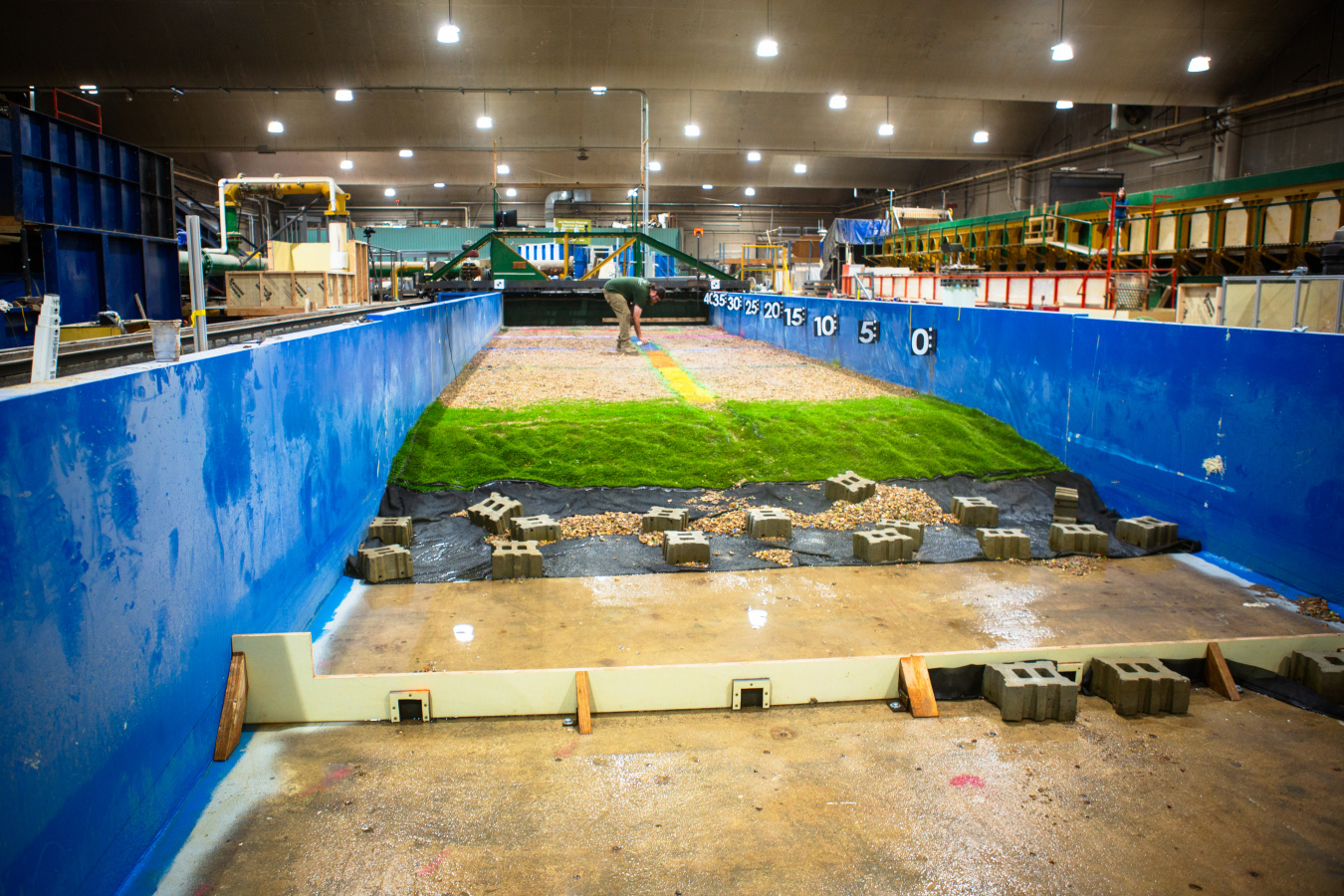
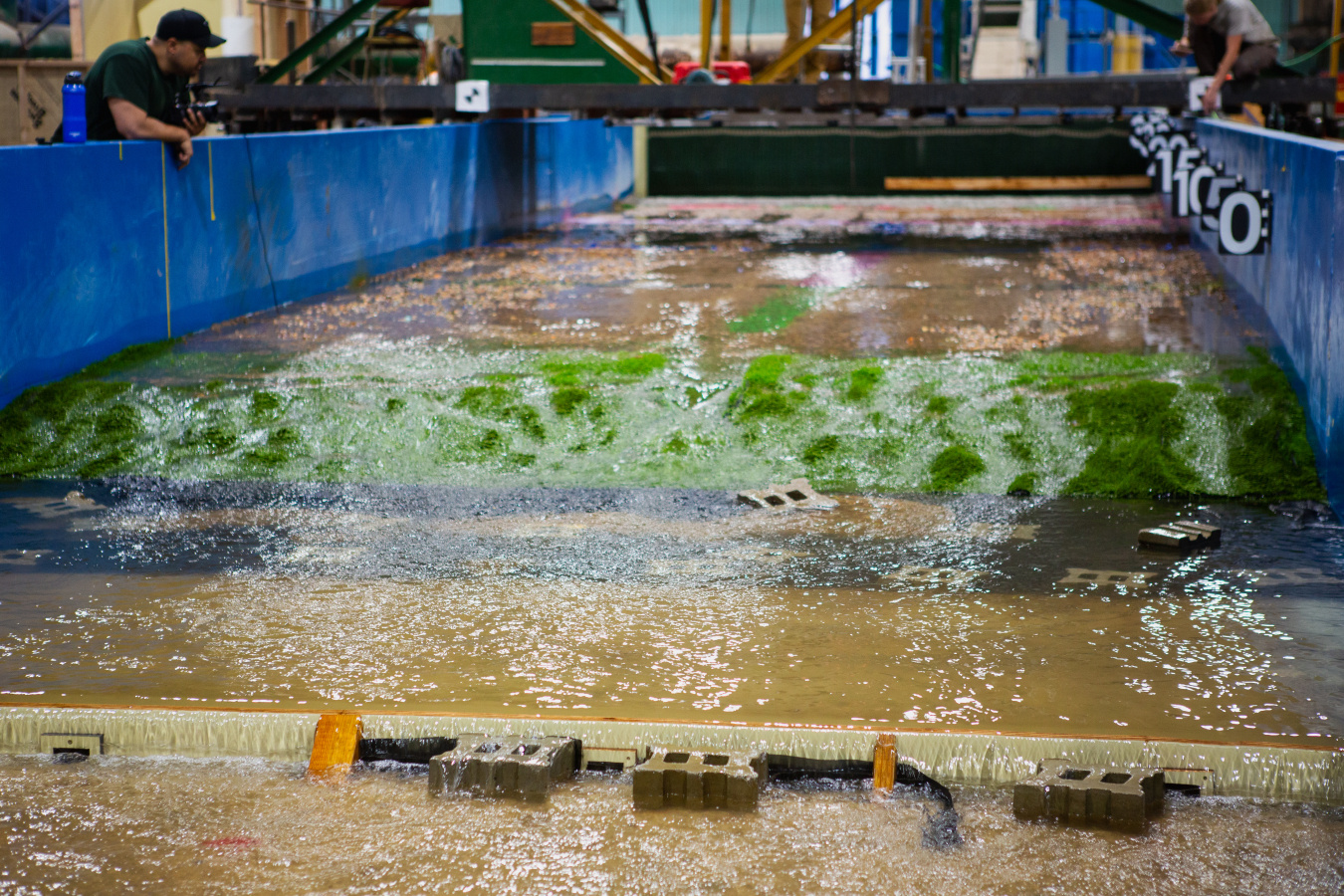
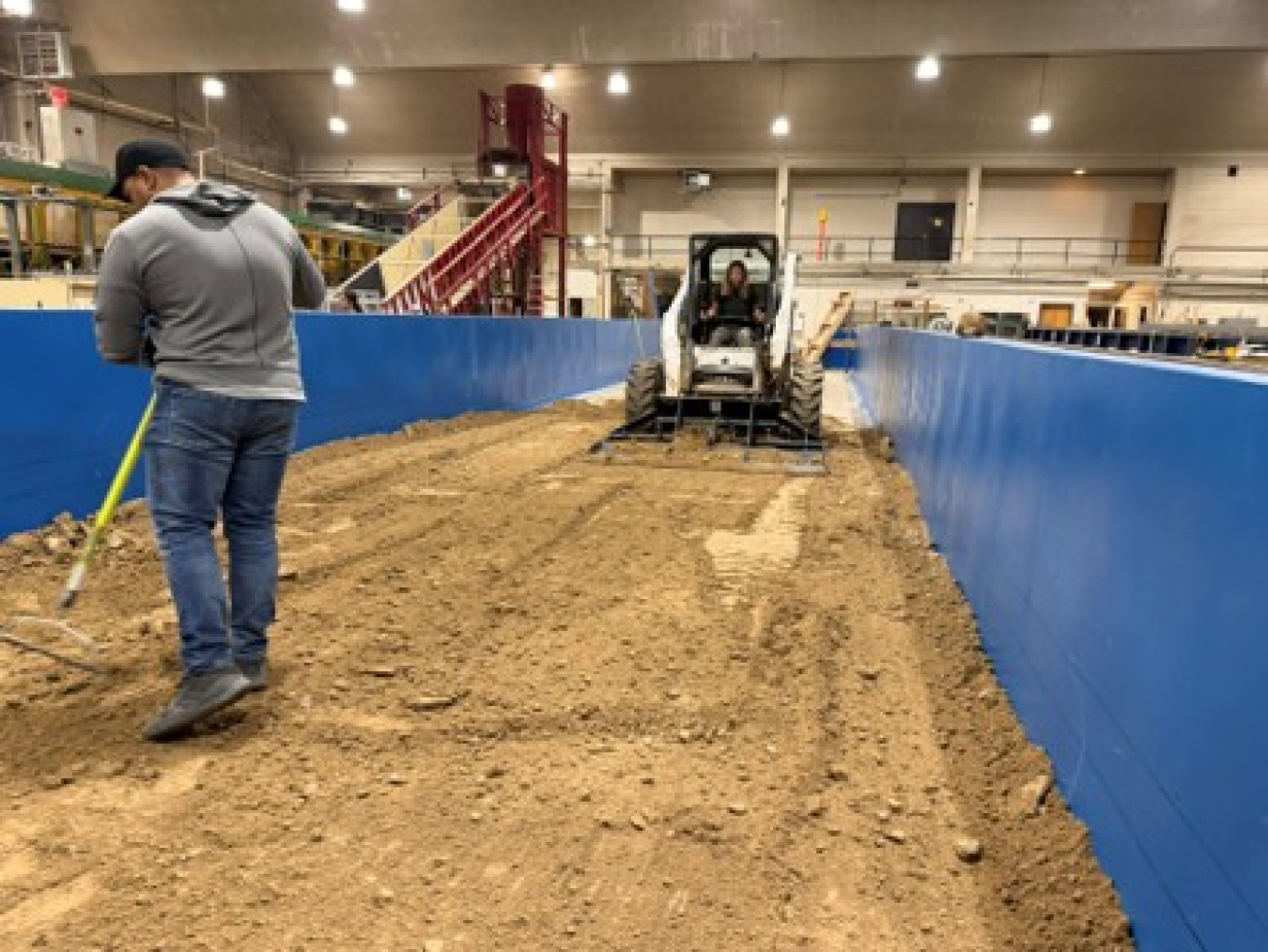
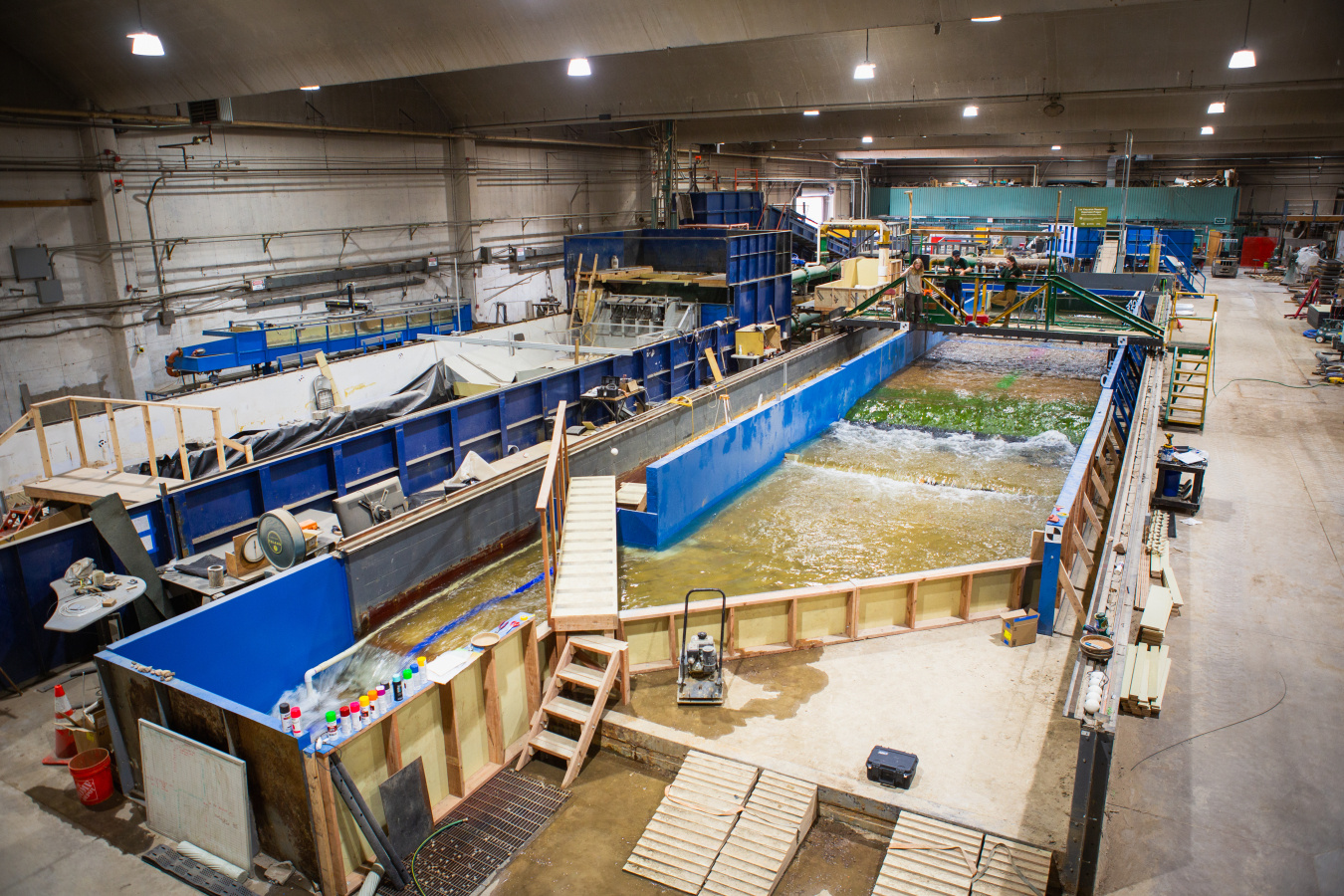
A flume is an artificial channel in which scientists construct embankments to the same specifications as actual disposal cells and run large volumes of water over them in a laboratory setting. The scientists simulate varying water flow rates, slope angles, cover layer configurations, rock-soil ratios, and other variables to observe when and how erosion affects the embankments.
In the 1990s, the Nuclear Regulatory Commission (NRC) collaborated with researchers at the Colorado State University (CSU) Hydraulics Laboratory to conduct flume studies that resulted in regulatory guidance, or NUREGs, for traditional riprap-armored disposal cells.
LM is again working with the CSU Hydraulics Lab, in partnership with NRC in the current flume study – or Reasonable Assurance for Design and Repair (RADAR) project – to test new disposal cell designs. In 2026, this collaboration also provided funding for an intern, who participated in LM’s summer workforce development activities.
Unlike the 1990s research, the current flume studies are testing alternative cover designs that include rock-soil mixtures for the top layer, as opposed to plain riprap. Alternative evapotranspiration (ET) covers that incorporate rock-soil mixtures are being proposed and LM doesn’t have data to show how rock-soil mixtures withstand erosion, what the ideal rock‑soil ratio is, how big the rocks should be, and the roles soil properties play.
Through flume experiments, scientists measure critical thresholds such as water velocity and shear stress required to erode rock and soil layers. Once erosion occurs, repair methods are tested for erosion resistance. The insights from these controlled tests allow LM, AS&T, and NRC to develop criteria for new disposal cell designs, exploring the possibility of retrofitting existing rock-armored cells with soil, and creating procedures for repairing disposal cells if they experience erosion.
“Rather than waiting for major storms to reveal potential weaknesses, flume test data can help LM predict which sites might be vulnerable to erosion and address it proactively,” said AS&T Project Manager Ellen Garcia.
Ultimately, flume studies provide site managers and regulators with scientific evidence to make informed decisions about long-term maintenance and monitoring. By connecting laboratory results to real-world environmental management, flume studies help ensure that waste materials remain safely contained, thereby protecting communities and ecosystems for future generations.