



Learn how America's nuclear energy workforce is growing and wages are rising as the nation enters a nuclear renaissance thanks to President Trump’s leadership.
October 20, 2026 Estimated Read Time min

America's nuclear energy workforce is growing, and demand for workers with specialized technical skills is on the rise.
That's one of the findings in the 2026 U.S. Energy & Employment Report (USEER), an annual report published by the U.S. Department of Energy (DOE) that breaks down statistics across the energy industry, including employment numbers, workforce demographics and wage data for all fuel sources and electric power generation sectors.
The 2026 report found that nuclear energy outpaced broader trends in 2025, adding jobs and raising wages even as overall employment in electric power generation declined.
Read on for four key takeaways from the report.
1. Nuclear energy employment is growing.
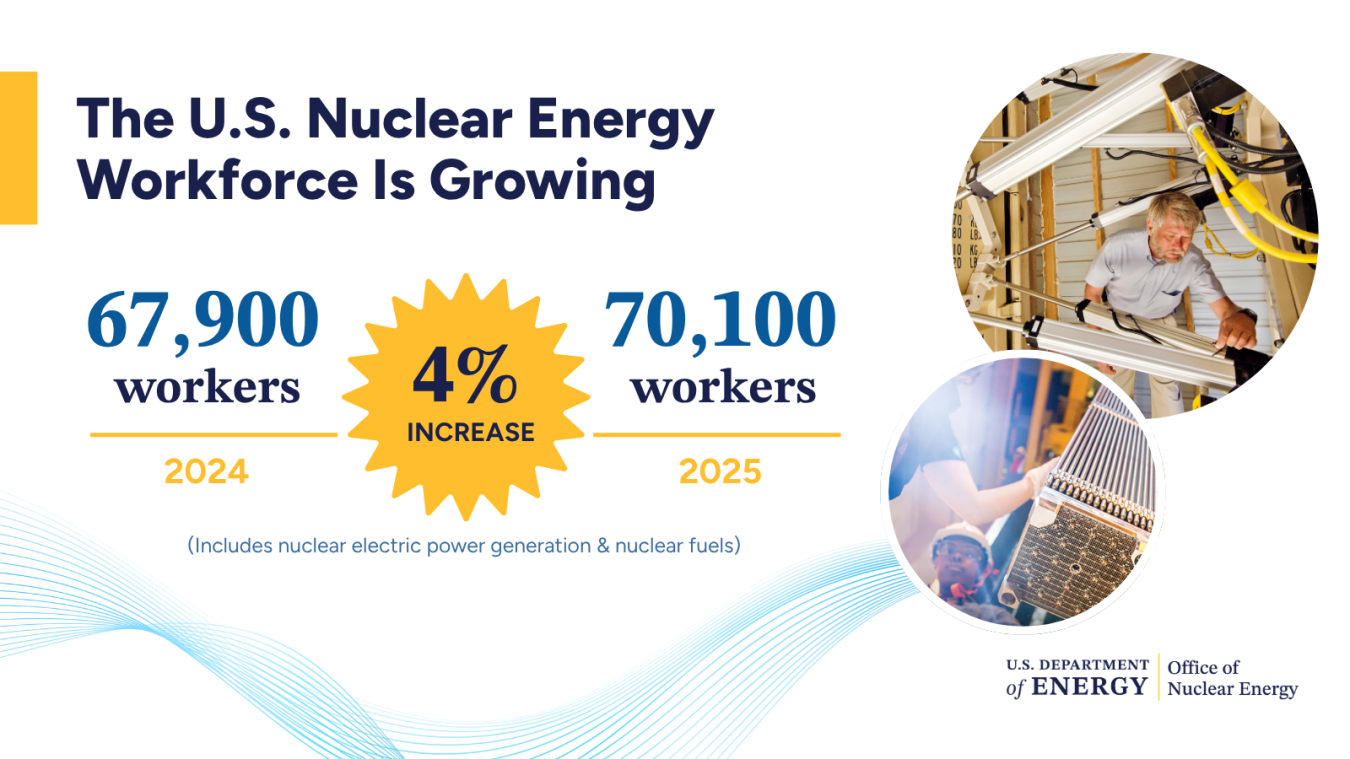
The nuclear energy sector grew to more than 70,000 workers in 2025, according to the USEER.
Employment in nuclear power generation rose 4% from 2024, even as employment in electric power generation overall dropped by 2%. That's part of a steady climb: the nuclear power generation workforce has grown 6% since 2022.
Utilities continued to employ the largest share of nuclear energy workers.
Nuclear fuels employment dipped 1.7% from 2024 but increased 5.7% from 2022 levels. Notably, employment in used nuclear fuel storage doubled, adding 100 workers to the subsector.
2. Nuclear jobs pay well — and pay is rising.
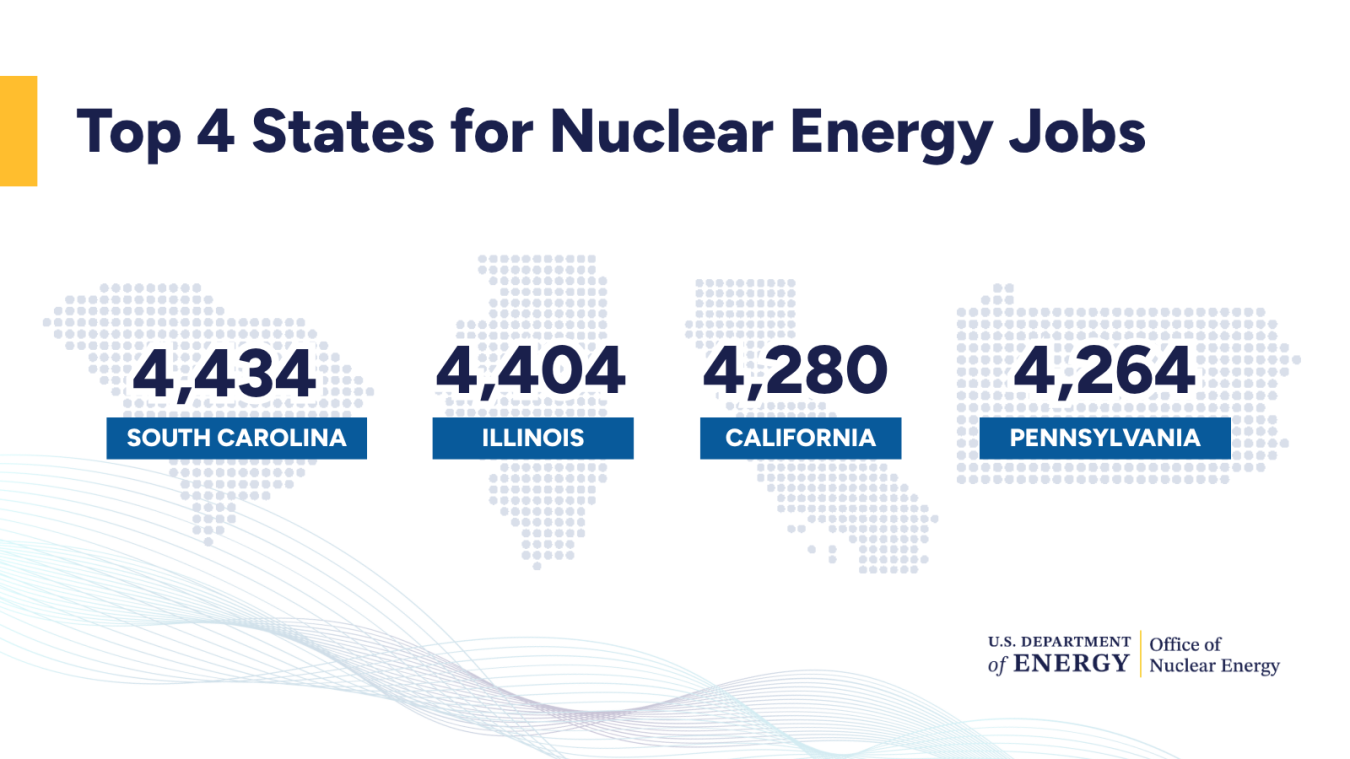
Nuclear careers have long ranked among the highest-paying jobs in the energy sector. This year's report shows wages for nuclear utility workers are now paying even better.
Inflation-adjusted wages for nuclear utilities jobs grew 2.7% in 2025. That's well above the 1.5% inflation-adjusted wage growth reported nationally.
3. The nuclear energy sector needs more workers with the right skills.
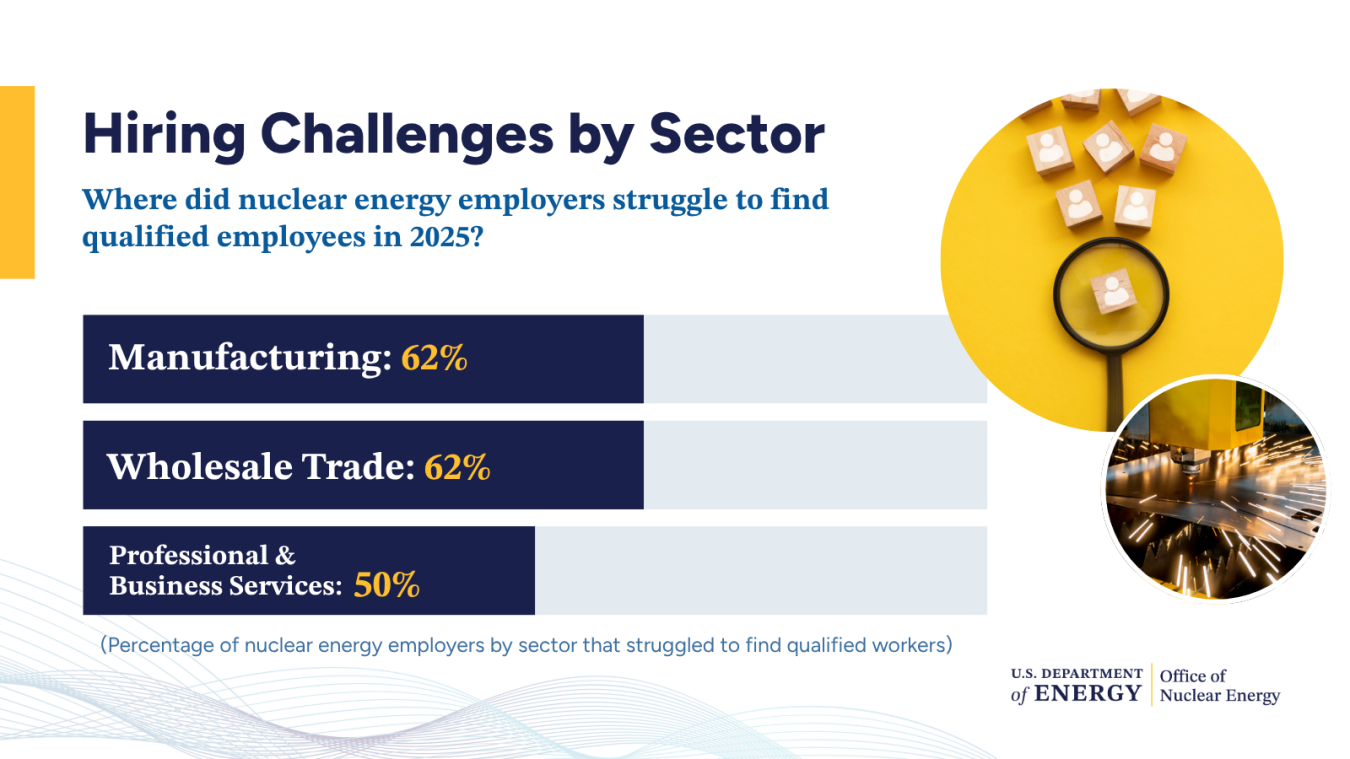
Both nuclear fuels and nuclear electric power generation reported 65% of employers experiencing some hiring difficulty in 2025. Engineers and scientists were the toughest positions to fill, with 32% of nuclear fuels employers reporting challenges in hiring. Additionally, 17% of employers in nuclear electric power generation reported difficulty finding technicians and mechanical support workers.
DOE is already building that pipeline. Since 2009, the Department’s Nuclear Energy University Program has provided more than $1 billion in university support. In addition, DOE established the Nuclear Reactor Safety Training and Workforce Development Program in FY 2025, which funds nuclear safety training and work-based learning such as apprenticeships, and awarded more than $49.7 million to 10 university-led projects earlier this year.
4. As we build more nuclear plants, competition for skilled workers could increase.
While engineers and scientists were the most difficult roles to hire last year, that could change as the U.S. builds more new nuclear plants. Across the energy sector, employers reported acute labor shortages in construction and electrically skilled occupations. The USEER found that construction jobs in fast‑growing energy sectors were among the toughest to fill. In the broader electric power generation sector, 76% of construction firms reported hiring challenges.
As nuclear energy projects expand, employers could face increased competition for skilled workers from other growing industries, including data centers, infrastructure development and advanced manufacturing. These industries rely on overlapping pools of electricians, engineers, technicians, construction workers and other skilled tradespeople.
President Trump’s 2025 executive orders underscore the importance of investing in the next generation of energy workers and direct DOE and other government agencies to help grow the nuclear workforce. Key priorities include expanding training programs, apprenticeships, and opportunities for students to gain hands-on experience at national labs.
The Administration’s push to add more nuclear power to the grid, combined with investments in workforce development, creates important long-term employment opportunities and makes America’s nuclear renaissance a reality.
Read the full report for more insights into the U.S. energy workforce.