



Savannah River Fact Sheet on Operational Closure of Radioactive Liquid Waste Tanks
July 21, 2026 Estimated Read Time min
The Savannah River Site (SRS) is home to the first operational closure of a radioactive liquid waste tank in the nation, a major milestone toward stabilizing Cold War legacy facilities. Operational closure is defined as:
- The U.S. Department of Energy (DOE), South Carolina Department of Environmental Services (SCDES), and the U.S. Environmental Protection Agency (EPA) mutually agree that waste has been removed to the extent practicable from an engineering perspective;
- The waste tank has been isolated from the associated tank farm’s Waste Transfer System, Chemical Addition System and
support systems; and, - The waste tank has been stabilized by filling with grout.
Tank 20, the first high level waste tank operationally closed, was certified closed by SCDES (formerly South Carolina Department of Health and Environmental Control) on July 31, 1997. SCDES certified operational closure of Tank 17 in December 1997. Both tanks, located in the Site’s F Tank Farm, were constructed in 1958 with Tank 17 placed into service in 1961 and Tank 20 in 1960. These closed tanks are part of the 51 total underground tanks built in the Site’s F and H Tank Farms to store radioactive liquid waste generated from the production of special nuclear material. Tanks 18 and 19, operationally closed in 2012, were F Area tanks built at the same time as Tanks 17 and 20 and had a similar service history.
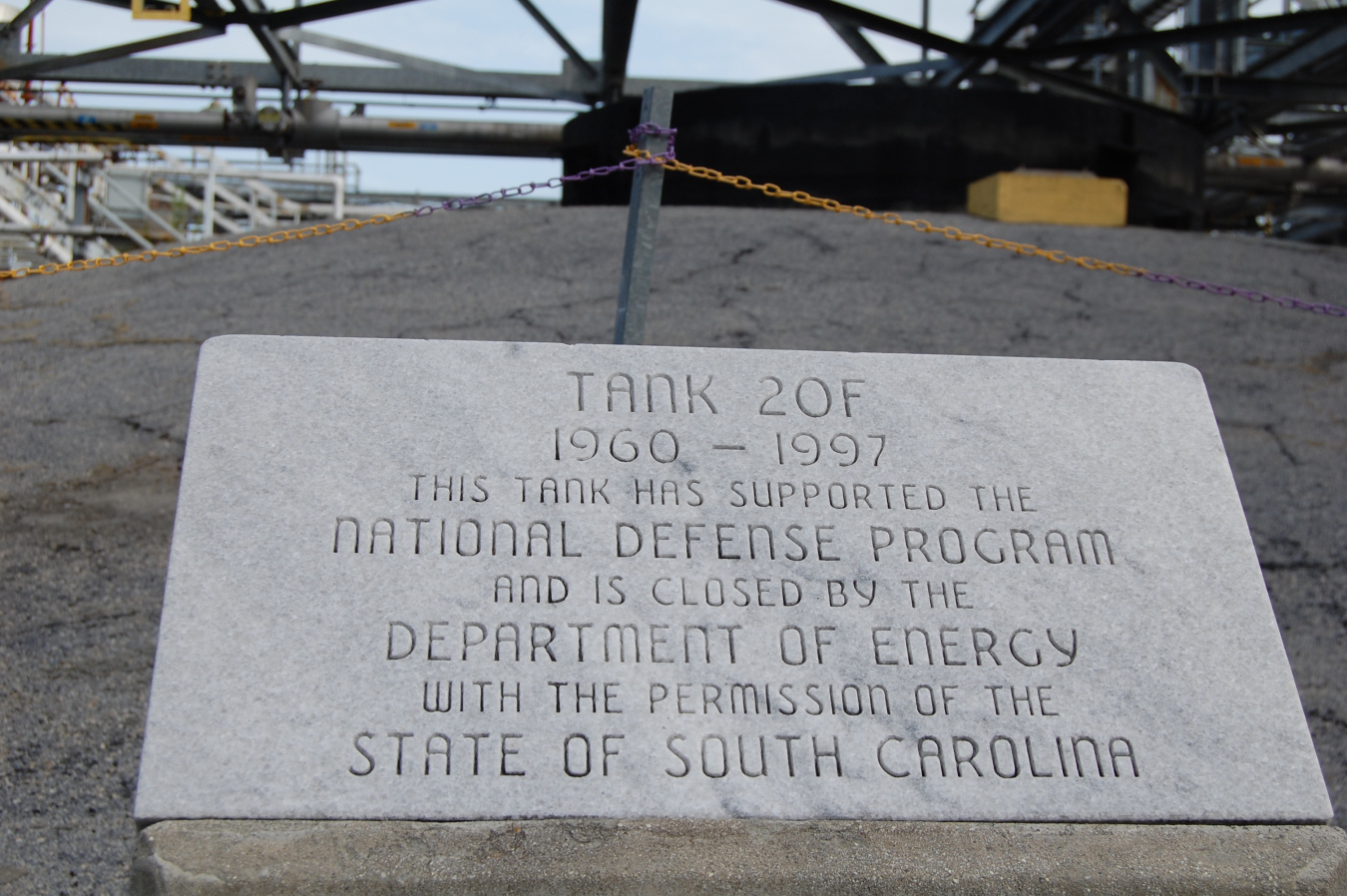
Tank 20, the first high level waste tank operationally closed, was certified closed by the SCDHEC (now SCDES) on July 31, 1997.
Tanks 5 and 6, operationally closed in 2013, were also F Area waste tanks built in the mid-1950s with Tank 5 placed into service in 1959 and Tank 6 in 1964. Tanks 12 and 16 are in H Tank farm and were operationally closed in 2016 and 2015, respectively. Tank 12 was placed into service in September 1956. Tank 16 was placed into service in May 1959.
The DOE, SCDES, EPA, U.S. Nuclear Regulatory Commission, SRS workers, and SRS stakeholders worked closely together to implement strict closure requirements that support all state and federal regulations for operational tank closure and protect people and the environment long into the future.
Before the operational closing of the tanks can begin, the bulk of the radioactive waste must be removed for treatment and stabilization using SRS processing facilities, a milestone called Preliminary Cease Waste Removal (PCWR).
PCWR is a regulatory milestone for old-style tanks that designates agreement between DOE, EPA, and SCDES that, based on preliminary information, there is reasonable assurance that performance objectives for tank closure will be met.
This regulatory concurrence also means that work can begin on the sampling and analysis phase for these tanks as part of the tank closure process. This next phase will verify these conclusions, based on laboratory analysis of any remaining material, and final residual volume determination, prior to stabilization and final isolation of the waste tank.
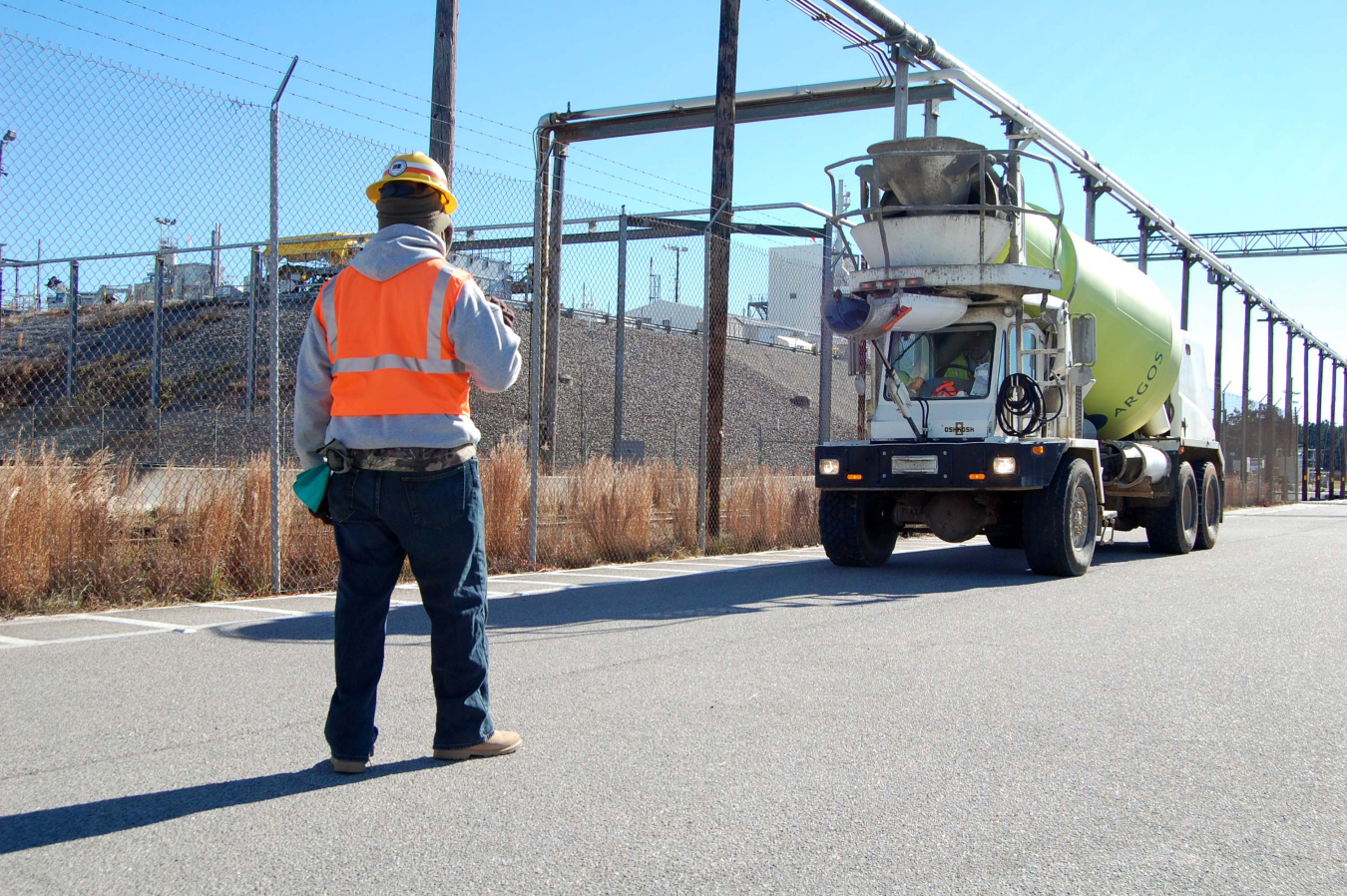
The final operational closure activity begins with workers pouring specially formulated grout (a cement-like substance) into the approximately one-million-gallon capacity tank.
PCWR has been completed on Tank 3, Tank 4, Tank 8, Tank 9, Tank 10, Tank 11, Tank 14, and Tank 15 — all seven to 27 months ahead of the agreed-upon deadlines outlined in the SRS Federal Facility Agreement (FFA). The agreement establishes a procedural framework, including liquid waste-tank milestone agreements, such as the schedule for waste removal and operational tank closures, and other site cleanup priorities.
Following completion of PCWR in a tank, operational closure activities continue with removal of the remaining heel waste material using either mechanical or chemical cleaning methods to the extent practical in accordance with federal requirements and closure plans established with SCDES. The small amount of waste that remains is characterized and documented.
The final operational closure activity begins with workers pouring specially formulated grout (a cement-like substance) into the tank.
Over the course of several months, the tank fills with grout, and tank top openings are sealed. This special grout stabilizes the tank and its surroundings, as it fills the tank with a solid material that will not collapse. The solidified grout also impedes the migration of any residual waste, which reduces risks to people and the environment by securing any residual waste in the tank minimizing the potential for groundwater contamination in the future.
Radioactive liquid waste in the SRS tank farms is concentrated to reduce its volume. Approximately 32 million gallons of radioactive liquid waste is stored currently in the remaining 43 underground carbon-steel waste tanks.
New technology and tools continue to be built, tested, and deployed to remove waste from the tanks. In addition, special
grout testing has helped determine how to best add the grout into the tanks to secure the remaining residual material and protect the tank structure.
The Site’s F and H Tank Farms store radioactive liquid waste left over from Cold War nuclear material production.
Radioactive sludge waste removed from tanks is washed and treated, then sent to the SRS Defense Waste Processing
Facility (DWPF), where it is immobilized in a glass form for safe storage and eventual long-term disposal in a federal repository. Approximately 92 percent of the waste in the tanks is salt waste, which is also removed as part of the operational tank closure process.
Beginning radioactive operations in January 2021, the Salt Waste Processing Facility (SWPF) will process the Site’s remaining salt waste inventory. SWPF processes radioactive liquid waste on a large scale in a shielded facility capable of handling salt with higher levels of radioactivity.
The decontaminated salt solution from SWPF is transferred to the Saltstone Production Facility for treatment by mixing with dry materials, forming a grout. The grout is transferred to Saltstone Disposal Units where it hardens into saltstone for permanent disposal.
A broad range of efforts to operationally close waste tanks per agreements with SCDES and EPA are in progress. Ninety-five percent of the tanks are in various stages of the waste retrieval and closure process, including tank cleaning, field modification, or processing support.
Two ancillary structures in F Tank Farm called diversion boxes were operationally closed and entombed in 2022. Diversion boxes contain a series of connection points that allow radioactive waste to be transferred from one tank or facility to another.
The Site’s mission is to operationally close all waste tanks.