



The Hanford Waste Treatment Plant has reached a major commissioning milestone, successfully solidifying more than 100,000 gallons of Hanford tank waste into glass. May 26, 2026
Office of Environmental Management
May 26, 2026 Estimated Read Time min
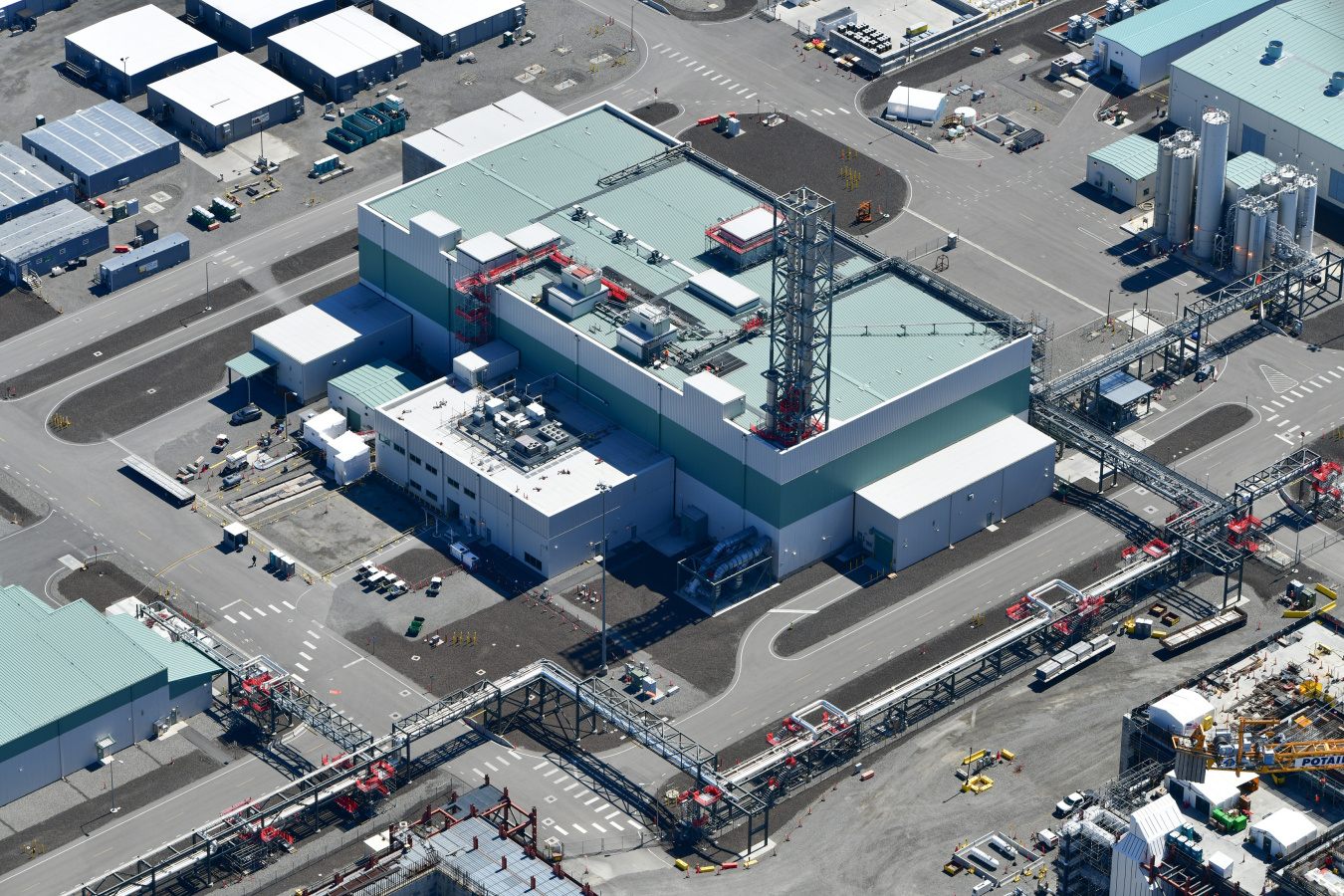
Crews at the Hanford Waste Treatment Plant have immobilized 100,000 gallons of tank waste at the Low-Activity Waste Facility, pictured, since beginning hot commissioning in October 2025.
RICHLAND, Wash. — The Hanford Waste Treatment Plant (WTP) has reached a major commissioning milestone, successfully solidifying more than 100,000 gallons of Hanford tank waste into glass. The achievement reflects strong momentum in the Hanford mission to protect people and the environment while supporting the site’s long-term transition from legacy cleanup to future revitalization.
"This achievement is a testament to the dedication and expertise of our team. Each gallon of immobilized waste brings us closer to a cleaner, safer environment and revitalized community,” said Brian Hartman, WTP project director and senior vice president with contractor Bechtel National Inc., which designed, built and is commissioning the plant.
Treating waste through vitrification supports Hanford’s priorities of safely remediating contaminated sites while delivering measurable progress for taxpayers. It reinforces Hanford’s role in the cleanup mission by addressing complex environmental challenges with sustained performance.
"Treating 100,000 gallons is more than just a number; it represents our commitment to protecting the Columbia River and Tri-Cities community for future generations," added Mat Irwin, Hanford Field Office assistant manager for tank waste operations.
The waste being treated is part of the 56 million gallons of radioactive and chemical waste generated by plutonium production during World War II and the Cold War and stored in aging underground tanks located a few miles from the Columbia River. This progress is part of dual glass-plus-grout solutions that are advancing the Hanford tank waste mission.
The Bechtel-led team has operated the plant in extended hot commissioning since October 2025. The hot commissioning process will continue over the next year, during which the team will build production consistency and establish a steady rhythm for safe and sustained operations.
Inside the Low-Activity Waste Facility’s two 300-ton melters, radiological and chemical waste is combined with glass-forming materials and then heated to 2,100 degrees Fahrenheit.
That process, called vitrification, transforms the waste into a stable glass form and seals it in stainless steel containers, each of which is 4 feet wide and 7.5 feet tall, weighing approximately 7 metric tons when filled. The containers are delivered to Hanford’s Integrated Disposal Facility for long-term disposal.
The plant facilities can be viewed using the self-guided Hanford Virtual Tour available here.
To receive the latest news and updates about the Office of Environmental Management, submit your e-mail address.