



Through an interagency agreement, the U.S. Department of Energy’s Carlsbad Field Office has transferred three large-platform lithium-ion batteries from its Waste Isolation Pilot Plant in New Mexico to the National Institute of Occupational Safety and Health Pittsburgh Mine Research Division for a first-of-a-kind study to develop real world knowledge of the nature and risks of large-scale battery fires.
Office of Environmental Management
November 3, 2026 Estimated Read Time min
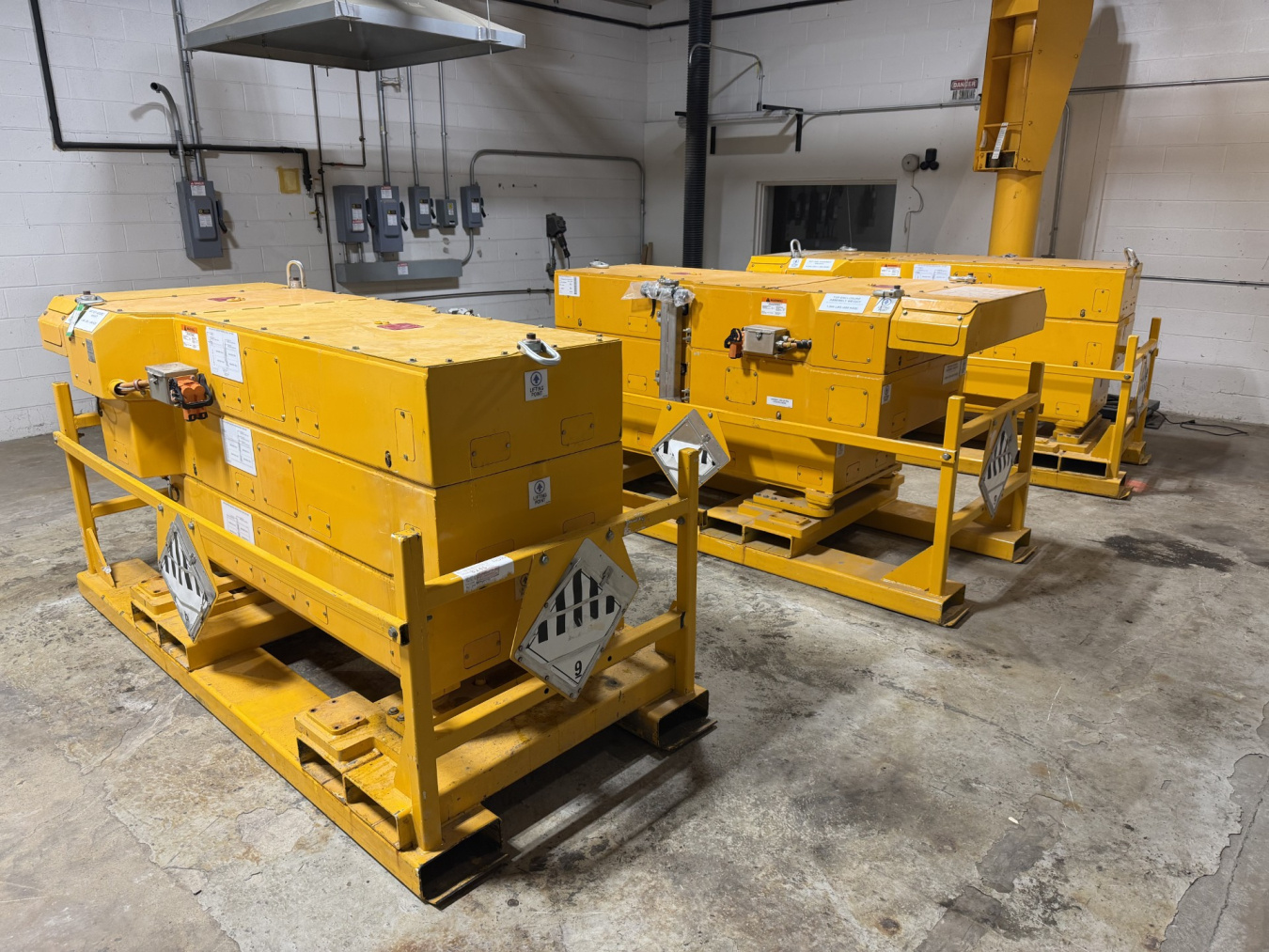
The large lithium-ion batteries transferred from the Waste Isolation Pilot Plant in New Mexico are shown in storage at the National Institute of Occupational Safety and Health Pittsburgh Mine Research Division in Bethel, Pennsylvania, for future testing.
DOE and National Institute for Occupational Safety and Heath collaborate to advance battery safety research
CARLSBAD, N.M. — Through an interagency agreement, the U.S. Department of Energy’s Carlsbad Field Office has transferred three large-platform lithium-ion batteries from its Waste Isolation Pilot Plant (WIPP) in New Mexico to the National Institute of Occupational Safety and Health Pittsburgh Mine Research Division for a first-of-a-kind study to develop real world knowledge of the nature and risks of large-scale battery fires.
Previous research has been limited to testing medium-sized battery packs, with results used to estimate the performance and fire risk of larger batteries. While that research provided valuable information, the true nature of large-scale battery fires remains difficult to predict and understand.
The landmark research is vital to advancing the safety of underground facilities such as mines, tunnels, repositories and research facilities, including those under DOE jurisdiction where heavy-duty battery-electric vehicles are becoming more common. Among them is WIPP, the nation’s only deep geologic repository for the permanent disposal of defense-related transuranic waste.
The research findings could support development of targeted emergency evacuation, response protocols and occupational safety and health related to underground spaces.
To receive the latest news and updates about the Office of Environmental Management, submit your e-mail address.