



The U.S. Department of Energy’s Savannah River Site is ready to begin chemical and mechanical preparations for operations in H Canyon, a critical milestone to produce high-assay low-enriched uranium for America’s next generation of nuclear reactors.
Office of Environmental Management
November 24, 2026 Estimated Read Time min
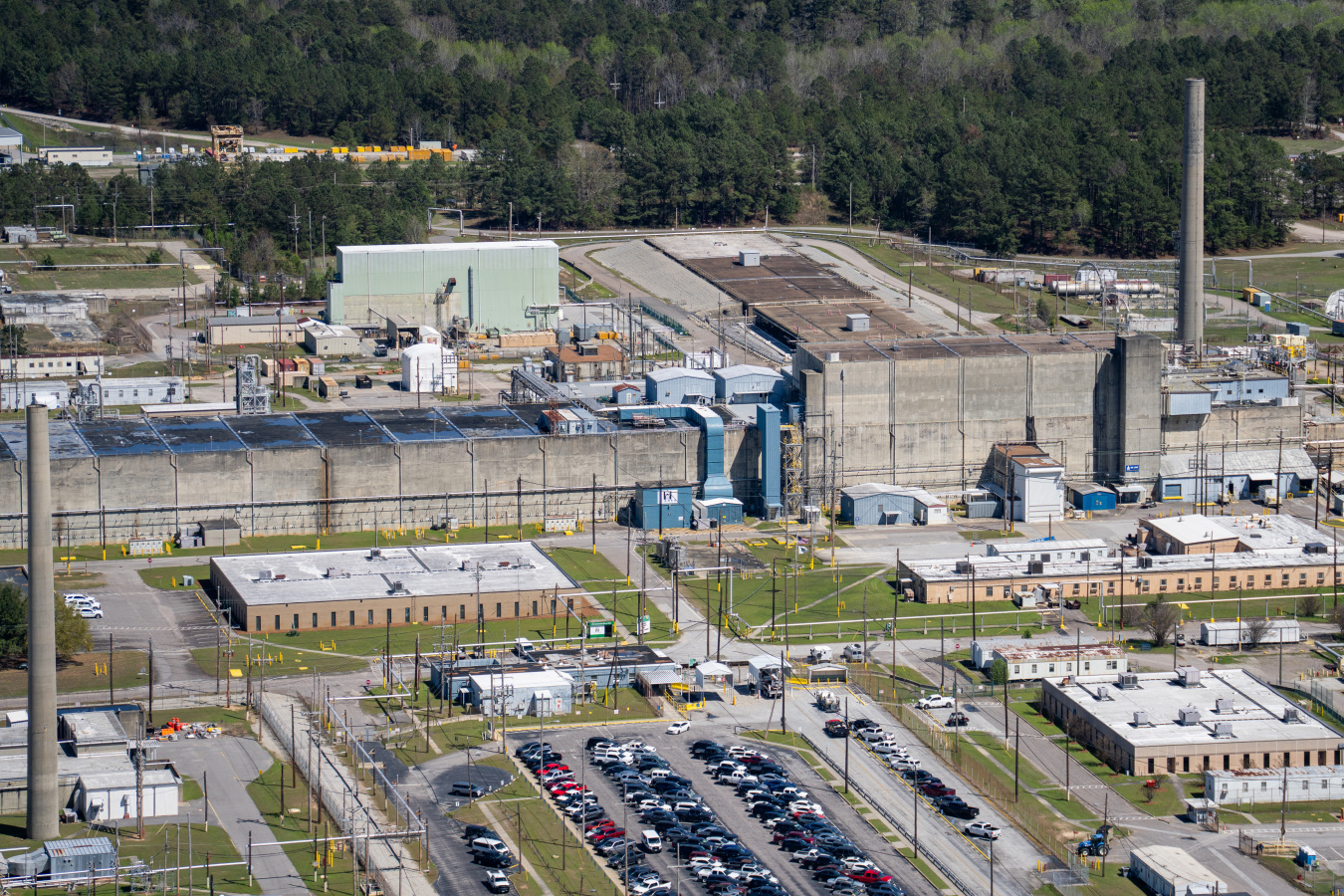
A view of H Canyon, where work is underway to produce high-assay low-enriched uranium for America’s next generation of nuclear reactors.
AIKEN, S.C. —The U.S. Department of Energy’s (DOE) Savannah River Site (SRS) is ready to begin chemical and mechanical preparations for operations in H Canyon, a critical milestone to produce high-assay low-enriched uranium (HALEU) for America’s next generation of nuclear reactors.
The milestone builds on the February decision by DOE’s Office of Environmental Management (EM) to restart uranium recovery operations at H Canyon, supporting President Donald Trump’s executive orders to reinvigorate the nation’s nuclear industrial base and deploy advanced reactor technologies for national security.
Through the Fuel Utilization, Extraction, Leverage (FUEL) mission, SRS will recover uranium from used nuclear fuel stored in L Basin, the site’s underwater disassembly and storage basin, and produce up to 22.8 metric tons of HALEU, strengthening the nation’s capacity to supply reliable, domestically produced fuel for advanced reactors.
“Under President Trump’s leadership, the Savannah River Site is demonstrating how legacy facilities and expertise can directly power America’s future,” said EM Assistant Secretary Tim Walsh. “Recovering uranium and producing HALEU reduces long-term cleanup risk and waste while providing the critical domestic fuel needed to jump-start the nation’s advanced reactors and secure our energy independence.”
This graphic shows how H Canyon at Savannah River Site will recover uranium from used nuclear fuel and produce up to 22.8 metric tons of high-assay low-enriched uranium.
H Canyon, which began operations in the early 1950s, is the only operating, production-scale, radiologically shielded chemical-separations facility in the United States. It is also the nation’s only facility currently capable of producing HALEU at this scale.
HALEU is essential to most advanced-reactor designs, including small modular reactors and microreactors. Expanding the domestic HALEU supply supports U.S. energy independence and helps meet anticipated demand as advanced reactors are deployed to strengthen the electric grid, including for energy-intensive technologies and data centers.
“H Canyon’s head end process is the gateway to the HALEU mission,” said Kevin Moeller, H Canyon and HB Line facility manager. “This is the first system in what will be a multiyear effort to produce HALEU.”
Head end is the initial chemical and mechanical preparation stage for material entering H Canyon’s separation process. Used nuclear fuel or target materials are received, dissolved and conditioned in heavily shielded equipment. Chemical additions and clarification steps prepare the resulting solution for subsequent processing.
“Our workforce has completed the extensive planning, maintenance, testing and readiness activities required to prepare this capability for operation,” Moeller said. “This accomplishment reflects the skill, commitment and mission focus of the H Area team who makes H Canyon uniquely prepared to support the nation’s advanced nuclear-energy goals.”
The uranium-bearing material processed through head end will produce clarified feed for two subsequent processes, first and second cycles. Following cycle operations, the recovered uranium will be blended with natural uranium to produce HALEU suitable for transfer to commercial industry partners for beneficial reuse in advanced reactors.
During this fiscal year, which began Oct. 1, the H Canyon team is preparing to begin first-cycle operations. First-cycle restart requires the reactivation of hundreds of operations and maintenance procedures, implementation of several complex design changes and completion of numerous maintenance activities.
“Restarting uranium recovery at H Canyon is a testament to the unparalleled capabilities and commitment of our Savannah River Site workforce,” DOE-Savannah River Manager Edwin Deshong said. “We’re not just safely managing legacy nuclear materials, we are actively turning them into the HALEU fuel necessary to drive America’s advanced reactor industry and strengthen national energy security.”
H Canyon has served the nation for decades by adapting its capabilities to meet evolving national priorities, said Janice Lawson, senior vice president for Environmental Management Operations at Savannah River Nuclear Solutions, the SRS managing and operating contractor.
“Through the FUEL mission, SRNS is helping jump-start the advanced-reactor industry while responsibly addressing legacy nuclear materials,” Lawson said. “This work demonstrates the flexibility of the Savannah River Site and the vital role its workforce plays in strengthening America’s energy future.”
In addition to supplying a critical fuel source for the advanced-reactor industrial base, the FUEL mission supports the site’s cleanup mission by reducing legacy nuclear materials and limiting the number of high-level-waste canisters needed for eventual disposal, lowering long-term risk and cost.
According to DOE, the nation’s “existing fleet of power reactors runs on uranium fuel that is enriched up to 5% with uranium-235 — the main fissile isotope that produces energy during a chain reaction. HALEU is enriched between 5% and less than 20% and is required for most U.S. advanced reactors to achieve smaller designs that get more power per unit of volume. HALEU will also allow developers to optimize their systems for longer operating cycles, increased efficiencies and better fuel utilization.”
-Contributor: Katie Gantt
To receive the latest news and updates about the Office of Environmental Management, submit your e-mail address.