



Heavy equipment and engineered design plans are not the only aspects of facility demolition at the U.S. Department of Energy’s Portsmouth Site. June 30, 2026
Office of Environmental Management
June 30, 2026 Estimated Read Time min
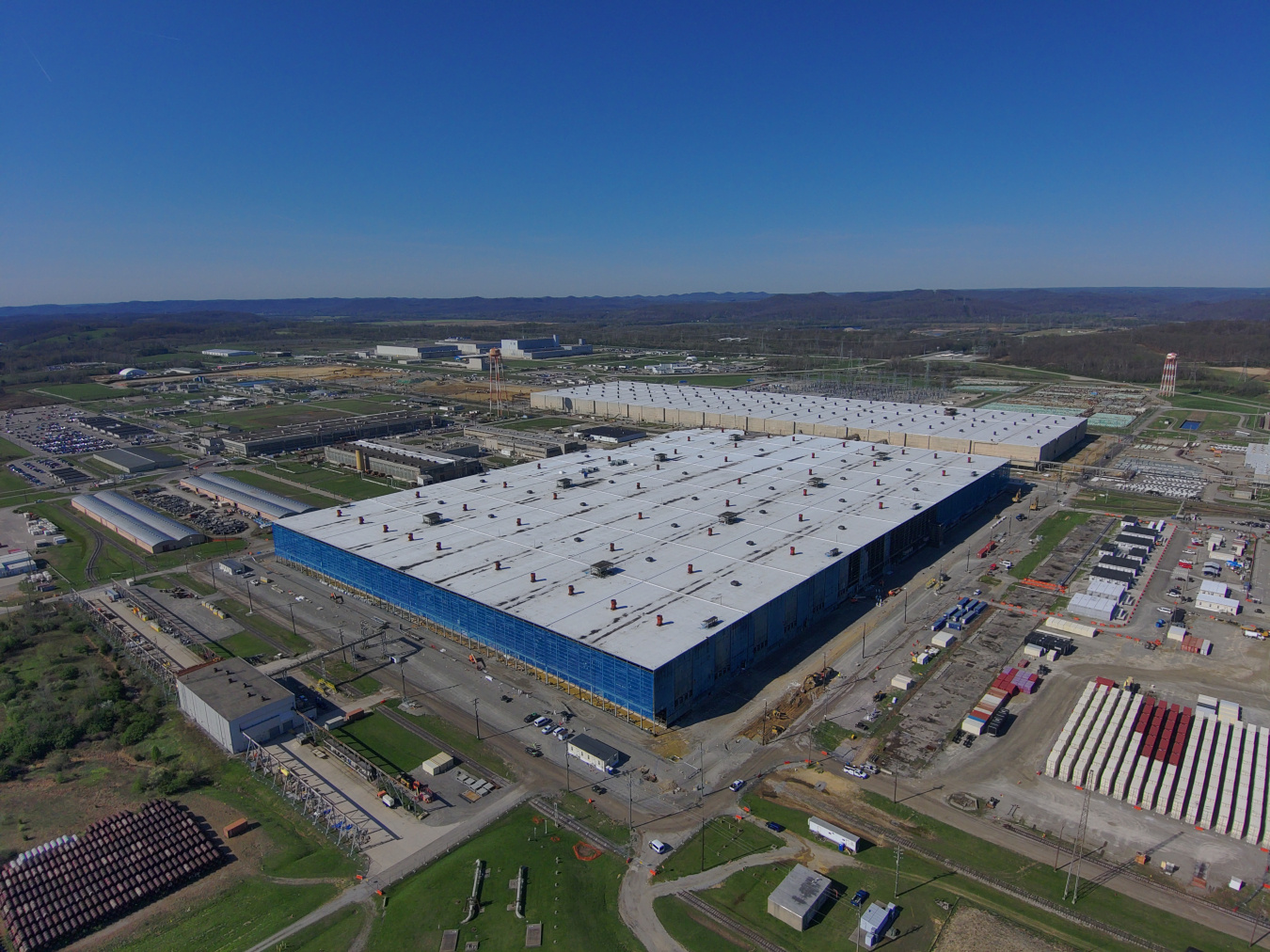
Part of the Portsmouth Site skyline turns blue as the east side of the X-333 Process Building is completely covered in netting. Crews put the material in place piece by piece as they removed transite panels from the building exterior.
PIKETON, Ohio — Heavy equipment and engineered design plans are not the only aspects of facility demolition at the U.S. Department of Energy’s (DOE) Portsmouth Site. Nearly 5,000 linear feet of blue netting stands out against the skyline as a vital safety component in knocking down X-333, the second of the site’s three process buildings set for teardown.
Crews completed many safety measures to prepare for demolition of the 33-acre X-333, among the largest in the DOE complex. They completed facility deactivation; installed fencing; removed above-grade structures and pads around the building; put in a perimeter liner, berm, and water collection and treatment system; added air monitors around the building; and applied fixative to maintain dust suppression.
The first step in structural demolition was removing nearly 15,000 transite panels that contained asbestos. As crews took down panels on the building’s exterior piece by piece, they installed the high-tenacity, flexible-plastic netting.
The netting is used alongside fixative and water applications for dust suppression during demolition, adding to the many safety measures in place to protect the workforce, community and environment.
“This building is so large, in some cases the transite will be removed more than a year before an area is demolished, so the netting keeps any remaining loose material, verified safe to remain inside the building during demolition, from blowing out of the building before an area is brought down,” Federal Project Director Christy Brown said.
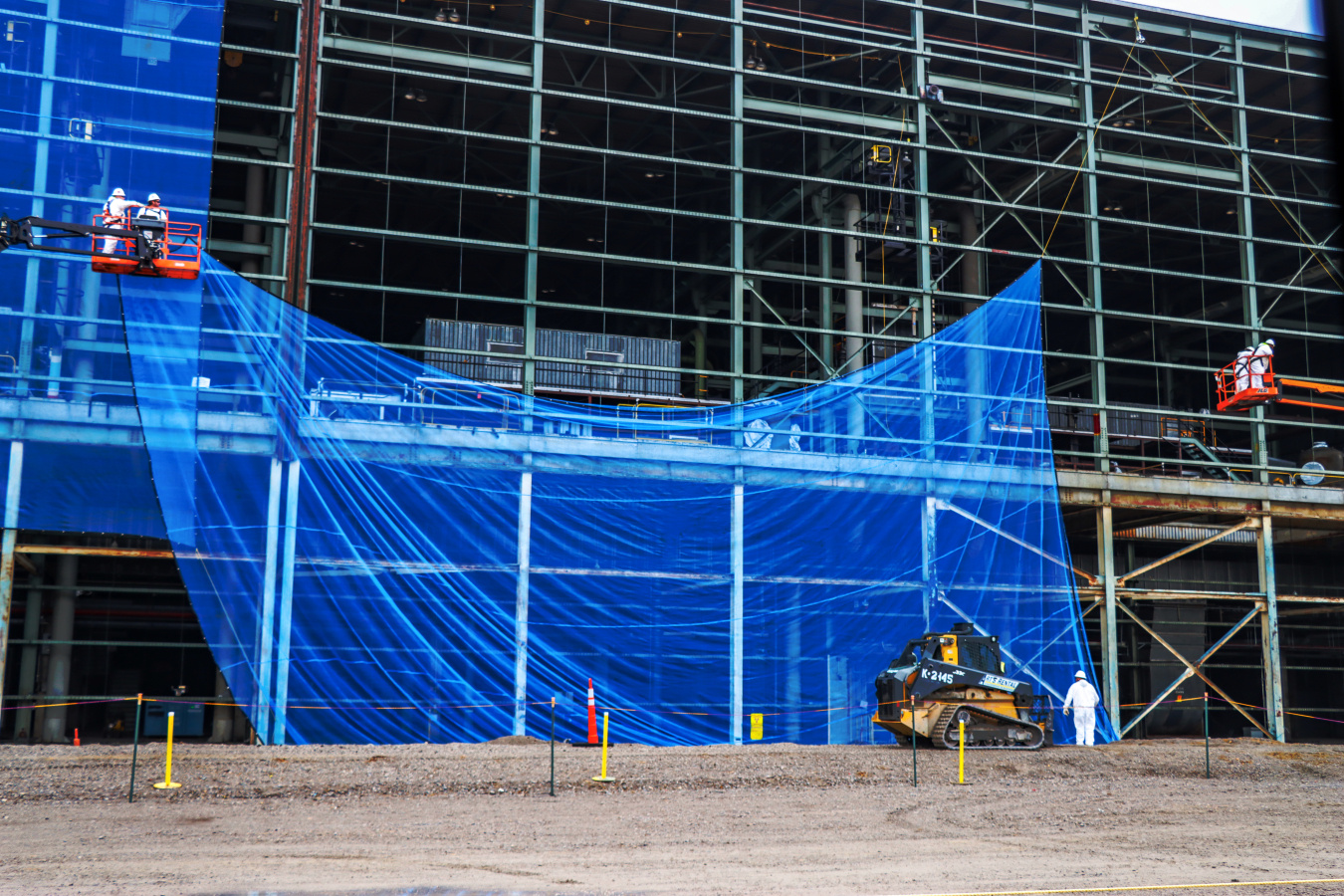
Crews use an aerial lift and pulley system to raise a panel of netting where it will stay until that portion of the X-333 facility is brought down. After demolition, the netting is placed in the On-Site Waste Disposal Facility with the rest of the building debris.
The netting comes in panels 100 feet wide and 60 feet long. It takes around 50 panels to cover the two-story X-333. Crews use an aerial lift and pulley system to raise a panel of netting where it will stay until the area is torn down. After demolition, the netting is placed in the On-Site Waste Disposal Facility with the rest of the building debris.
Covering the building with netting was found to be a best practice after it was used during the demolition of the X-326 Process Building. The additional layer of protection proved effective in that project.
“Our main goal is to clean up the site as safely and efficiently as possible,” Portsmouth Paducah Project Office Acting Deputy Manager April Ladd said. “Safety measures, like the netting, ensure we are protecting our workers and neighbors as we prepare the site for the next generation of energy.”
Demolition of X-333 is set to be completed in 2031.
-Contributor: Cindi Remy
To receive the latest news and updates about the Office of Environmental Management, submit your e-mail address.