



The Hanford Site’s complex operational landscape requires continuous innovation to ensure safe, compliant and efficient management of aging nuclear facilities.
Office of Environmental Management
November 3, 2026 Estimated Read Time min
RICHLAND, Wash. — The Hanford Site’s complex operational landscape requires continuous innovation to ensure safe, compliant and efficient management of aging nuclear facilities.
A recent drone roof inspection highlights the growing role of remote technology and the importance of proactive cross-contractor integration in advancing the One Hanford mission.
Initiated by Hanford Tank Waste Operations & Closure (H2C), it was the contractor’s first time using a drone as part of its facility condition inspection.
“Using drones gives Hanford a safer, smarter way to inspect aging facilities while reducing risk to workers,” said Vanessa Turner, assistant manager for mission support at the Hanford Field Office. “It replaces conventional manned inspections that historically exposed personnel to fall hazards. This approach supports the U.S. Department of Energy’s (DOE) mission by helping teams make faster, better decisions that protect people.”
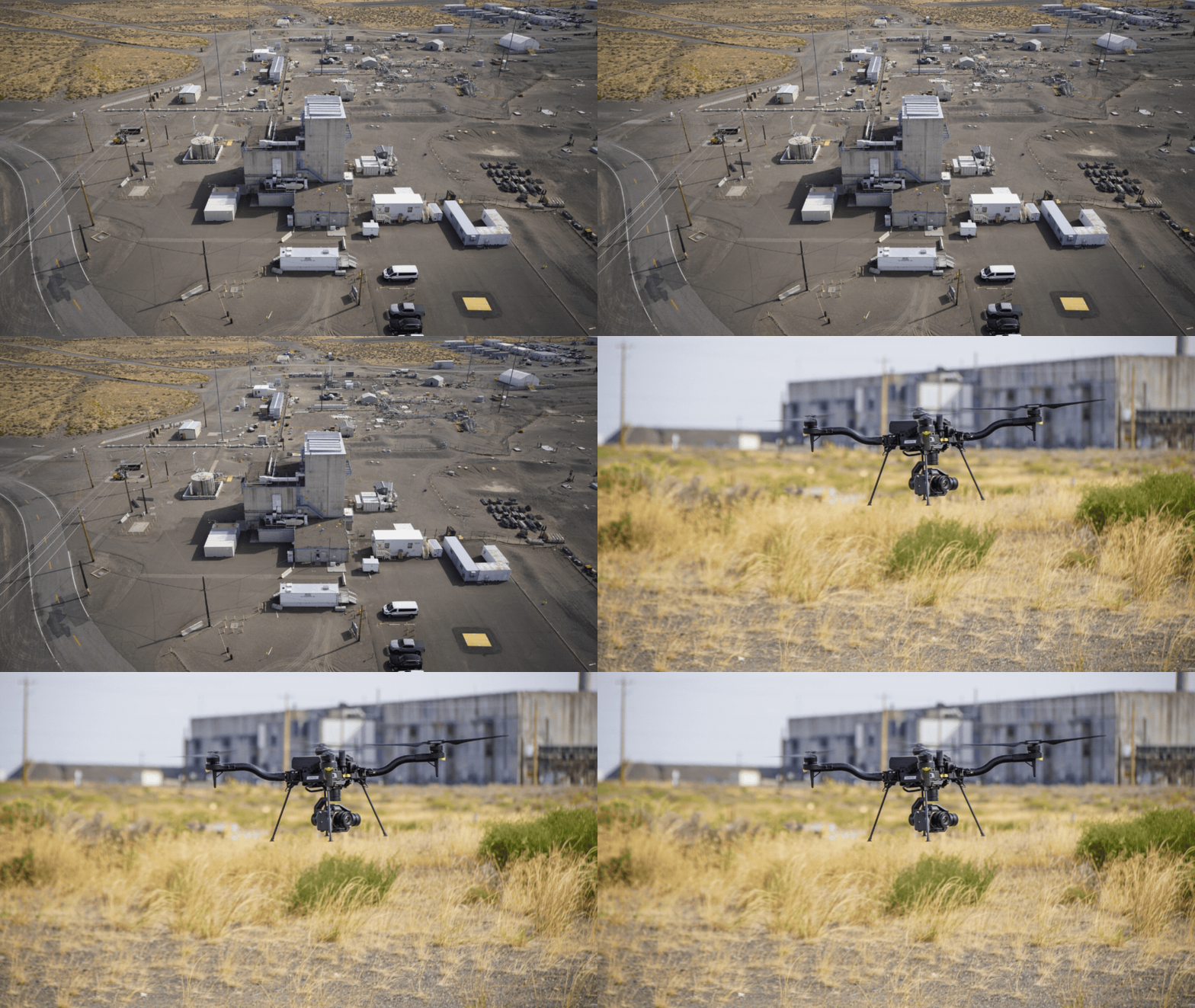
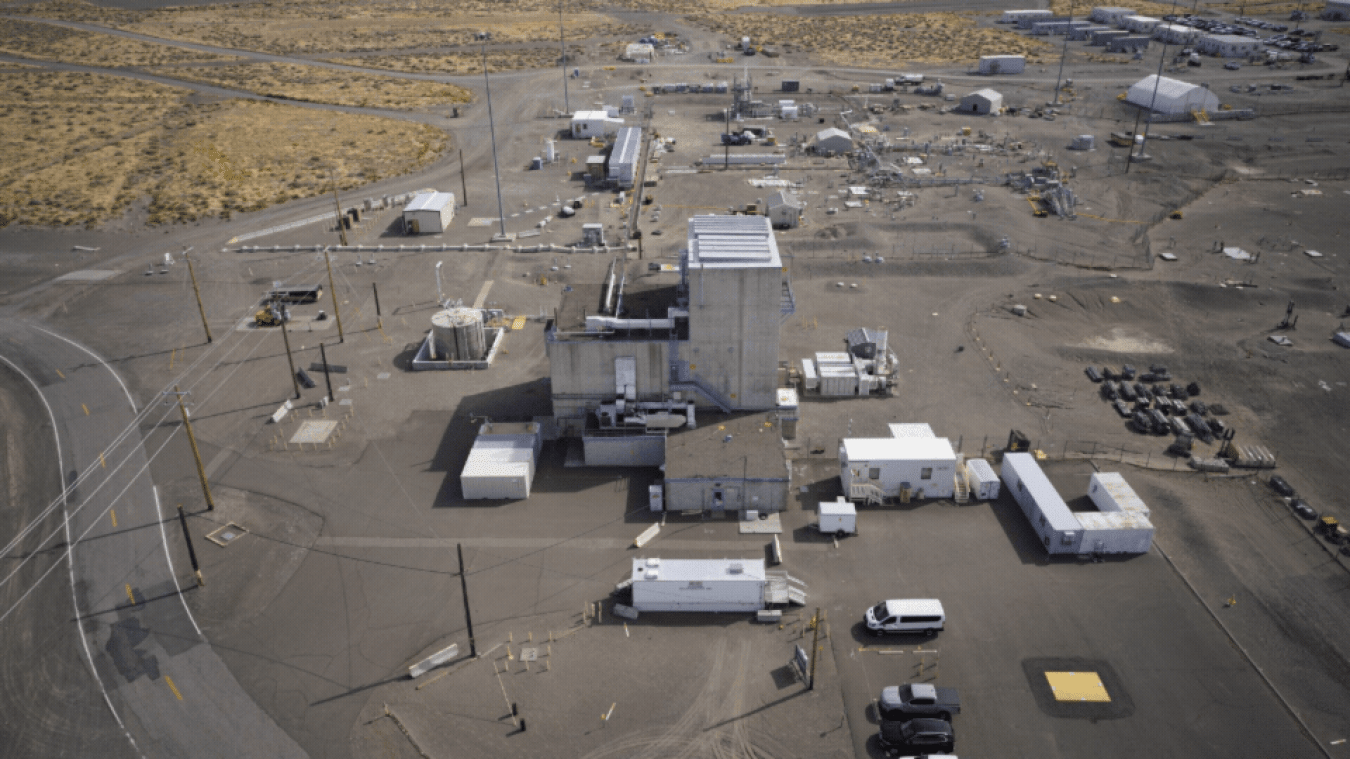
A drone captures images of the Hanford Site’s inactive 242-S Evaporator during a roof inspection.
H2C requested the inspection as part of a routine effort to check inactive facility conditions that don’t require a hands-on approach to fulfill maintenance requirements. Instead of deploying workers at elevated height to check the roofs of inactive facilities, H2C used the opportunity to work with Hanford Mission Integration Solutions (HMIS), which manages the site’s drone program, for the inspection.
H2C’s Engineering & Innovation team guided drone operators during the flight, ensuring that imagery captured roof surfaces, vents, stacks and potential leak pathways that could impact nuclear material protection. This collaborative effort reflects Hanford’s broader operational model, where contractors pool specialized expertise to solve complex technical challenges efficiently.
“It’s another way to use technology to improve processes and keep people safe,” said Rob Voeks, H2C Nuclear Maintenance Program manager. “Cross-contractor teamwork is essential because each contractor holds different pieces of scope and we want to continue to find ways to expand the use of drones at Hanford.”
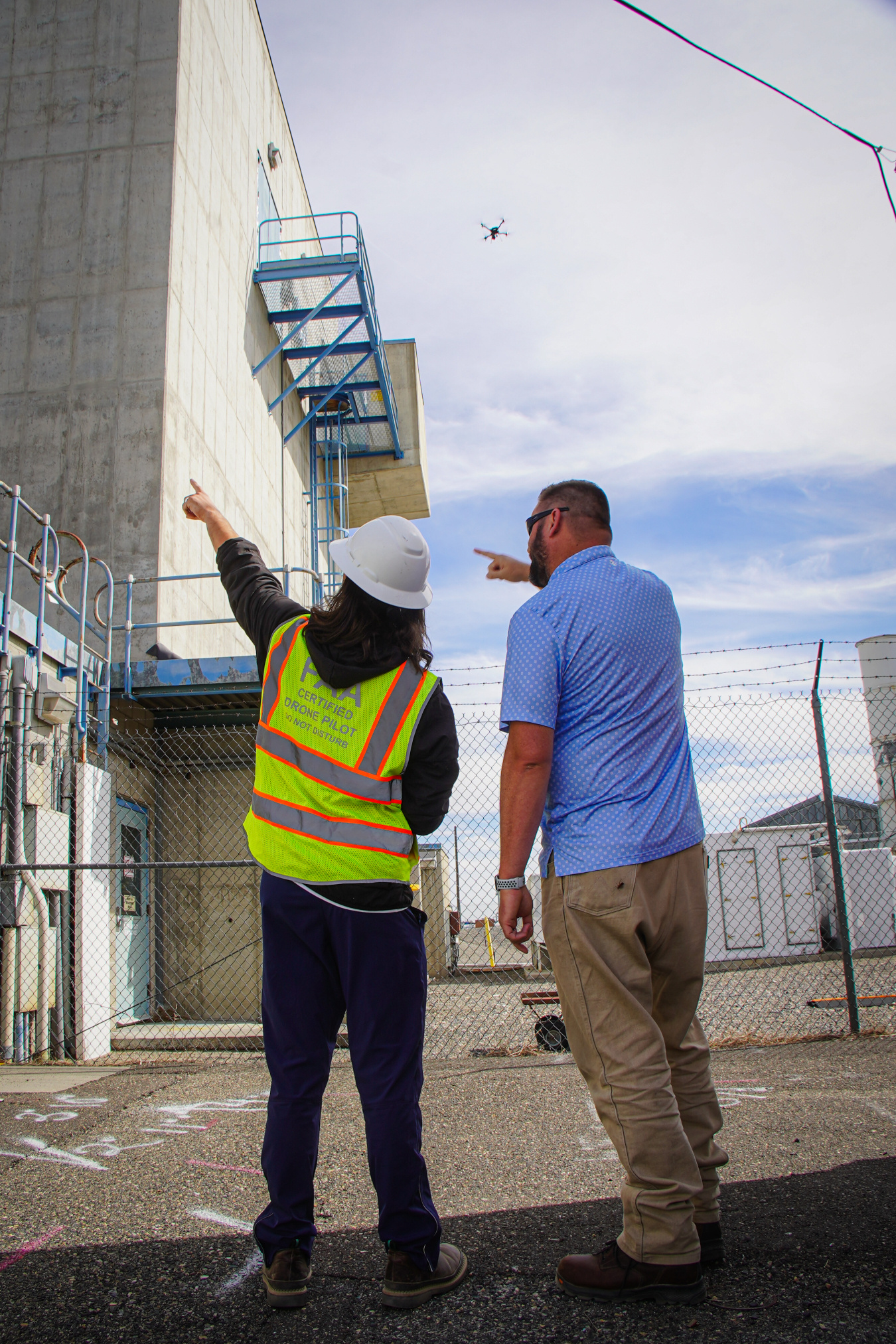
Matthew Williams, right, a Hanford Tank Waste Operations & Closure engineer, guides drone footage in real time with Danner Breault, a certified drone pilot with Altitude Agri Services, a Hanford Mission Integration Solutions subcontractor.
Hanford’s drone program began in 2022 and is available for use by DOE and Hanford contractors. In addition to taking photos and video, drones can help teams build detailed 3D images and maps.
HMIS routinely produces photogrammetric 3D models, often between 2,000 and 5,000 images, enabling precise dimensional measurements and structural assessments. Photogrammetry is the science and technology of capturing such 3D models from 2D photographs or digital imagery.
Additional capabilities include lidar mapping, which is used to characterize terrain and structural boundaries without requiring field personnel to enter unmonitored areas. Short for light detection and ranging, lidar is a sensing method that uses pulses of laser light to determine the presence, shape and distance of objects, often in great detail.
“We push safety — keeping people out of hazardous areas for as long as possible,” said John-Paul LeCompte, HMIS Aviation Program manager. “HMIS continually looks for areas where we can integrate this technology and assist contractors.”
-Contributor: Jamie St. Martin
To receive the latest news and updates about the Office of Environmental Management, submit your e-mail address.