



Cleanup progress continues across Oak Ridge National Laboratory, where workers recently began preparing another facility for demolition as they remove hazards and pave the way for the next chapter of scientific discovery and innovation at the site. June 16, 2026
Office of Environmental Management
June 16, 2026 Estimated Read Time min
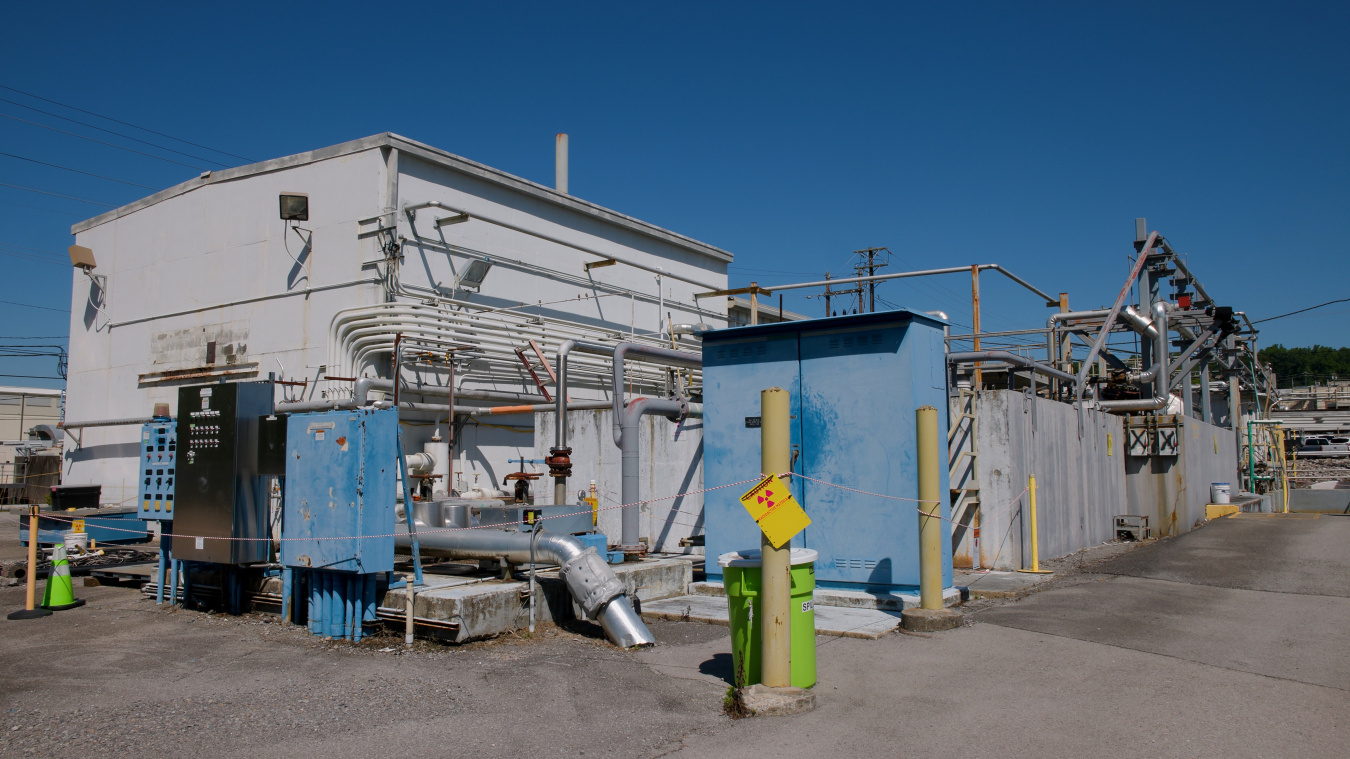
A view of Building 3544 at Oak Ridge National Laboratory. Constructed in 1976, the facility has exceeded its design life, and crews are in the early stages of preparing the structure for demolition.
OAK RIDGE, Tenn. — Cleanup progress continues across Oak Ridge National Laboratory (ORNL), where workers recently began preparing another facility for demolition as they remove hazards and pave the way for the next chapter of scientific discovery and innovation at the site.
The Oak Ridge Office of Environmental Management (OREM) and contractor United Cleanup Oak Ridge (UCOR) are characterizing and deactivating Building 3544, a former waste treatment plant, along with other infrastructure on the building’s footprint, including a wastewater plant.
“Adding Building 3544 into the cleanup sequence while simultaneously advancing demolition readiness across central campus demonstrates the momentum our workforce is achieving at ORNL,” said UCOR ORNL Area Project Manager Chad York. “Every facility we prepare for demolition reduces risk, modernizes the footprint and creates new opportunities for the scientific innovation and research missions.”
Characterization is the systematic data-gathering process of identifying and analyzing the nature and extent of contamination in and around facilities. Deactivation places a facility in a stable condition to minimize risks and protect workers, the public and the environment. This work at Building 3544 involves conducting surveys, removing hazardous and radiological materials, and preparing systems and equipment for demolition, which is expected in 2028.
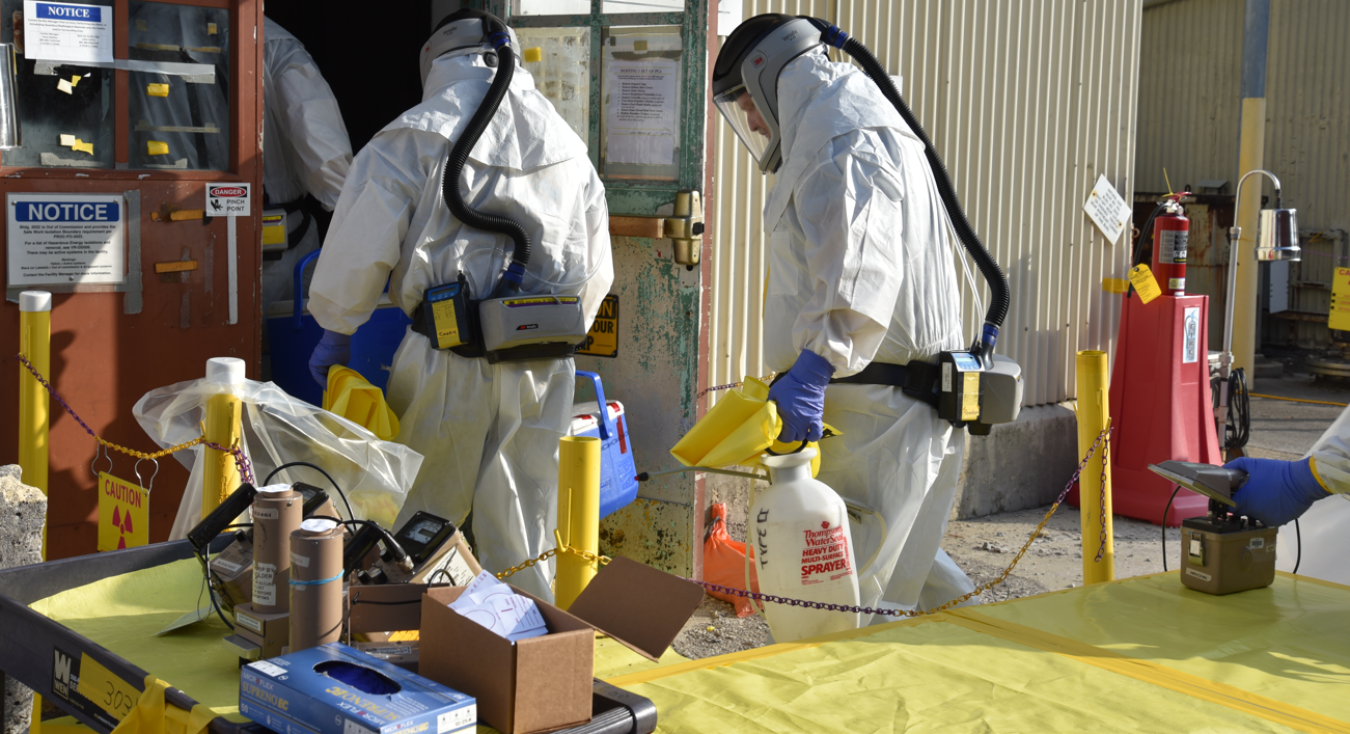
The work ahead at Building 3544 involves conducting surveys and characterization, removing hazardous and radiological materials, and preparing systems and equipment for demolition.
Constructed in 1976, the facility exceeded its design life and posed one of the biggest risks to operations at Liquid and Gaseous Waste Operations (LGWO).
The LGWO system is critical to ORNL’s ongoing missions, and any outage would result in immediate impacts at the site. It contains three waste treatment systems that collect, treat and reduce the volume of liquid and gaseous waste across the laboratory. The system encompasses more than 60 facilities and 27 miles of piping that process waste generated from cleanup operations, research and development laboratories, and active and deactivated nuclear reactors.
LGWO previously had two waste treatment complexes. Building 3608 treated nonradiological wastewater, while Building 3544 treated radiological wastewater. However, installations and upgrades consolidated all treatment at Building 3608. Those investments paved the way for OREM to eliminate Building 3544.
This project is the latest in a line of efforts to remove old, excess and contaminated structures in ORNL’s central campus.
Crews are in the final weeks of readying facilities on Isotope Row for demolition. These 11 buildings were constructed in the 1950s and 1960s to produce, process and research isotopes for medical, industrial and scientific applications.
Other teams are deactivating the final hot cell of the former Radioisotope Development Laboratory, preparing one of the most contaminated structures at ORNL for demolition in coming months.
-Contributor: Ryan Getsi
To receive the latest news and updates about the Office of Environmental Management, submit your e-mail address.