The annual Land-Based Wind Market Report provides an overview of trends and policies in the U.S. power industry, primarily focusing on land-based, utility-scale wind turbines over 100 kilowatts in size.
Now in its eighteenth year, the 2024 edition of the report provides an overview of developments and trends in the U.S. wind power market for the 2023 calendar year.
Land-Based Wind Market Report: 2024 Edition
Land-Based Wind Power
The U.S. wind industry installed 6,474 megawatts (MW) of new land-based wind capacity in 2023, bringing the cumulative total to nearly 150,500 MW. Also, $10.8 billion was invested in 2023 in land-based wind energy expansion. Utility-scale wind power is currently installed in 42 states across the nation.
Electricity Generated from Wind
Texas installed the most wind capacity of any state in 2023 with 1,323 MW followed by Illinois with 928 MW. In addition, four states (Iowa, South Dakota, Kansas, and Oklahoma) exceeded 40% wind energy penetration.
Global land-based wind additions reached a record 117 GW in 2023, yielding a cumulative 1,021 GW. The United States remains the second-leading market in terms of annual capacity additions and total cumulative capacity.
Use the slider and interactive maps below to see land-based wind energy capacity by state (with additions from 2023) and percentage of in-state generation (and sales).
Wind Turbines Keep Growing
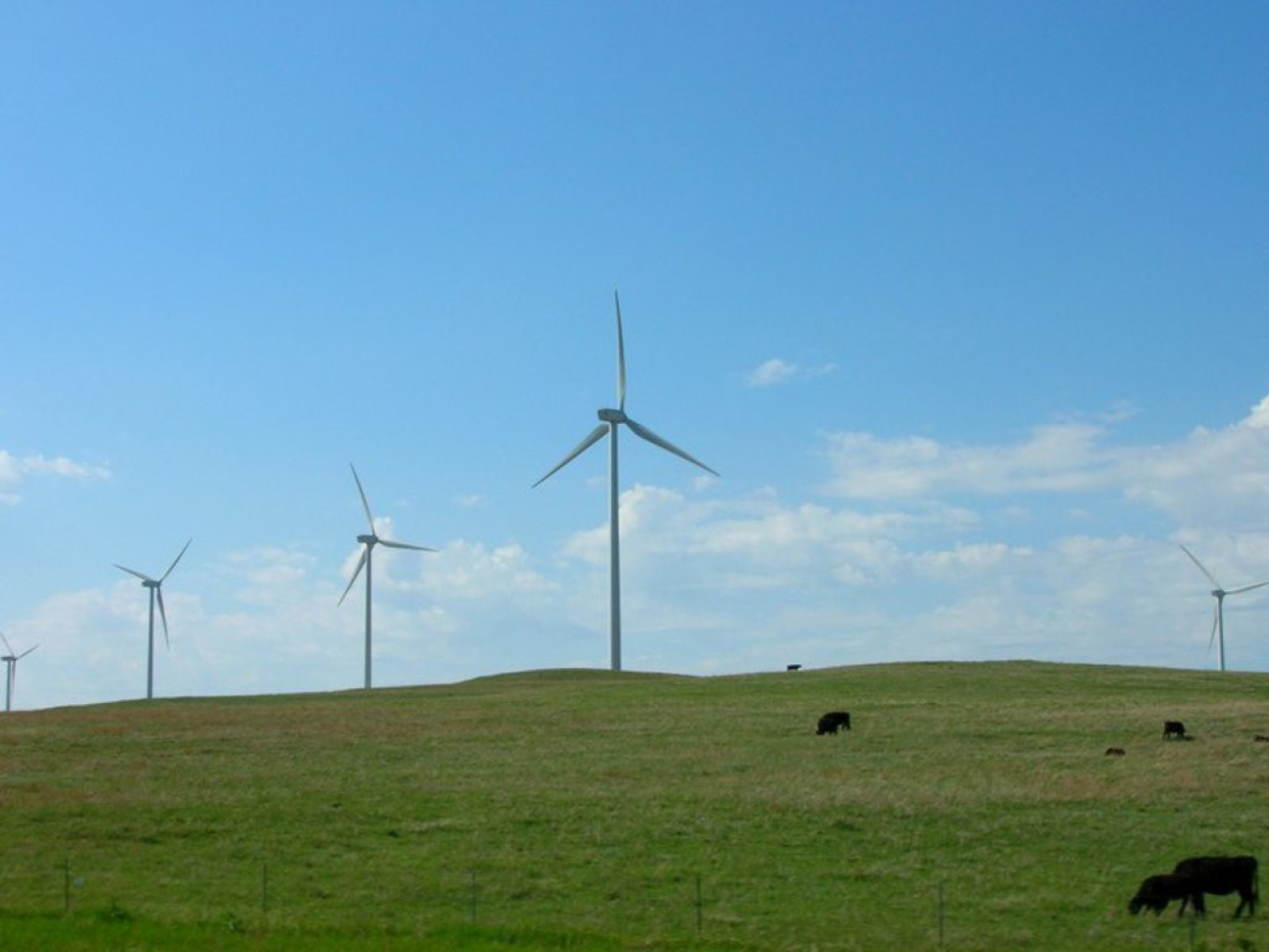
Wind turbines continue to grow in size. The average rated (nameplate) capacity of newly installed wind turbines in the United States in 2023 was 3.4 MW (enough to power over 1,000 U.S. households per day!), up 5% from 2022 and 375% since 1998−1999. The average rotor diameter of newly installed turbines was 133.8 meters, a 2% increase over 2022 and 178% over 1998−1999, while the average hub height was 103.4 meters, up 5% from 2022 and 83% since 1998−1999.
Health Benefits of Wind Power
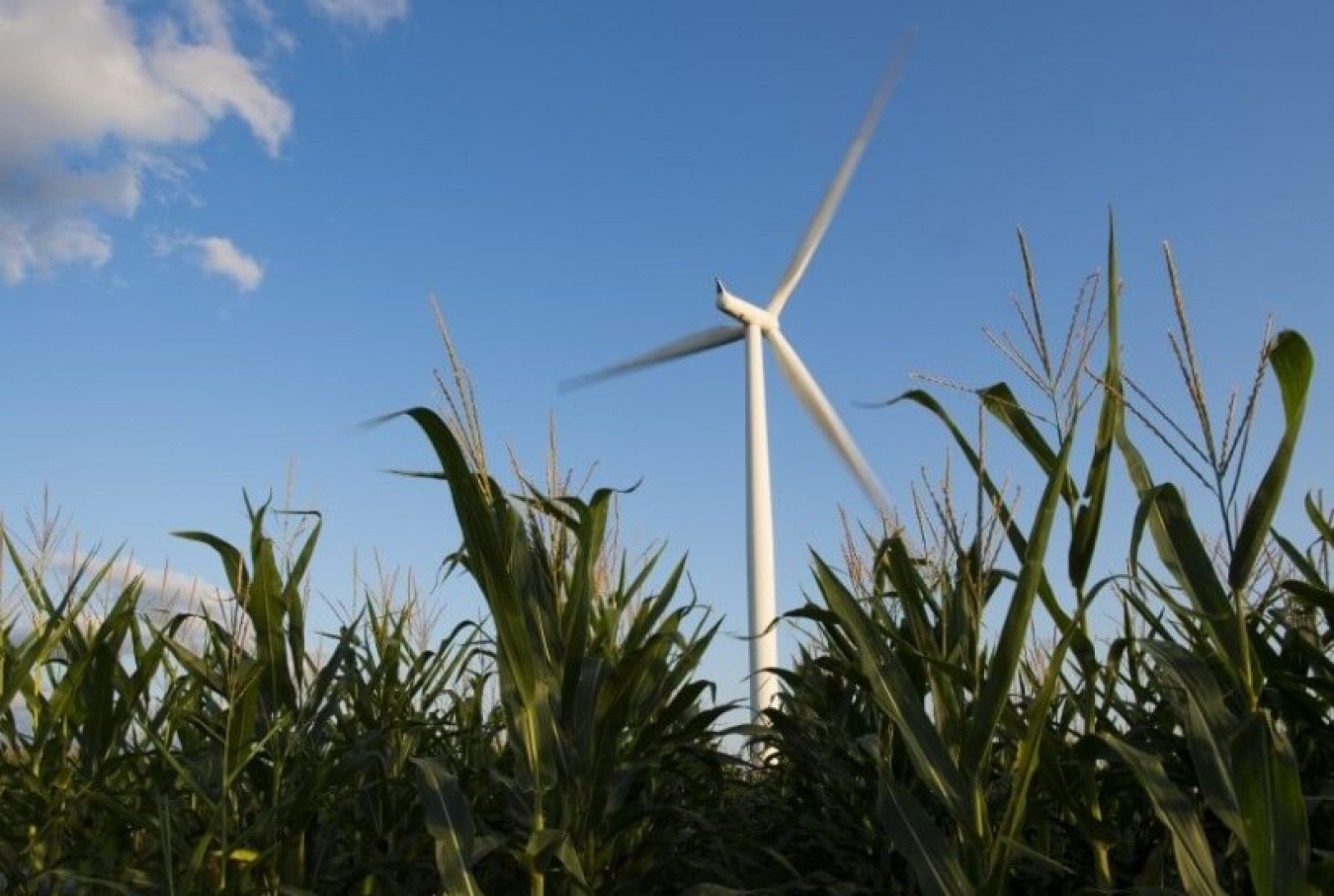
Wind provides public health and environmental benefits by reducing emissions of carbon dioxide, nitrogen oxides, and sulfur dioxide. Nationally, healthy and environmental benefits (when viewed in monetary terms) together averaged $162/MWh-wind. Learn more about the health and environmental benefits of wind.
Learn More
-
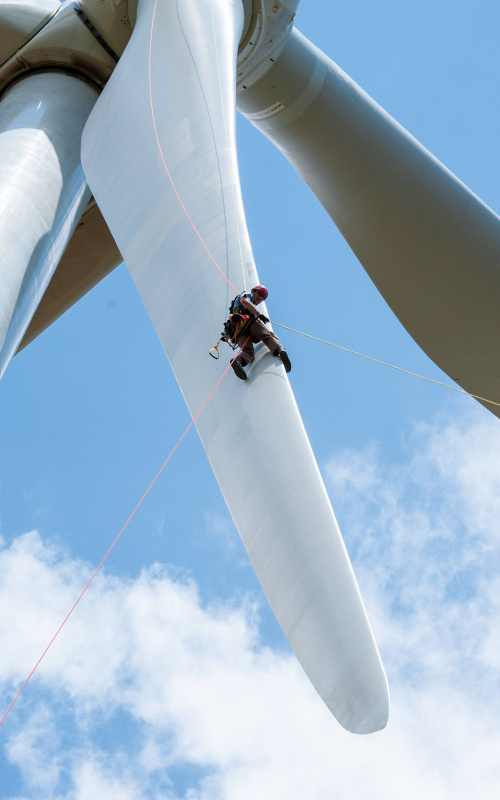 Brush up on your knowledge of wind! Get the details on a few of the lesser-known wind energy facts.
 -
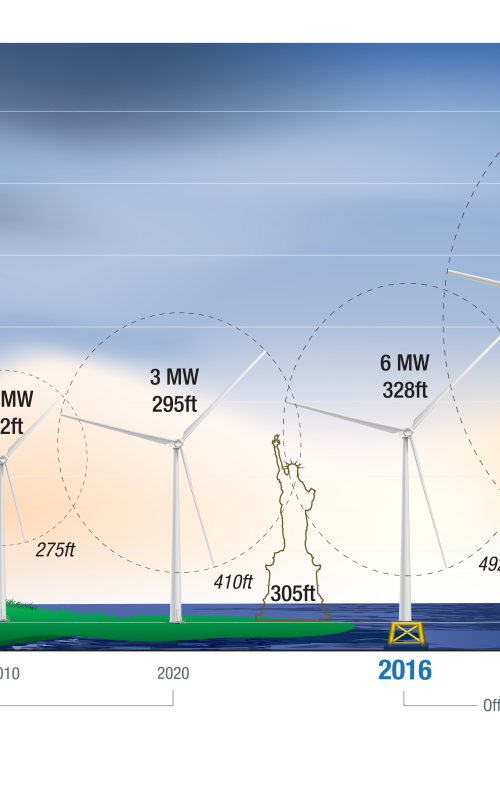 Since the early 2000s, wind turbines have grown in size—in both height and blade lengths—and generate more energy. What’s driving this growth? Let’s take a closer look.
 -
-
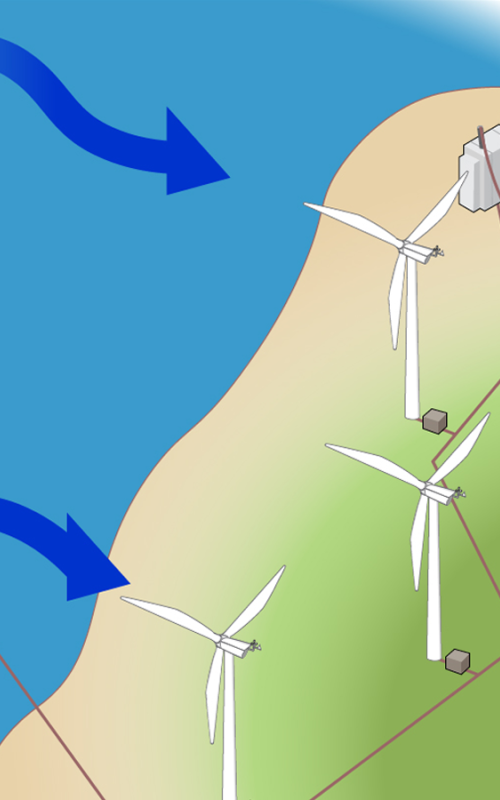 Wind turbines harness the wind—a free and widely available renewable energy source—to generate electric power.July 16, 2026
 -
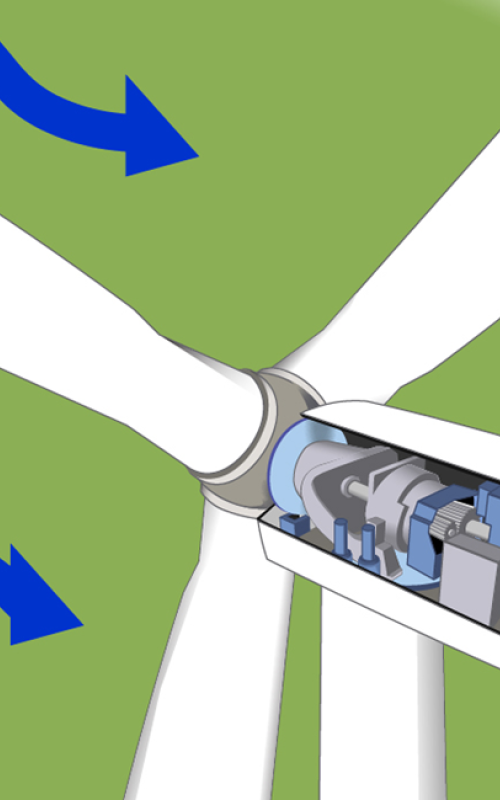
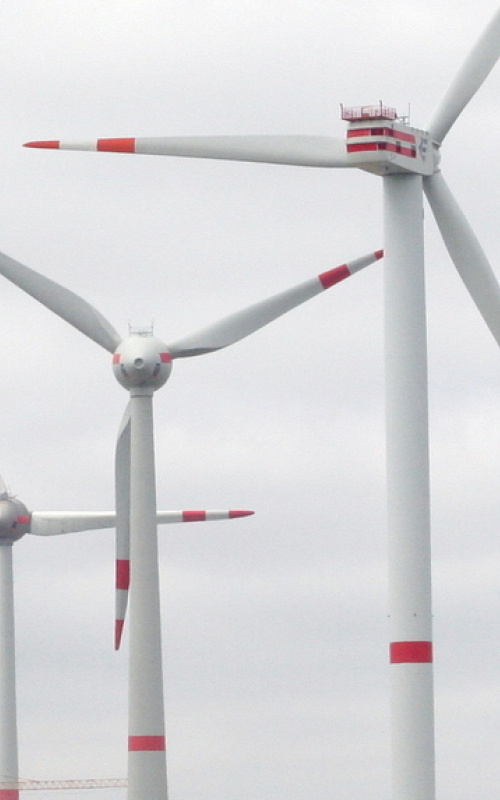 Learn more about wind, from how a wind turbine works to research in the field of wind energy.September 2, 2026
 -
-