



A biodegradable and nontoxic hydropower oil has gone through several rounds of testing as its developer aims to ramp up production to achieve commercialization in the next few years.
Hydropower and Hydrokinetic Office
March 14, 2024 Estimated Read Time min

Hydropower Program
Environmental and Hydrologic Systems Science
Project Name: Biodegradable Lubricant From Esterified Propoxylated Glycerol
Project Team: Tetramer (lead) and General Electric
Lead Recipient Location: Pendleton, South Carolina

In Fiscal Year 2023, Tetramer took its cutting-edge hydropower oil one step closer to adoption by expanding its use for different machinery components and testing various versions at the Porjus Hydropower Centre in Sweden. This bio-based oil is a biodegradable and nontoxic formula that does not break down into harmful substances or collect in the environment over time, thus supporting hydropower’s sustainability and minimizing damage to the environment in the event of an uncontained fluid leak.
All heavy machinery, such as hydropower turbines, require oil to lubricate moving parts, reduce friction, and transfer power in hydraulic systems. Most of the current oil options for hydropower turbines are synthetic- or petroleum-based mineral oils. With funding from the Small Business Innovation Research (SBIR) Program, Tetramer developed a biodegradable oil that aligns with the U.S. Army Corps of Engineers' specifications for hydropower facilities, meets U.S. Environmental Protection Agency requirements on environmentally acceptable lubricants and U.S. Department of Agriculture bio-based product certification, and fulfills performance requirements for hydroelectric facilities.
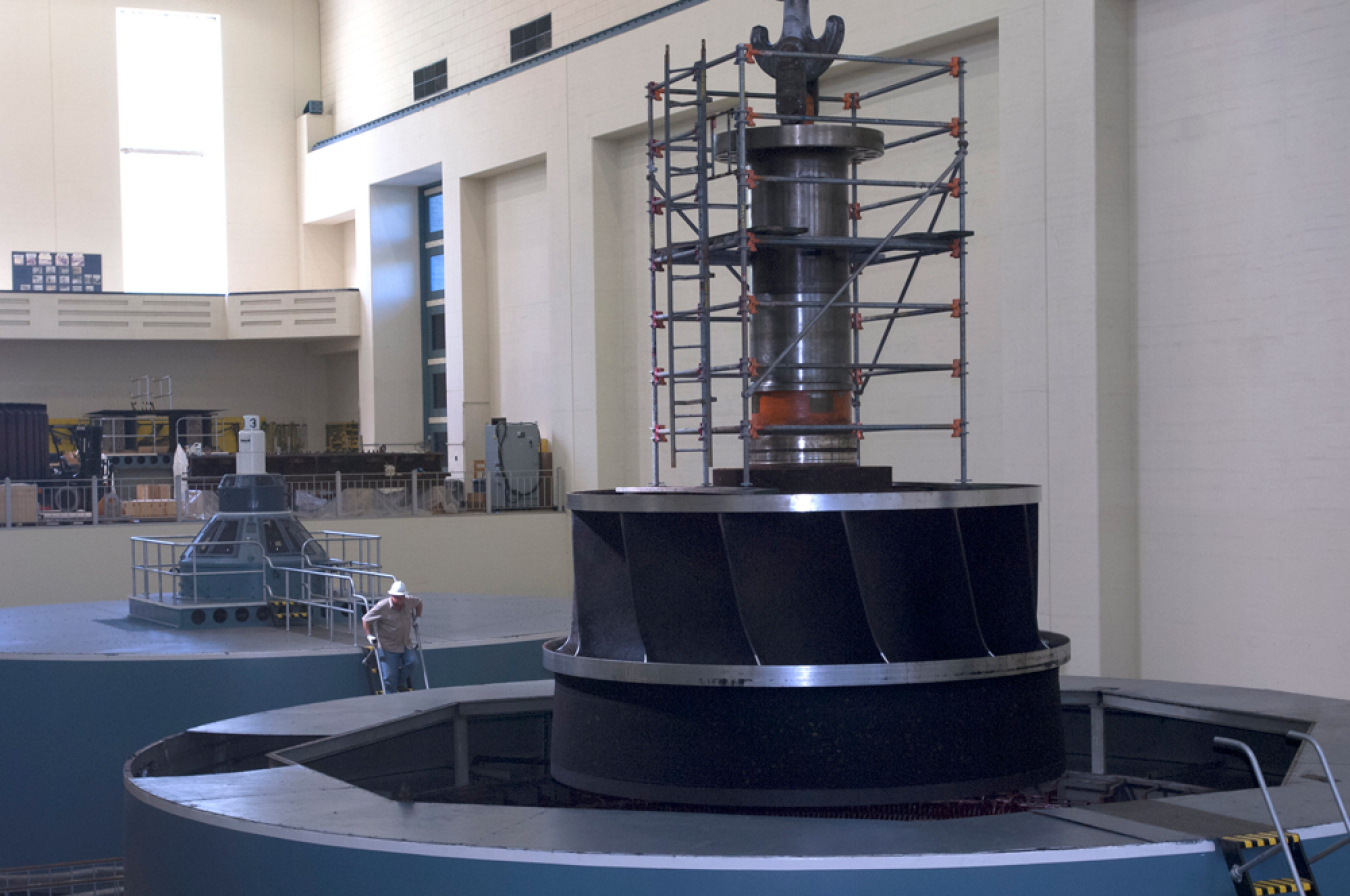
Heavy machinery needs oil to lubricate moving parts, reduce friction, and transfer power in hydraulic systems. A new biodegradable and nontoxic oil meets these needs and does not break down into harmful substances or collect in the environment over time.
The team conducted extensive testing with General Electric's Hydropower Center for Excellence in Switzerland. The team also sent three drums of the oil to run on a model turbine at the Porjus Hydroelectric Power Station in Sweden with the goal of verifying it would not damage components in the test facility and validating its performance across a broad range of operating conditions. The company also investigated the oil's compatibility with paint, seals, and other fluids.
Having found no major compatibility issues in test cases, the team is now actively working to expand the oil’s viscosity grades (or how easily the fluid flows) so it can be used in different types of turbines with different lubrication requirements and as an all-purpose oil throughout multiple mechanical components and equipment. The team plans to investigate whether these lubricants may improve the operating efficiency of moving components, and Tetramer aims to ramp up production to achieve commercialization in the next few years.
WPTO's hydropower e-newsletter features news on R&D and applied science to advance sustainable hydropower and pumped-storage technologies.
The WPTO e-newsletter brings funding opportunities, events, publications, & hydropower and marine energy updates directly to your inbox.