



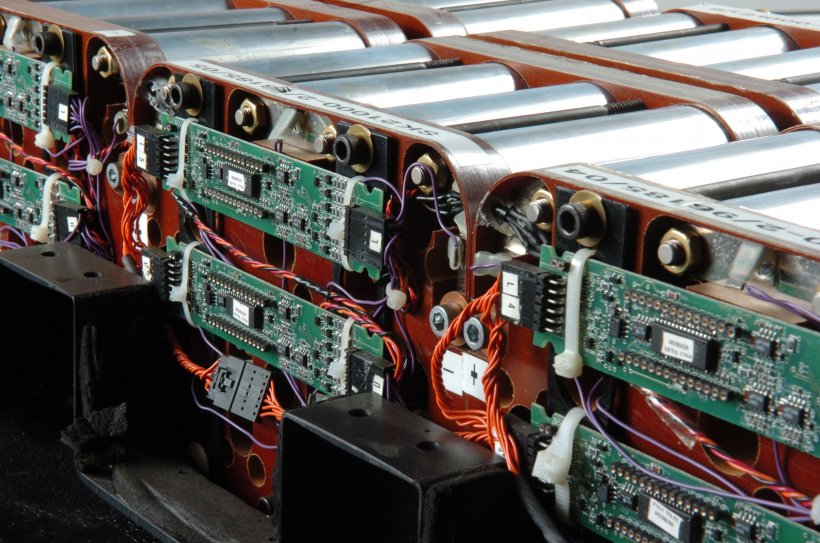
Improving the batteries for electric drive vehicles, including hybrid electric (HEV) and plug-in electric vehicles (PEV), plays a key role in the country's transportation future. In fact, transitioning to a light-duty fleet of HEVs and PEVs could reduce U.S. foreign oil dependence by 30-60%, depending on the exact mix of technologies. For a general overview of electric drive vehicles, see the DOE's Alternative Fuel Data Center's pages on Hybrid and Plug-in Electric Vehicles and Vehicle Batteries.
While a number of electric drive vehicles are available on the market, further improvements in batteries could make them more affordable and convenient to consumers. In addition to light-duty vehicles, some heavy-duty manufacturers are also pursuing hybridization of medium and heavy-duty vehicles to improve fuel economy and reduce idling.
The Transportation Technologies Office's Contribution
The Transportation Technologies Office (TTO) focuses on reducing the cost, volume, and weight of batteries, while simultaneously improving the vehicle batteries' performance (power, energy, and durability) and ability to tolerate abuse conditions. Reaching the TTO's goals in these areas and commercializing advanced energy storage technologies will allow more people to purchase and use electric drive vehicles.
TTO pursues three major areas of research in batteries:
- Exploratory Battery Materials Research: Addresses fundamental issues of materials and electrochemical interactions associated with lithium and beyond-lithium batteries. This research attempts to develop new and promising materials, use advanced material models to predict the modes in which batteries fail, and employ scientific diagnostic tools and techniques to gain insight into why materials and systems fail. Building on these findings, it works to develop ways to mitigate those failures.
- Applied Battery Research: Focuses on optimizing next generation, high-energy lithium ion electrochemistries that incorporate new battery materials. The activity emphasizes identifying, diagnosing, and mitigating issues that negatively impact the performance and life of cells using advanced materials.
- Advanced Battery Development, System Analysis, and Testing: Focuses on the development of robust battery cells and modules to significantly reduce battery cost, increase life, and improve performance. This research aims to ensure these systems meet specific goals for particular vehicle applications.
These research and development activities are described at the Annual Merit Review and Progress Reports.
This research builds upon decades of work that the Department of Energy has conducted in batteries and energy storage. Research supported by TTO led to today's modern nickel metal hydride batteries, which nearly all first generation hybrid electric vehicles used. Similarly, the Office's research also helped develop the lithium-ion battery technology used in the Chevrolet Volt, the first commercially available plug-in hybrid electric vehicle. This technology is now being used in a variety of hybrid and plug-in electric vehicles coming on the market now and in the next few years, including the Ford Focus EV.
Partnerships
The batteries subprogram works extensively with a number of different organizations, including national laboratories and universities. Within the Department, the office collaborates with the Office of Science and ARPA-e (Advanced Research Projects Agency-Energy). Across the federal government, the subprogram works with:
- The Interagency Advanced Power Group
- The Environmental Protection Agency
- The National Aeronautics and Space Administration
- The National Science Foundation
- The National Highway Traffic Safety Administration (Department of Transportation)
- The U.S. Army Tank, Automotive Research and Development and Engineering Center (Department of Defense)
They also collaborate on international research with:
- International Energy Agency's Hybrid & Electric Vehicle Technology Collaboration Programme
- The Clean Energy Ministerial's Electric Vehicle Initiative
- The Clean Energy Research Center bilateral agreement between the U.S. and China
Much of the subprogram's research is conducted in sync with industry partners through:
- The U.S. DRIVE Partnership focusing on light-duty vehicles
- The 21st Century Truck Partnership, focusing on heavy-duty vehicles
- The United States Advanced Battery Consortium (USABC), a partnership between the U.S. Department of Energy (DOE), Chrysler, Ford, and General Motors to develop and demonstrate advanced battery technologies for hybrid and electric vehicles, as well as benchmark test emerging technologies
Goals
TTO's Batteries and Energy Storage subprogram aims to research new battery chemistry and cell technologies that can:
- Reduce the cost of electric vehicle batteries to less than $100/kWh—ultimately $80/kWh
- Increase range of electric vehicles to 300 miles
- Decrease charge time to 15 minutes or less
For more information on TTO's research on batteries, contact Brian Cunningham on the batteries team.