



What Are Space Photovoltaics?
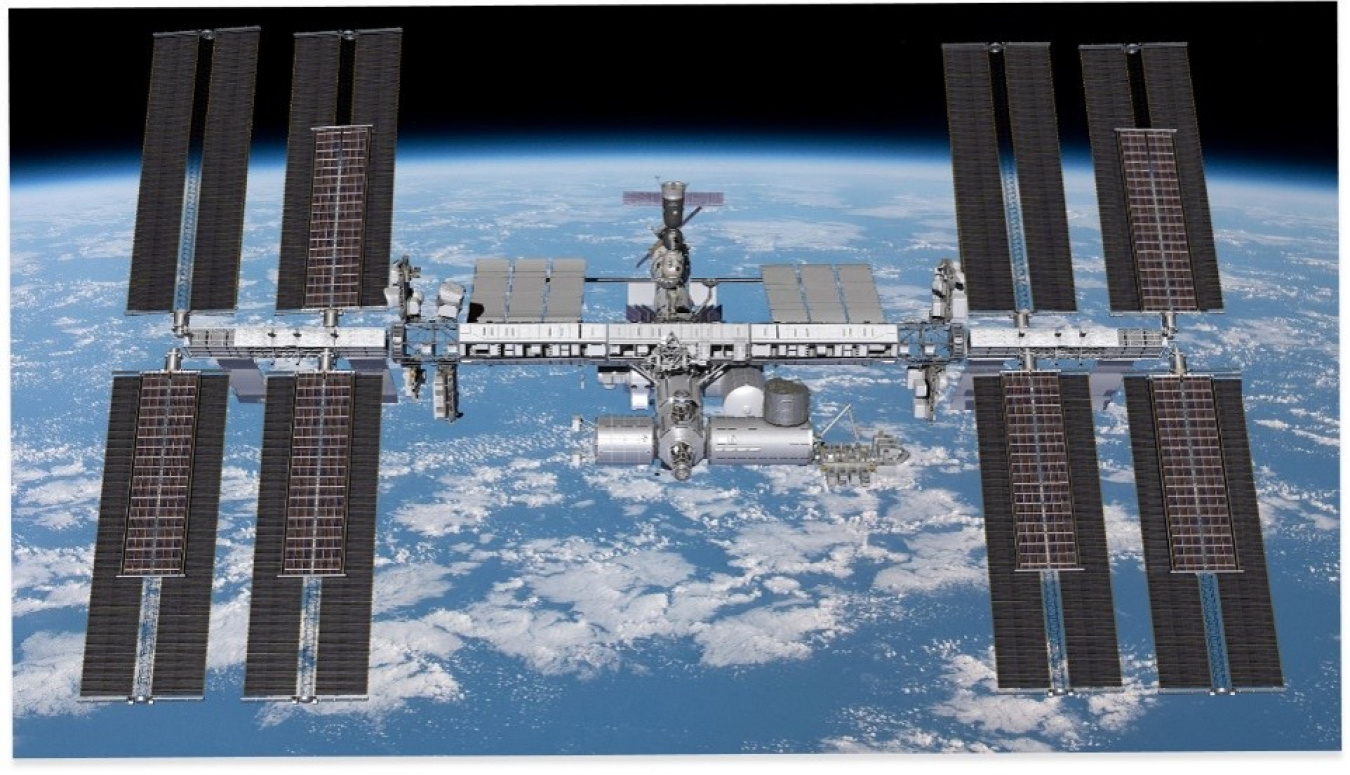
Space photovoltaics (PV) refers to materials and devices used in space to convert sunlight into electrical energy to power devices from low-earth orbit to deep space. Space PV technologies provide reliable power for satellites, spacecraft, space stations, lunar missions, and other systems that operate beyond Earth's atmosphere.
Space is one of the most challenging environments for energy technologies. Solar cells used in space must generate electricity while exposed to intense radiation, extreme temperature changes, high vacuum, and other conditions which do not exist on Earth’s surface. Space PV technologies must also travel into space aboard rockets, where weight and available space are limited. As a result, researchers develop PV materials and devices that are durable, lightweight and able to withstand harsh space environments while generating more power.
The U.S. Department of Energy (DOE) Integrated Energy Systems Office (IESO) advances research and development that improves the performance, durability, manufacturability, and affordability of space PV technologies. This work supports future space missions while strengthening U.S. leadership in PV innovation and manufacturing.
Learn More
How Do Space Photovoltaics Work?
Like terrestrial solar panels, which operate on or close to Earth’s surface, solar panels in space generate electricity when sunlight strikes a semiconductor material. The energy from sunlight excites electrons within the material, creating an electric current that can power spacecraft systems, communications equipment, scientific instruments, and other onboard technologies.
Although the basic operating principle is the same as for solar panels used on Earth, the space environment requires solar cells with specialized characteristics. Depending on the mission, space PV technologies may need to:
- Resist damage from proton, electron, ultraviolet, and ion radiation
- Operate through repeated cycles of extreme heat and cold
- Maintain performance in high vacuum and, in some Earth orbits, withstand exposure to atomic oxygen
- Deliver high amounts of power while minimizing weight
- Continue operating reliably throughout the planned mission lifetime.
Different space PV applications place different demands on PV systems. Satellites in low Earth orbit experience rapid transitions between sunlight and darkness as they orbit Earth, creating frequent temperature changes in the panel surface temperature. Spacecraft in geostationary orbit encounter fewer temperature swings, but experience much higher levels of radiation. Future missions to the Moon, other planets, and deep space will require PV technologies designed for unique environmental conditions while providing dependable power far from Earth.
To meet these needs, researchers continue improving several PV technologies, each with distinct advantages for current and future space applications.
Types of Photovoltaics Used in Space
Researchers are advancing several PV cell technologies to meet the power needs of satellites, spacecraft, lunar missions, and future space exploration. Each technology offers different advantages depending on the mission, operating environment, and performance requirements.
Multijunction III-V Solar Cells
Multijunction III-V solar cells are the current space industry standard. These devices combine multiple semiconductor materials from Groups III and V of the periodic table, and sometimes Group IV, in stacked layers, allowing each layer to capture a different portion of the solar spectrum. This design enables the cells to convert more sunlight into electricity than conventional single-junction solar cells.
In addition to their high efficiency, multijunction III-V solar cells provide the reliability and radiation resistance needed for long-duration missions. They have powered satellites and spacecraft for decades and continue to set records for PV performance.
One challenge with III-V solar cells is cost. Manufacturing III-V solar cells require specialized materials and fabrication processes that are more expensive than those used for many terrestrial solar technologies. DOE supports research to reduce these costs through innovations such as reusable substrates, lower-cost cell growth techniques, and more automated manufacturing methods.
Silicon Photovoltaics
Silicon PV have powered spacecraft since the early years of the space program and remain the industry standard for generating solar energy on Earth. Recent improvements in performance, manufacturing, and radiation tolerance have renewed interest in using silicon for certain space missions, particularly satellite constellations in low Earth orbit.
Silicon PV technologies can offer lower costs than III-V solar cells because they benefit from the large manufacturing infrastructure already established for terrestrial solar energy. As launch costs decrease and new commercial space applications emerge, silicon provides a promising option for missions where affordability, manufacturability, and shorter mission lifetimes are important factors.
Researchers are working to improve silicon's performance in a space environment by developing thinner, lighter solar cells and better understanding how radiation affects device performance over time. Advances in defect engineering, packaging, and radiation-hardening techniques could further expand silicon's role in future space missions.
Perovskite Photovoltaics
Perovskite PV is an emerging technology that uses halide perovskite materials and has the potential to be manufactured using lower-cost processes while achieving very high efficiencies. Perovskite PV cells can be combined with other PV cells such as silicon to form tandem and multijunction solar cells.
For space applications, perovskites can be manufactured as lightweight devices, endure common forms of radiation in orbital environments, and be readily scaled for future missions with high power demands, such as satellite constellations. However, researchers are still working to improve their full panel-size efficiency in space, manufacturability at scale, and durability before they can be widely deployed.
DOE supports research to improve perovskite PV technologies by developing more durable materials and devices, advancing manufacturing processes, engineering better device packaging, and evaluating how these technologies perform in space environments. These efforts help make next-generation space PV systems more affordable and scalable.
What Are the Benefits of Space Photovoltaics?
Many of the innovations that improve PV performance in space can also benefit solar energy technologies on Earth. Advances in semiconductor materials, manufacturing techniques, lightweight devices, and reliability help strengthen U.S. leadership in PV research while supporting both terrestrial and space applications.
At the same time, lessons learned from the mature terrestrial solar industry can help accelerate the development of lower-cost space PV technologies. Manufacturing improvements, supply chain investments, and advances in PV materials can support innovation across both sectors.
By supporting research across multiple PV technologies, IESO is helping address the unique challenges of generating solar power in space while strengthening U.S. innovation, manufacturing, and energy leadership.
Sign up to receive the latest news, updates, and opportunities from the Integrated Energy Systems Office.