



RSS

Below are stories about market transformation featured by the U.S. Department of Energy (DOE) Integrated Energy Systems Office.
Subscribe to the IESO E-Newsletter
Subscribe to the IESO e-newsletter to stay informed on the latest wind energy news, events, publications, and updates.
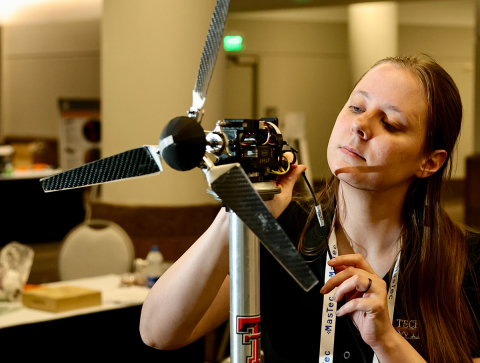
The 12 finalist teams will compete throughout the spring and present their work during the American Power Association's CLEANPOWER 2025 Conference and Exhibition.
WETO announced funding for 6 small businesses working to accelerate wind energy Research and Development
The funds will be used advance floating offshore wind through port and vessel innovations, transmission technology, and uncrewed underwater vehicles for environmental monitoring.
This innovative system collects behavioral data for birds and bats in the vicinity of wind turbines to help the wind industry meet monitoring requirements for development of proposed wind farm sites.
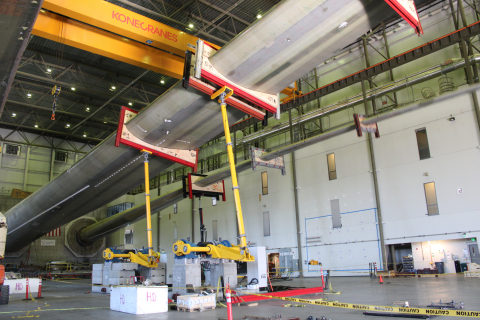
Thanks to funding from the Wind Energy Technologies Office, the Massachusetts Renewable Energy Center’s Wind Technology Testing Center (WTTC) is testing next-generation wind turbine blades.
With support from the U.S. Department of Energy’s Wind Energy Technologies Office, the National Renewable Energy Laboratory is helping grid operators and equipment manufacturers successfully adapt to national energy addition using the Grid Impedance Scan Tool.
An Idaho National Laboratory report takes the first comprehensive look at cyberattack risks that could jeopardize U.S. wind energy systems and real-world events that have affected wind energy systems and organizations around the world.
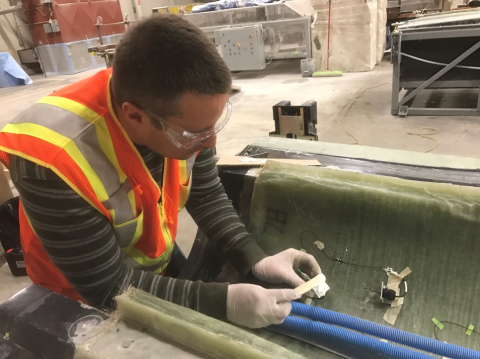
While studying mechanical engineering at the University of Texas in Austin, Paquette became interested in structural components and composite materials. Although he originally planned to pursue work in the aerospace industry, he jumped at the opportunity to work at Sandia on wind turbine blades—the largest composite structures in the world.
WETO released a roadmap assessing current practices, and future challenges and needs for operating and maintaining U.S. offshore wind farms, as well as specific recommendations for technology innovations that could help address the identified needs and gaps.
The Wind Resource Database is an online tool that captures information about atmospheric forces that affect how wind turbines perform and how much energy they capture.