



During National Manufacturing Month, DOE honors the workers whose craftsmanship, ingenuity, and determination keep America building and manufacturing strong.
Advanced Materials & Manufacturing Technologies Office
October 28, 2026 Estimated Read Time min
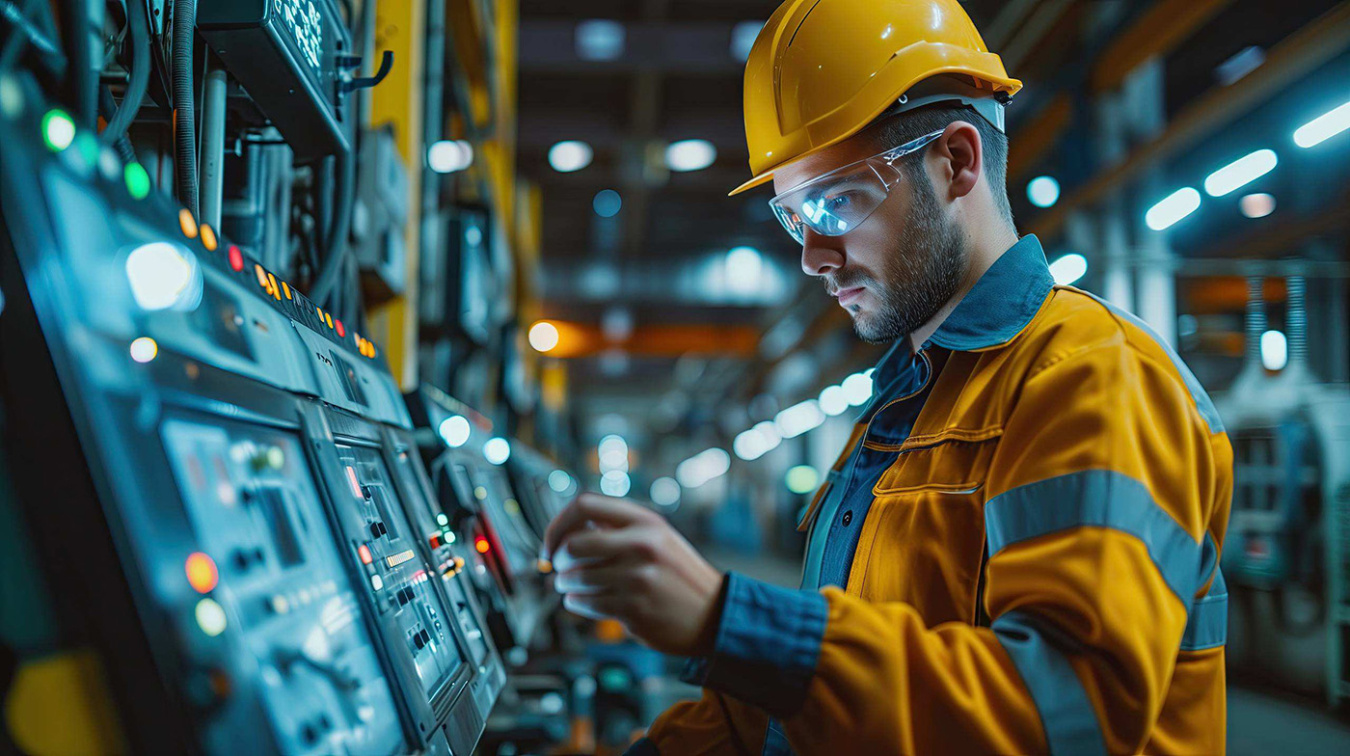
Manufacturing means different things to different people. For many of us, it brings to mind family members who woke before dawn and pulled on factory uniforms. For others, it means attending a technical school or community college and completing a registered apprenticeship or union training program. For still others, it means pursuing an advanced degree in engineering, materials science, or another highly specialized field.
These different paths reflect one of American manufacturing’s greatest strengths: its people. The men and women who make up America’s manufacturing workforce come from every background and bring a wide range of skills, experiences, and expertise to their jobs. During National Manufacturing Month, the U.S. Department of Energy (DOE) honors the workers whose craftsmanship, ingenuity, and determination keep America building and manufacturing strong.
Manufacturing is more than an economic sector. It is how American ideas become the machinery, equipment, materials, and products that power our economy, support our national defense, and improve our daily lives.
Under President Trump’s leadership, revitalizing American manufacturing is once again a national priority. The Trump Administration is working to encourage investment in American factories, machinery, equipment, and domestic research; protect American producers and workers from unfair trade practices; and ensure that manufacturers have access to the reliable, affordable energy they need to build, expand, and compete. At DOE, that America First agenda is being put into concrete action to strengthen industrial supply chains, advance manufacturing technologies, and prepare the next generation of American workers.
Long before a finished product rolls off an assembly line, miners, geologists, engineers, technicians, metallurgists, materials scientists, equipment operators, and supply-chain professionals are hard at work finding, producing, processing, and transporting the raw materials that manufacturers need. Mining, minerals processing, materials science, logistics, recycling, and manufacturing are not separate activities. They are interconnected links in the same industrial chain.
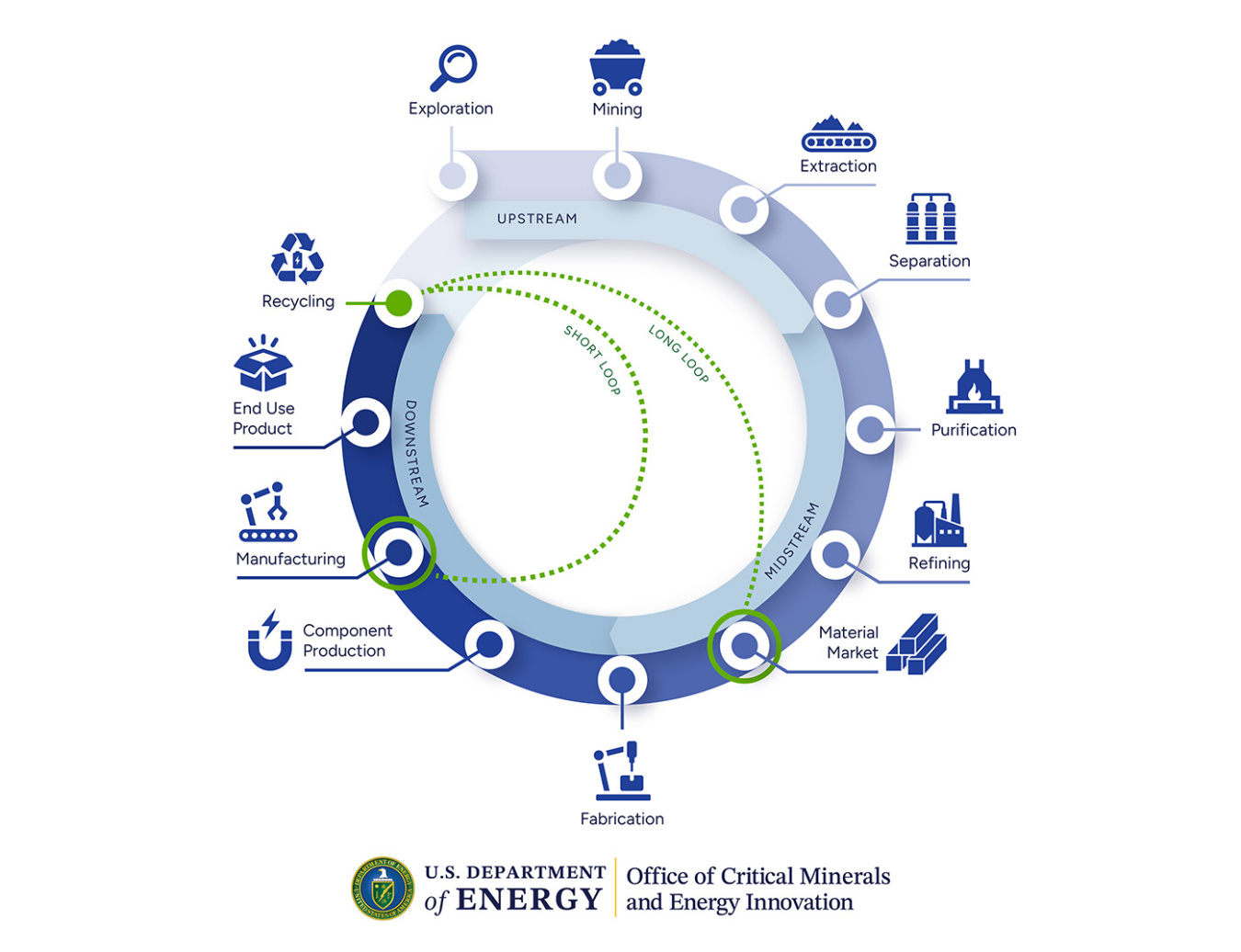
The infographic breaks down the end-to-end supply chain segments (upstream, midstream, and downstream), starting with exploration and extraction, moving to separation and refining, and finishing with manufacturing of an end-use product. Short- and long-loop recycling re-inject critical materials back into the supply chain.
Infographic by Office of Critical Minerals, Materials, and Manufacturing
From that perspective, one of our most immediate challenges is clear: America needs more workers entering the mining, minerals, and manufacturing fields.
DOE estimates that the United States will need approximately 6,000 new engineers in the mining sector over the next decade to replace retirees and support domestic mining projects. In 2023, the nation’s 14 mining engineering programs graduated just 162 students, far below the estimated 400-600 new mining engineers needed annually to replace retirees and support ongoing domestic mining projects. Right now, our country is simply not producing enough mining professionals to meet future demand.
That gap is a manufacturing challenge, too. A factory cannot flourish without reliable material inputs, and a mine cannot flourish without manufacturers ready to use what it produces.
To close this gap. DOE’s Office of Critical Minerals and Energy Innovation (CMEI) has launched the Providing Opportunities for Specialized Education in Critical Technologies (PROSPECT) initiative, a historic investment to help develop the American talent needed to produce, process, recover, and recycle critical minerals here at home so American manufacturers can have access to the resources they depend on.
PROSPECT is designed around two timelines. In the short term, it sets an ambitious and measurable objective: double the number of graduates in mining, minerals, and associated supply-chain disciplines within two years. In the long term, the initiative supports new curricula, modern teaching tools, financial aid programs, and other incentives intended to promote sustained growth in critical minerals fields.
These investments are not simply about producing more degrees. They are about opening doors to good-paying, high-skill careers for American workers. PROSPECT can help students and workers build skills that are valuable in mines, processing plants, recycling facilities, factories, engineering firms, equipment companies, research laboratories, and government agencies.
A resilient manufacturing sector is not something a country simply possesses. Its capabilities must be renewed from one generation to the next. We cannot predict every challenge that future American workers will encounter, but we can give them the knowledge, skills, technologies, and institutions they need to overcome those challenges.
This Manufacturing Month, we celebrate the men and women whose work powers every part of America’s industrial economy. Under President Trump’s leadership, our nation is back renewing its commitment to a future in which critical materials are produced and processed at home, American innovations become American factories, supply chains are secure, and more Americans can build good-paying careers making the products our country needs.