



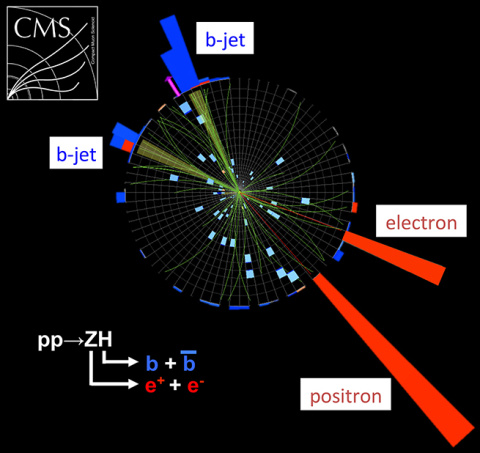
CMS observes Higgs boson decays into bottom quarks, furthering our knowledge of how the particles that make up matter behave.
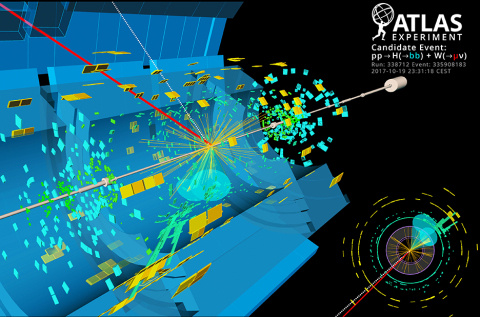
New direct evidence for Higgs interactions with top and bottom quarks confirms its role in generating mass for constituents of matter.
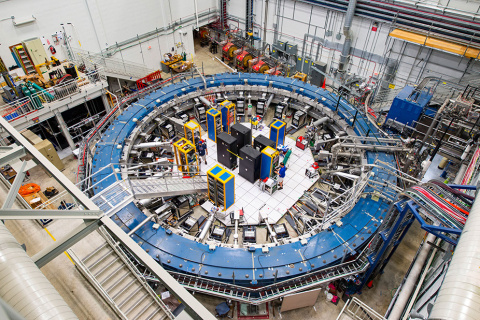
Comparing new prediction to measurements of muons’ precession could potentially help scientists discover new subatomic particles.
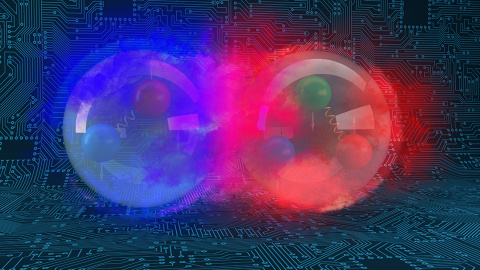
The first-ever computation of an atomic nucleus, the deuteron, on a quantum chip demonstrates that even today’s rudimentary quantum computers can solve nuclear physics questions.
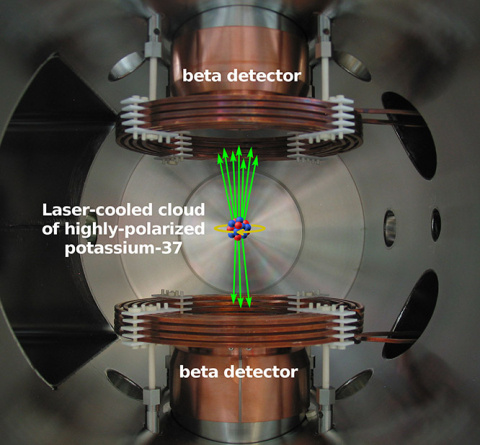
Using the TRIUMF Neutral Atom Trap (TRINAT) facility, a collaboration from Texas A&M University, TRIUMF (Canada's national particle accelerator
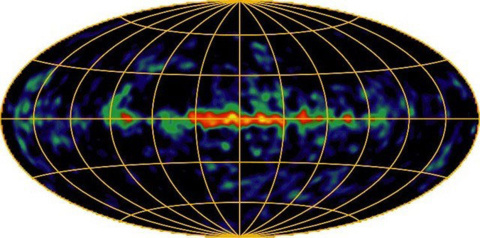
New Tech Uses Isomeric Beams to Study How and Where the Galaxy Makes One of Its Most Common Elements
Satellites equipped with gamma-ray telescopes have proven to be powerful tools for finding evidence that elements are continually being produced in
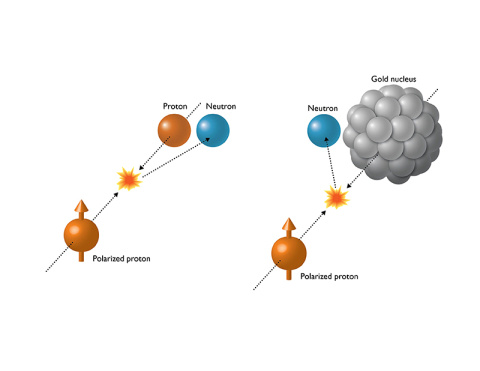
When RHIC physicists first collided spin-aligned protons with much larger gold nuclei in 2015, they expected to see neutrons emerging along the
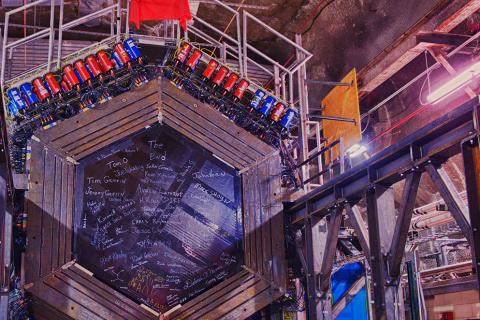
Scientists are developing better models that describe both neutrino and antineutrino data, which can offer insights into the nature of the universe.
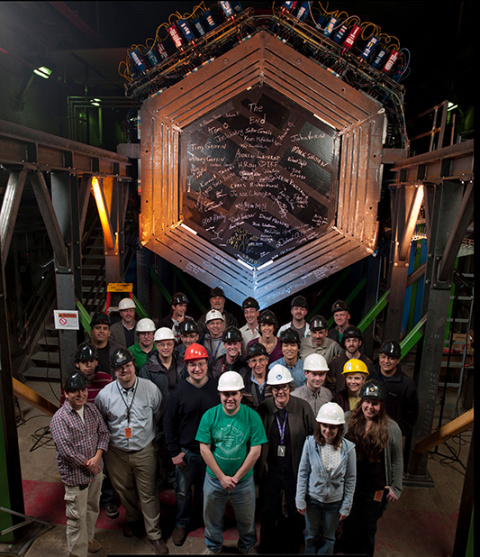
Neutral pion production is a major character in a story of mistaken identity worthy of an Agatha Christie novel.
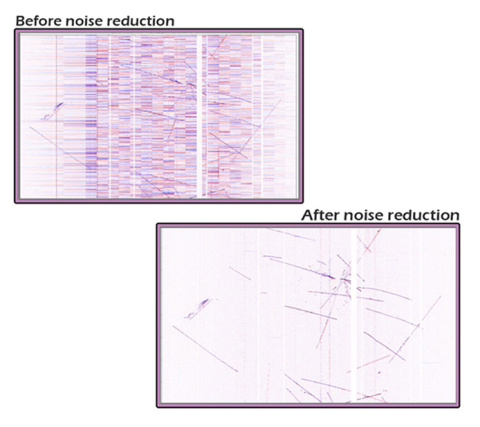
The primary component of the MicroBooNE detector is the TPC—a large, rectangular structure that includes a set of wire planes and readout