



Sandia’s ducted fuel injection technology moves from laboratory research toward real-world applications
Office of Technology Commercialization
November 17, 2026 Estimated Read Time min
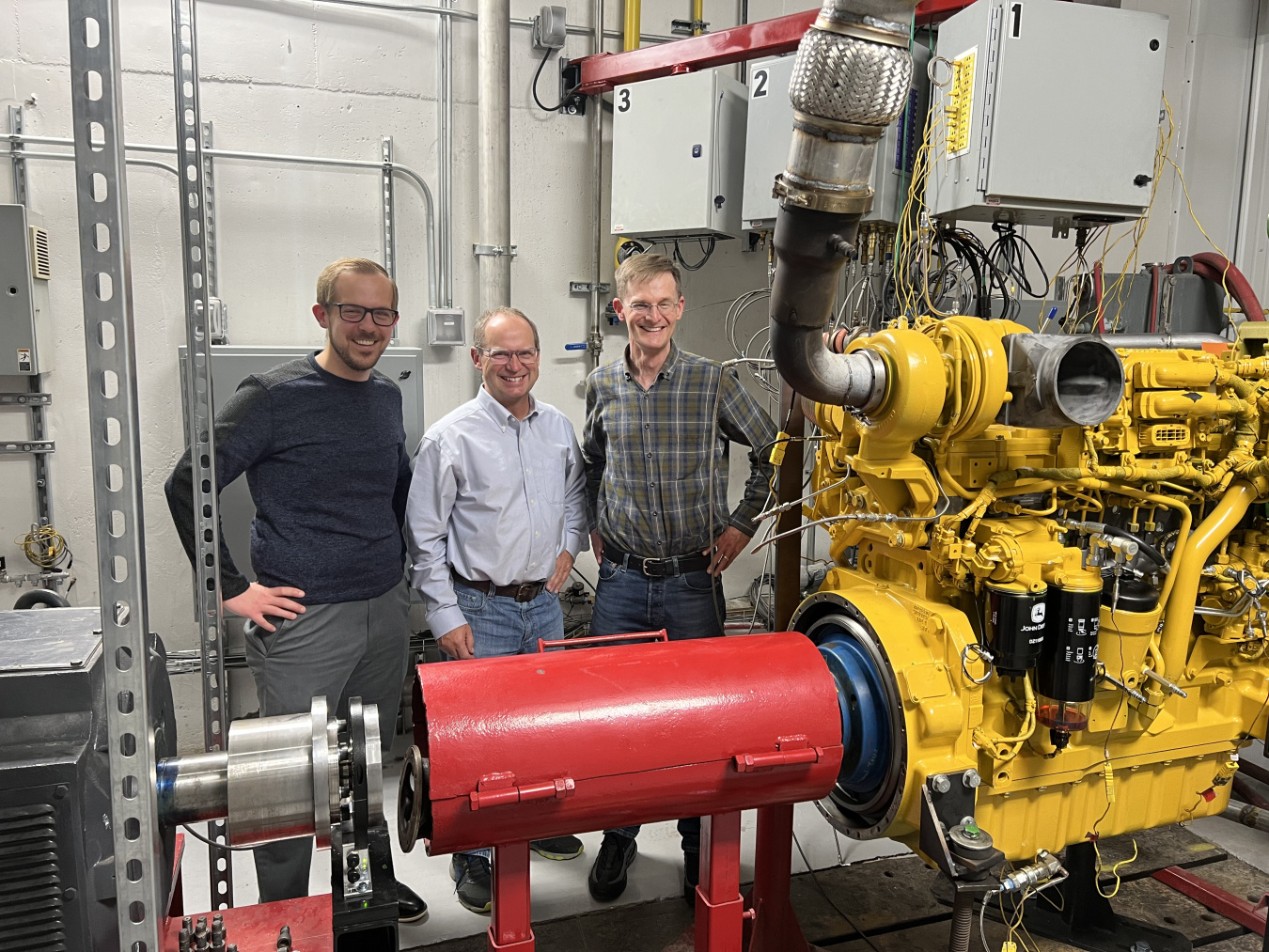
For the team at Sandia National Laboratories developing ducted fuel injection (DFI), the U.S. Department of Energy’s (DOE’s) Energy I-Corps program helped broaden the focus beyond proving that the technology works to understanding what it would take to bring it to market.
The team participated in the program in 2021. Although the formal program lasted two months, its impact continues through industry relationships, collaborations, and a commercialization strategy shaped by what the team learned.
An initiative of DOE’s Office of Technology Commercialization, Energy I-Corps pairs researchers with industry mentors to define a technology’s value, engage potential stakeholders, and identify viable paths to market.
As part of the program, the DFI team conducted 76 “customer discovery” interviews with raw material suppliers, manufacturers, component suppliers, fuel suppliers, and end users.
“There is a lot more to commercialization than just successful research and development,” said Kirby Baumgard, entrepreneurial lead for the DFI team and former staff engineer for John Deere Power Systems. “You need to find a path that makes sense for production and understand the partners you need to bring the technology to market.”
Chuck Mueller, principal investigator and staff scientist at Sandia, said the program helped the team turn those industry insights into a more focused development strategy.
“Energy I-Corps was tremendously beneficial in bringing our team together and helping us translate what we heard from stakeholders into more strategic next steps,” Mueller said. “We learned how to build a strong stakeholder network and develop a solid value proposition.”
Understanding the Value Chain
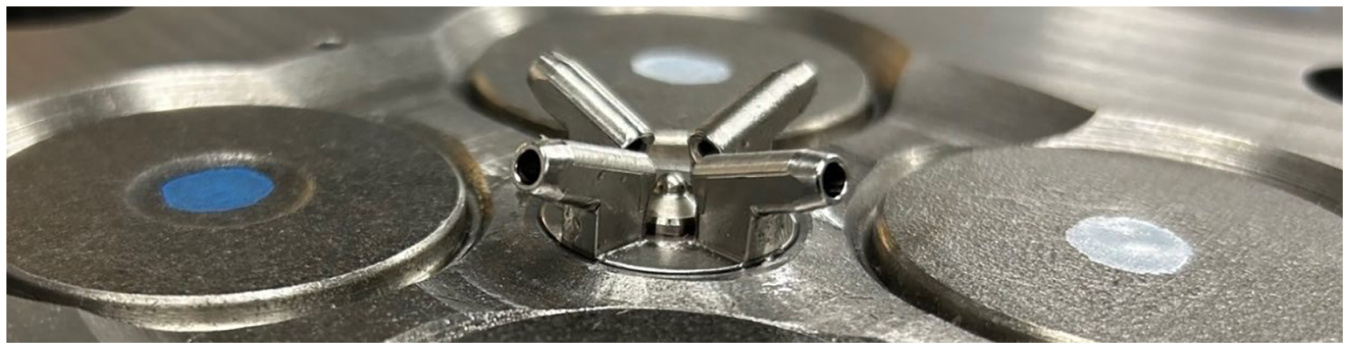
DFI is a combustion technology designed to improve the distribution of fuel and air inside a diesel engine, reducing fuel consumption and pollutant formation. Its potential is particularly relevant for large heavy-duty engines, where improved fuel economy can significantly affect operating costs.
DFI can also deliver economic benefits by optimizing the combustion process itself, reducing reliance on costly exhaust aftertreatment systems and potentially lowering equipment costs, weight, space requirements, and ongoing maintenance expenses. However, realizing these benefits requires more than improved engine performance. DFI must also be successfully integrated into real-world engine designs, manufacturing processes, and supply chains to achieve cost-effective, commercially viable deployment.
The 76 customer discovery interviews helped the researchers understand what would be required to manufacture, install, and create value with DFI. The team also worked with the Coordinating Research Council to build a broad network of industry stakeholders.
“You need to understand every player in the value chain to assess whether a technology can make it to market,” said Danan Dou, the DFI team’s industry mentor and chief power systems technologist at John Deere. “Energy I-Corps enabled us to view DFI through the lens of customers, suppliers, manufacturers, and other stakeholders, helping us identify its highest-value applications and establish a beachhead for commercialization.”
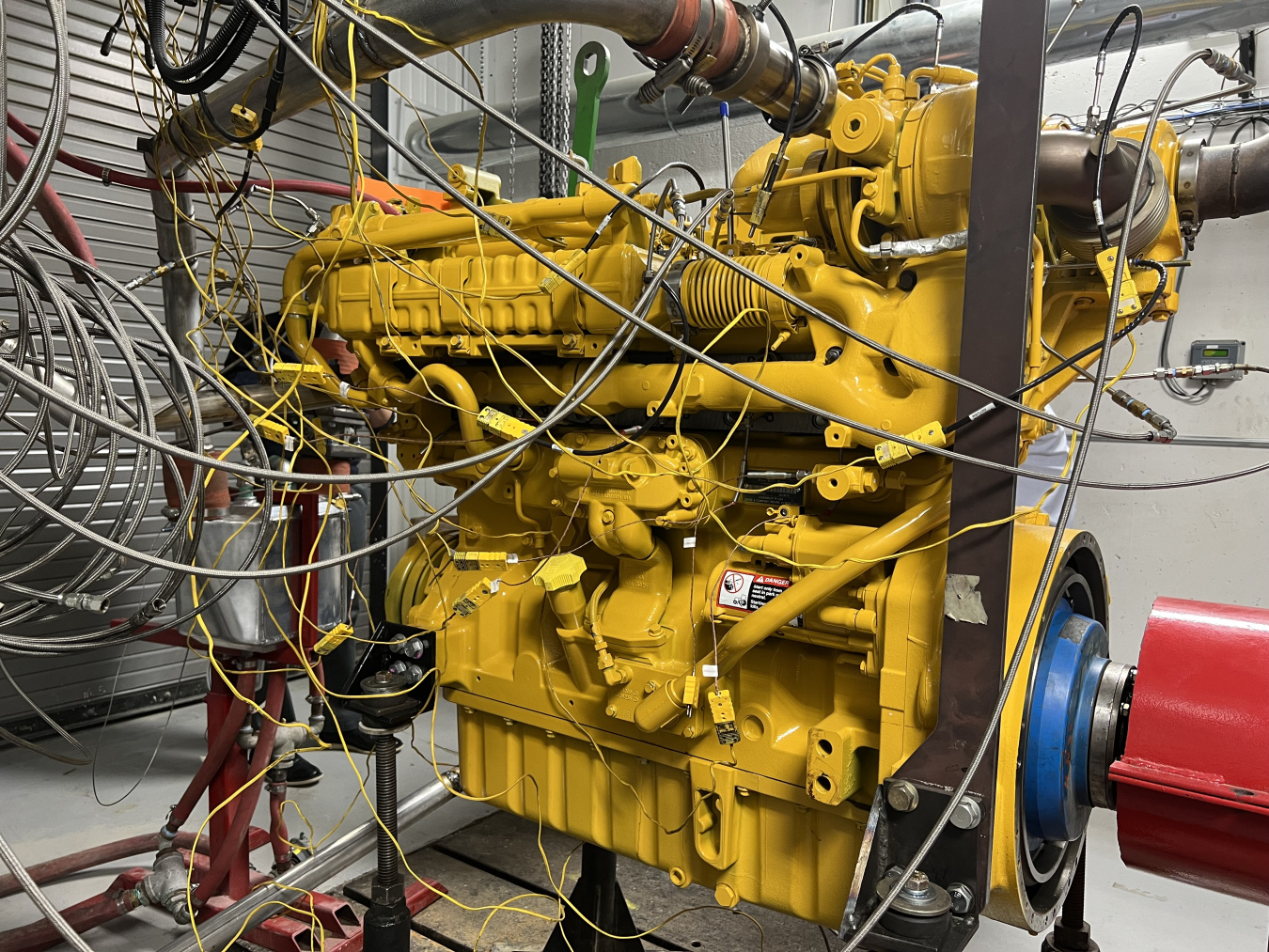
The team identified non-road engines above 560 kilowatts as a potential beachhead market, including locomotive and large-displacement engines such as John Deere’s 18-liter engine.
Those insights also influenced the technology’s design. The team evaluated six approaches for installing DFI duct modules in a production setting before selecting one for further development.
From Laboratory to Multicylinder Engine
DFI’s development spans more than two decades. Conceived in 2001, the technology was demonstrated in a constant-volume combustion vessel in 2014 and tested in a single-cylinder optical engine in 2018.
In 2024, DFI reached another milestone with its first testing in a multicylinder engine, demonstrating efficiency gains, along with approximately 40% lower nitrogen oxide emissions and 60% lower soot emissions in a John Deere 6090 engine.
More recent testing combining DFI with domestically produced alternative fuels reported even higher efficiency levels, with average reductions of 76%–87% in engine-out soot, 42%–49% in nitrogen oxides, and approximately 70% in life-cycle carbon dioxide, all while delivering the same power as the baseline engine. Beyond efficiency, the technologies offers several other potential benefits. The team sees opportunities for DFI to lower original equipment manufacturer production costs by reducing the need to retool factories for alternative technologies. Additional compliance margin could also simplify calibration, while reducing the requirements for aftertreatment systems could lower system costs.
For customers, potential benefits include lower fuel consumption, reduced equipment purchase costs, and lower total cost of ownership.
The next challenge is translating the testing results into a product that manufacturers can build and customers can afford. This question is central to the team’s work under a 2025 Technology Commercialization Fund Base Award. The goal is to demonstrate that DFI can provide a significant efficiency benefit without degrading emissions performance. Improving fuel economy is particularly important for large engines because fuel is a significant component of operating costs. The team’s work will also focus on production integration and demonstrating the technology’s value to manufacturers and customers who would ultimately adopt it.
From Technical Breakthrough to Market
Technical performance alone is not enough to commercialize a technology. Sustained industry partnerships and continued funding are needed to bridge the gap between research and deployment.
“It takes a long time and a tremendous amount of effort,” Baumgard said. “Commercialization requires sustained support from government and industry. Ultimately, the technology must make business sense—it has to create enough value for people to invest in it.”
Mueller emphasized the importance of continued multidisciplinary collaboration.
“The research is one piece of it, but moving the technology forward takes a much broader team,” he said.
For the DFI team, success ultimately means deploying the technology in commercial engines and demonstrating lower total cost of ownership alongside environmental benefits.