



Operators at the U.S. Department of Energy’s Portsmouth Site are uniquely prepared to take on the formidable demands of the legacy X-333 Process Building demolition — including new cutting-edge machines with powerful shear attachments that few in the world have handled.
Office of Environmental Management
October 20, 2026 Estimated Read Time min
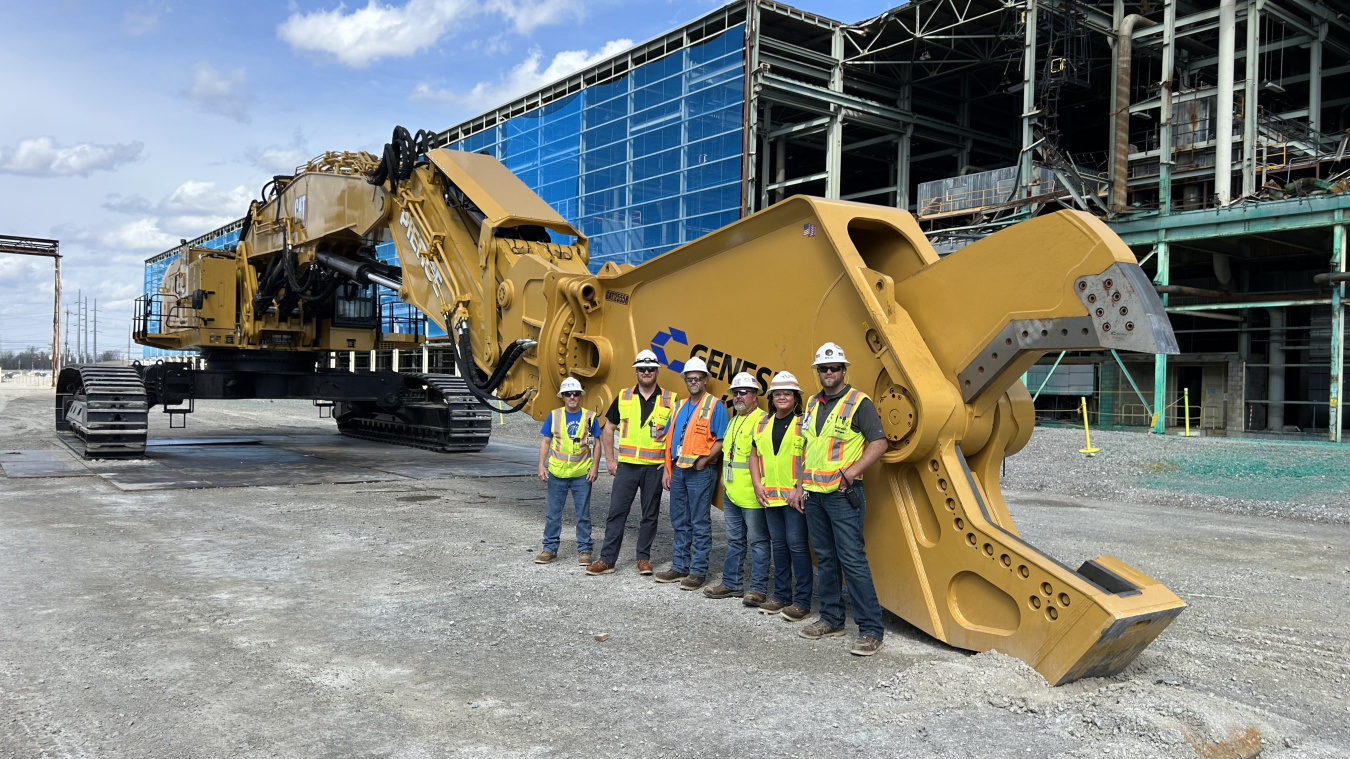
Operators show the scale of giant shears made for an excavator to help take down the X-333 Process Building. From left, Southern Ohio Cleanup Company (SOCCo) Excavator Operator Troy Woodward, Genesis Trainer Loren LaGesse, SOCCo excavator operators Craig Barker and Donald Proffitt, Construction Supervisor Jessica Hurd and Construction Manager Wade Howard.
PIKETON, Ohio — Operators at the U.S. Department of Energy’s Portsmouth Site are uniquely prepared to take on the formidable demands of the legacy X-333 Process Building demolition — including new cutting-edge machines with powerful shear attachments that few in the world have handled.
Four team members are trained to use the new fleet additions after a full day of classroom work and several days in the field running each machine through its motions, adjusting controls and learning maintenance routines necessary to keep the custom assemblies functioning at peak performance.
“Honestly, the hardest thing to grasp was how many moving parts are inside those large shears and just how powerful they are,” Southern Ohio Cleanup Company (SOCCo) Excavator Operator Craig Barker said. “We’ve never run anything like this before.”
SOCCo is the deactivation and demolition contractor at the DOE Office of Environmental Management’s Portsmouth Site.
Demolition of the 33-acre X-333 — the largest former uranium enrichment facility in the heart of the site — represents a landmark step in future redevelopment. Its teardown follows the successful demolition of the X-326 uranium process building in 2022.
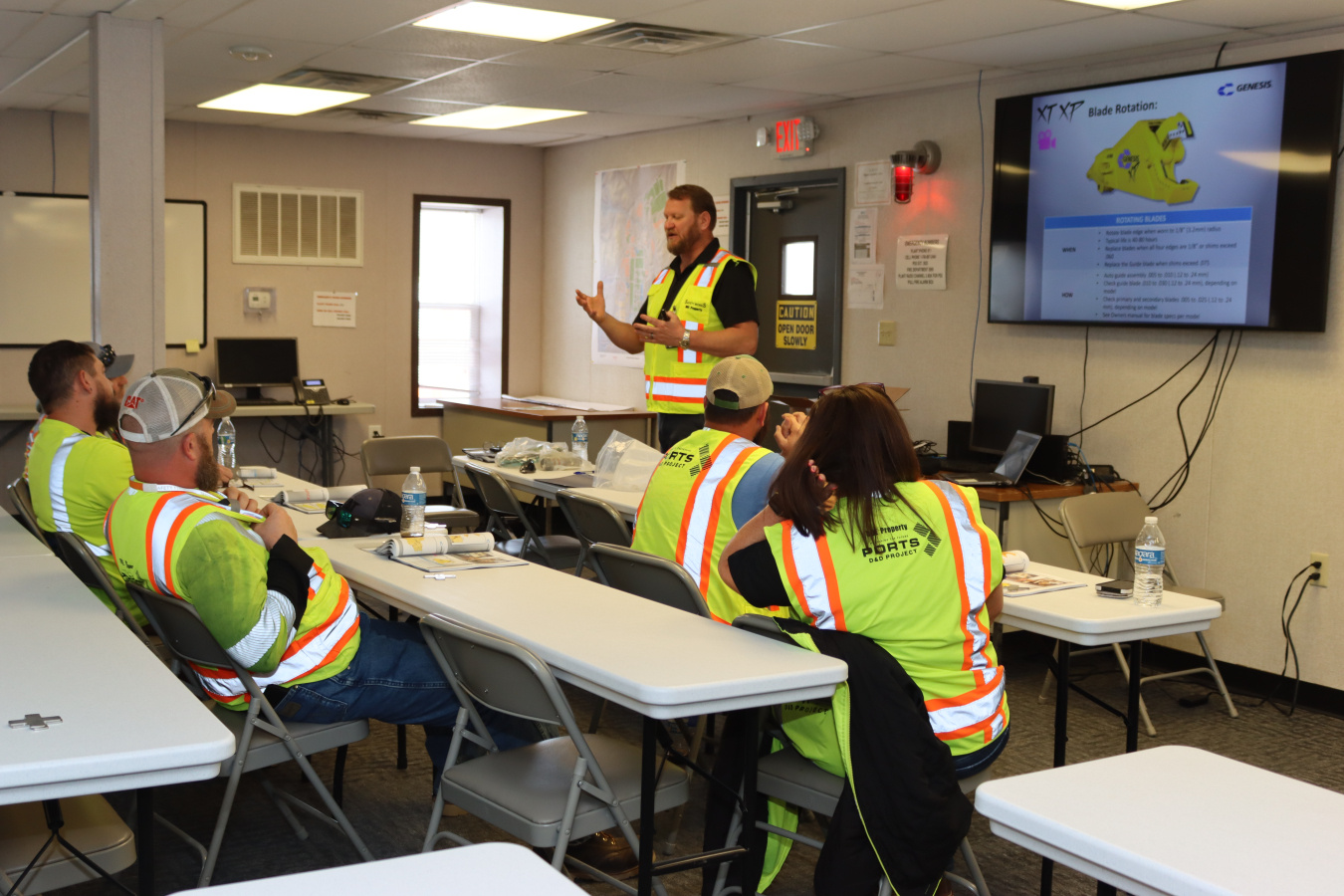
Genesis Technical Trainer Loren LaGesse discusses the importance of proper blade maintenance, rotation routines and wear checks to ensure operator safety and optimal performance to Portsmouth Site team members in training.
The new demolition equipment includes a variety of excavators, shear attachments and material handlers to lift heavy components, clear debris, slice through structural steel, and sort, load, and remove waste materials from the job site. The equipment will join the “Empress,” an oversized excavator designed to handle the massive framework of X-333.
“With the size and complexity of the X-333 Process Building, the team knew we would need equipment that was powerful enough to safely take the building down,” Federal Project Director Christy Brown said. “The X-333 held much larger process gas equipment than the X-326, so we’ve had to make the necessary adjustments to our fleet.”
Some of the excavators are equipped with the largest shears of their kind, capable of cutting through steel beams with unprecedented force, and other excavators wield enough power to pulverize concrete and strip concrete columns. In addition, mechanical attachments with claw-like tines and smaller shears allow operators to precisely sort and manage debris.
“The fleet was designed to be one of a kind,” SOCCo X-333 Construction Manager Wade Howard said. “The specialized training was needed so the operators could be prepared for how the attachments worked with the excavators.”
With safety as a top priority, the operators are trained to identify abnormal characteristics and are prepared to shut down and inspect the machines and equipment to ensure they always operate safely.
Additional operators are being trained for the new fleet of tools. Demolition of X-333 began in April 2025 and is expected to be completed in 2031. The team will look for opportunities to accelerate the project.
-Contributor: Michelle Teeters
To receive the latest news and updates about the Office of Environmental Management, submit your e-mail address.