



America’s energy resources may be beneath our feet but developing them depends on something above ground: a highly skilled workforce.
Hydrocarbons and Geothermal Energy Office
October 21, 2026 Estimated Read Time min
America’s energy resources may be beneath our feet but developing them depends on something above ground: a highly skilled workforce.
Earlier this month, the U.S. Department of Energy’s (DOE) Hydrocarbons and Geothermal Energy Office (HGEO) and Office of Indian Energy Policy and Programs announced eight projects selected for negotiation to receive nearly $11.1 million through the Partnerships for Academic-Industry Career Training (PACT) Initiative.
The projects will connect colleges and universities with energy employers and workforce organizations to create hands-on training and industry-recognized credentials for jobs supporting oil, natural gas, coal, and geothermal energy.
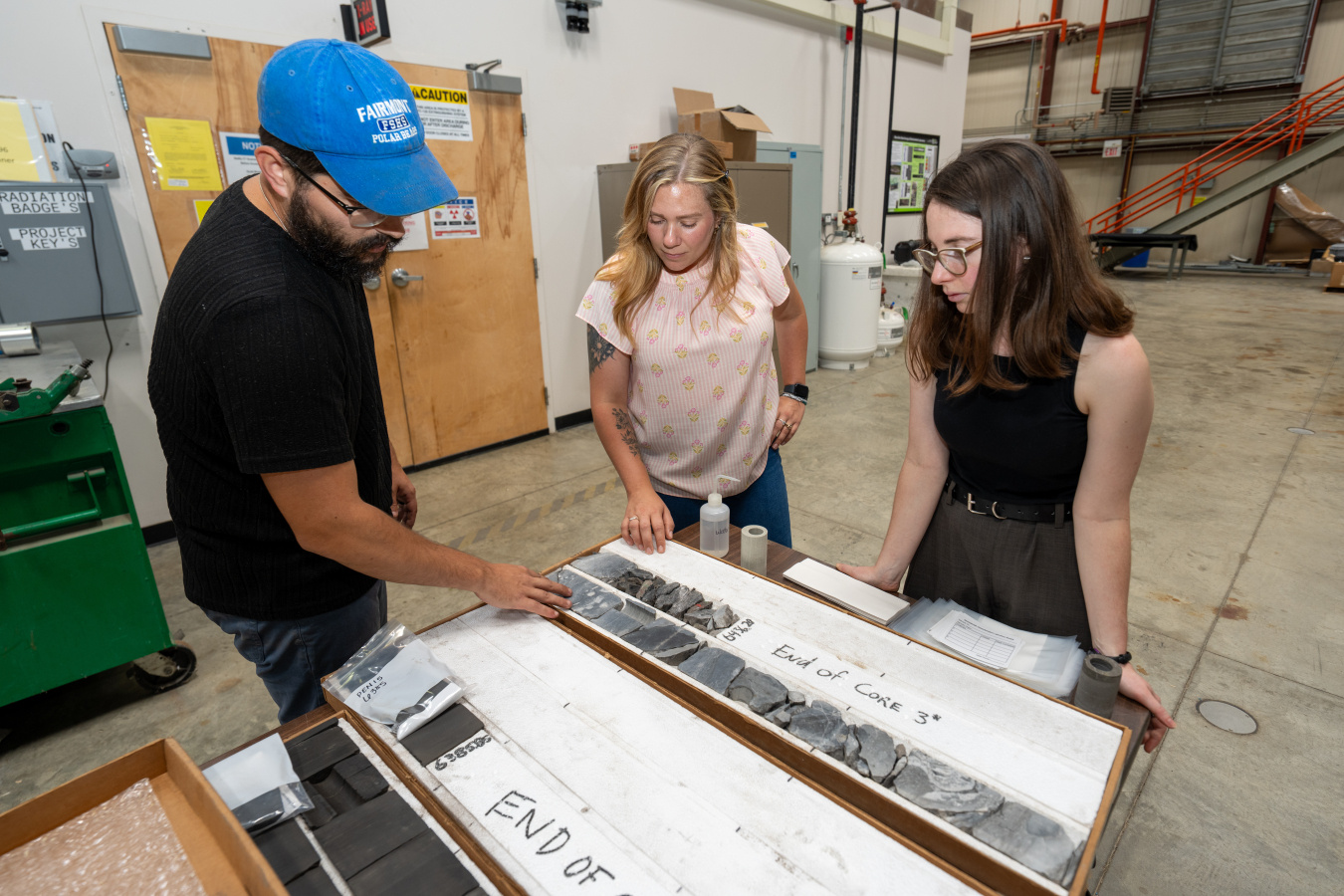
PACT is part of a much bigger story. Across HGEO, investments in early-stage research and development at colleges and universities are helping turn classrooms and laboratories into launching pads for energy careers. These targeted investments ensure that student training directly aligns with the precise skills and technical roles that modern energy employers require.
Bringing the Energy Workplace Into the Classroom
The eight newly-selected PACT projects span a remarkable range of skills and regions. For example, at New Mexico Junior College, students will train for increasingly automated oil and natural gas operations using immersive simulation technology. Somerset Community College in Kentucky will establish progressive training for geothermal field technicians, assistant drillers, and drillers. At South Texas College, in partnership with the University of Texas Rio Grande Valley, students will receive hands-on training for produced-water treatment, recycling, and disposal operations. The Alaska Vocational Technical Center, in collaboration with the University of Alaska Fairbanks, will develop a training program to cultivate a new tranche of instructors for Alaska’s energy sector. Other projects will develop skills in super intelligence, geographic information systems, energy infrastructure, and project management.
Approximately $2.3 million will support two projects at Tribal Colleges and Universities through DOE’s Office of Indian Energy and Policy Programs, including geospatial technology training at Leech Lake Tribal College in Minnesota and learning nondestructive ultrasonic inspection techniques to find hidden flaws in pipelines, manufactured components, and other critical energy infrastructure at Navajo Technical University in New Mexico.
A critical aspect of the PACT Initiative is the creation of robust partnerships. Industry employer partners help identify high-demand skills, shape curricula, provide work-based learning opportunities, and create clearer pathways from training to employment. Workforce development partners assist with student recruitment, deliver essential support services, and monitor outcomes. In short, these collaborative efforts bridge the gap between academic training and direct hiring, making the path from the classroom and the jobsite shorter and more navigable.
Turning University Research Into a Training Ground
HGEO’s investment in the future workforce begins well before a student applies for a job. Through its University Training and Research (UTR) Program, DOE supports early-stage research at U.S. colleges and universities while giving students opportunities to work alongside faculty on real energy challenges.
These investments place students at the center of emerging technology development. UTR participants contribute to the development of next-generation technologies, ranging from advanced sensors to robotics and autonomous systems.
At West Virginia University, for example, doctoral student Paulo Simplicio investigated algorithms to enable drones to autonomously inspect mining waste-storage facilities and identify potential hazards. Other university participants have explored technologies such as high-temperature fiber-optic sensors.
In August 2026, HGEO announced up to $10.75 million in new UTR funding for university research and training. This funding opportunity introduces new concepts to the UTR program, including the requirement of a non-academic partner to help ground the academic research in real-world applications and expose student participants to non-academic careers. Projects awarded will also involve creation of educational modules designed for hands-on learning that will continue to educate students even after the grant period has ended. Further, the funding opportunity is structured as “recurring,” meaning there is expected to be three separate application periods from 2026-2028.
The result is more than a research project. Students learn how to solve problems that matter to the energy sector while building expertise they can carry into industry, academia, national laboratories, or future technology development.
Opening the Door to DOE's National Laboratories
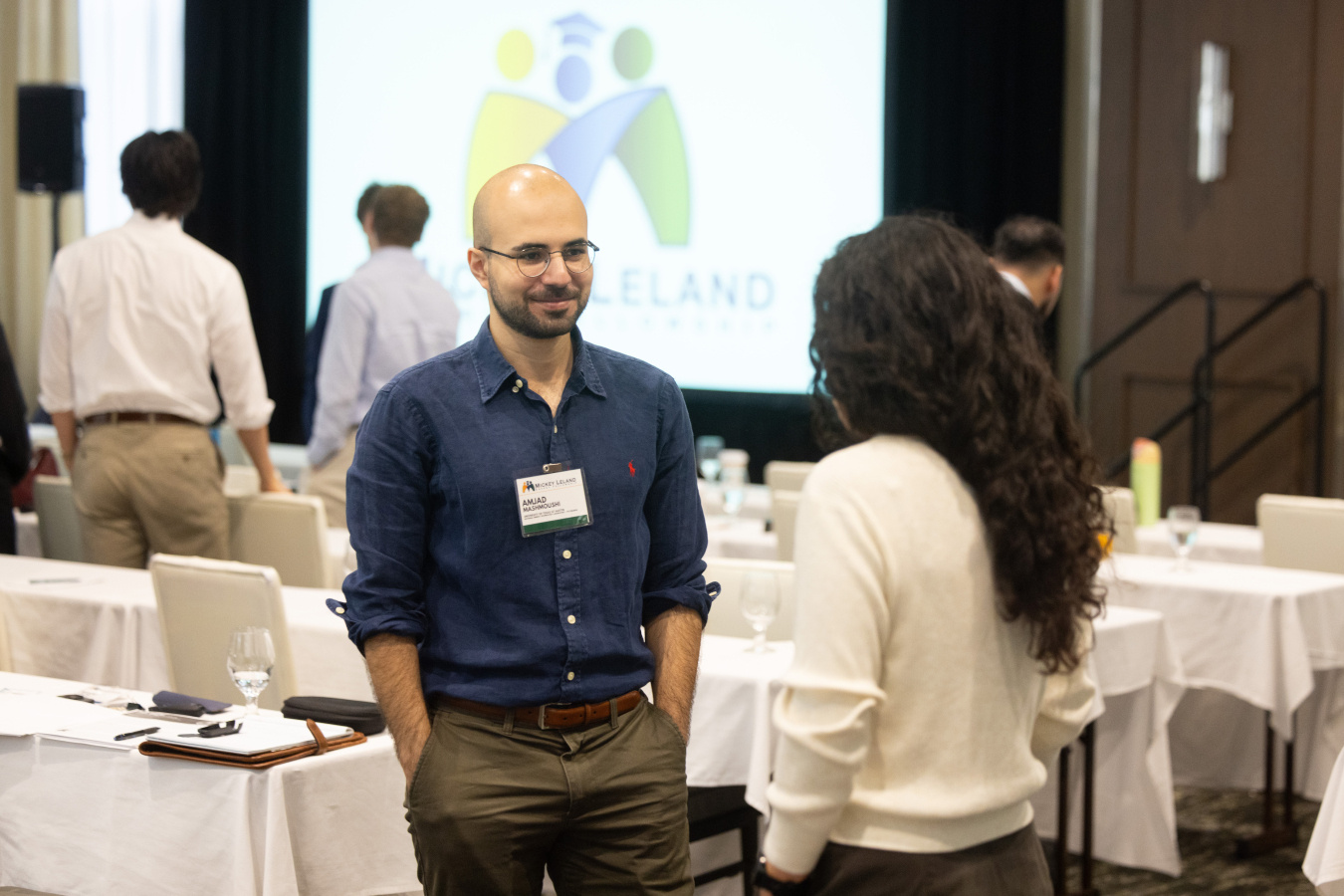
For three decades, the Mickey Leland Energy Fellowship (MLEF) has championed career pipelines that connect top talent to the energy sector. This 10-week summer program provides undergraduate and graduate science, technology, engineering, and mathematics (STEM) students opportunities to train with DOE scientists and engineers on mission-focused research at DOE’s Washington, D.C. headquarters, the National Energy Technology Laboratory; the National Laboratory of the Rockies, the Idaho National Laboratory, Lawrence Livermore National Laboratory, Lawrence Berkeley National Laboratory, and other DOE laboratories.
For a student, that can mean access to sophisticated facilities, experienced researchers, and energy challenges that are difficult to reproduce in a traditional classroom. Fellows have contributed to projects involving geothermal systems, advanced materials, pipeline safety, and other areas critical to America's energy future.
For example, University of Miami geology student Caroline Quanbeck analyzed geological data from over 250 wells during her fellowship at DOE headquarters, identifying underground layers that may contain rare earth elements. She identified approximately 25 high-potential wells for further investigation and sampling, maximizing both the target accuracy and efficiency of DOE’s critical materials exploration.
These immersive experiences frequently shape participant’s academic trajectories and subsequent career choices. Since its inception in 1995, MLEF has cultivated a nationwide network of more than 1,300 alumni. Applications are being accepted now for the current cycle through January 8, 2027.
Investing in People is Investing in Energy
PACT, UTR, MLEF, and HGEO’s broader competitive funding opportunities take different approaches, but they share the important purpose of investing in people. For example:
- A community-college student can earn an employer-informed technical credential.
- An undergraduate can spend a summer being mentored by a DOE researcher.
- A doctoral student can test new technology with support from a federal research award.
- A professor can build a research program that trains students while pursuing solutions to energy challenges.
Although the impact of these initiatives transcends what can be measured in a single funding announcement, they expand our national talent pool of scientists, engineers, technicians, researchers, and innovators poised to drive the leadership of domestic energy industries.
Visit the HGEO website or sign up for email updates to learn more about these and other HGEO workforce programs.