



LM works with Tribal partners to shine a light on history of Hopi Code Talkers in World War II
October 5, 2026 Estimated Read Time min
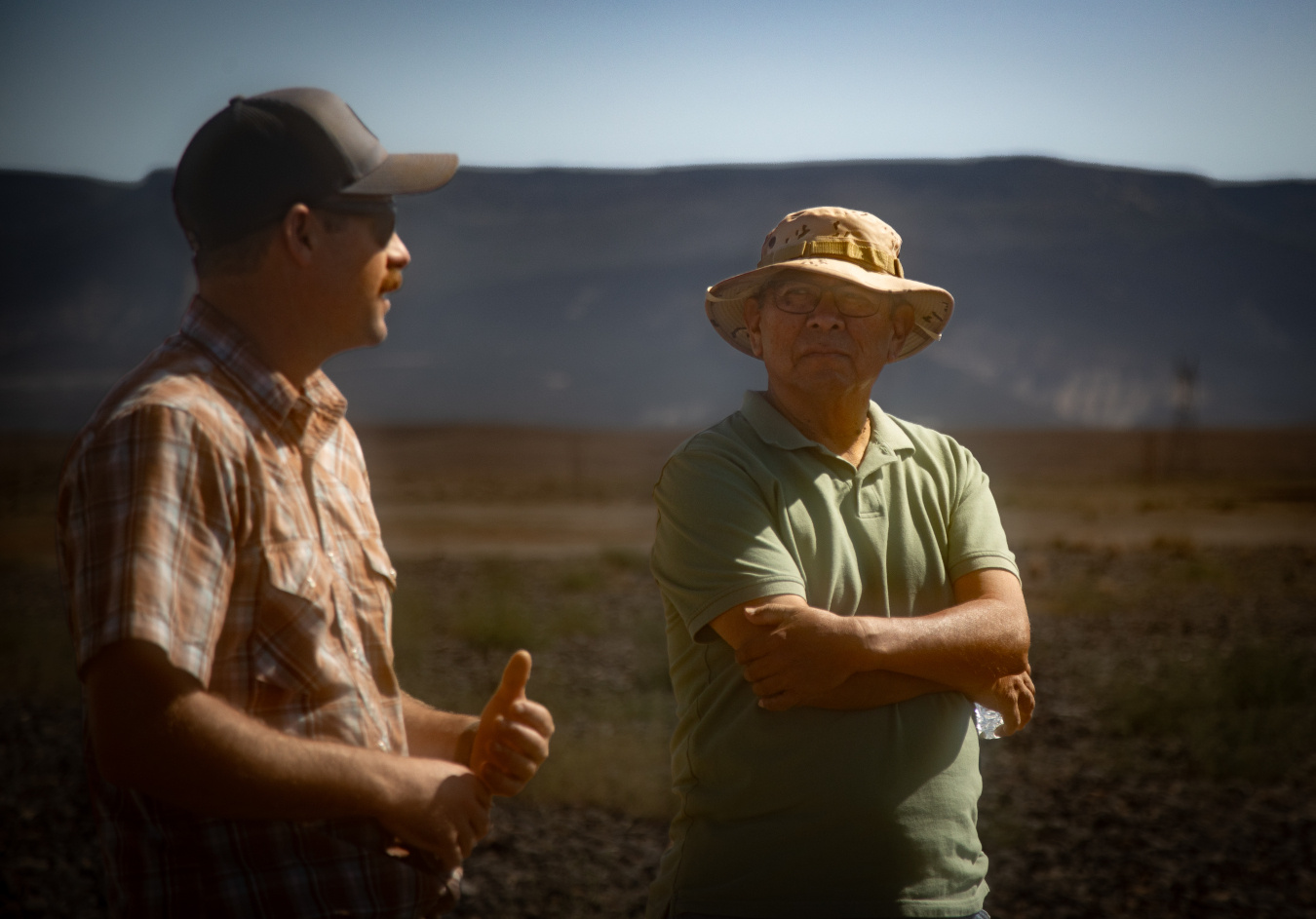
LM first met Geno Talas when he agreed to serve on a committee of Hopi subject-matter experts to develop an LM-sponsored exhibit at the Tuuvi Travel Center in Moenkopi, Arizona.
Talas is a U.S. Air Force veteran and a member of the Hopi Tribe who has extensive knowledge of the Hopi Code Talkers, 10 men who served in World War II and spoke in their native language for our nation’s defense. In the Pacific theater, Hopi and other Tribal code talkers communicated via radio in their native tongues. Because none of the languages existed in written form at the time, Japanese code breakers were never able to decipher the radio traffic of U.S. forces, giving the Americans a tremendous military advantage.
Talas’s subject-matter expertise is precisely why LM asked him to serve on the committee.
“We knew we could never put this exhibit together without Geno’s help,” said Tuba City Site Manager Bill Frazier. “The relationship that has developed between Geno and LM and our Support Partners has only deepened LM’s commitment to the Hopi Tribe and our work at the Tuba City Disposal Site.”
Talas served 30 years in the U.S. Air Force before returning to the Hopi Reservation to serve as the manager of Hopi Veterans Services for the Tribe. With Talas’s impressive credentials, he might seem intimidating. Upon the first introduction, those thoughts were immediately dispelled as he asked everyone who did not know him to call him Geno.
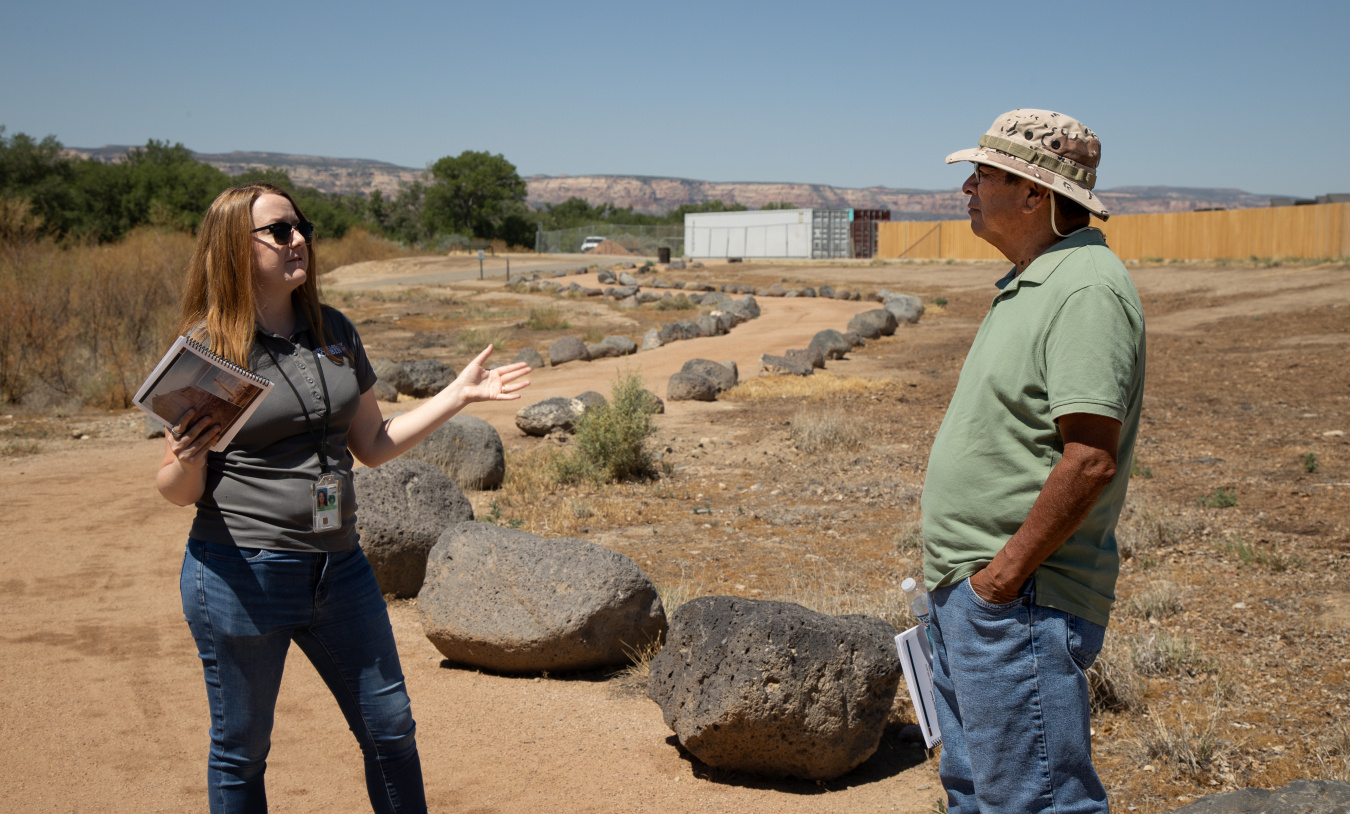
“He’s an incredibly nice guy,” said LM Program Communications Specialist Shawn Montgomery. “He’s just very interested in helping to develop this project because it’s so deeply personal to him.”
One of Talas’s accomplishments at Hopi Veterans Services was researching the histories of 10 Hopi Code Talkers who served in WWII. As a result of his efforts, the Hopi Tribe was awarded the U.S. Congressional Native American Code Talkers Gold Medal in 2013. The Code Talkers’ surviving family members received a silver duplicate medal. In addition, 34 Native American Tribes have been honored with the Gold Medal whose members served as Code Talkers during World Wars I and II.
April 23 has been designated Hopi Code Talker Day. Annually, Talas hosts Hopi Code Talker Day at the Hopi Veterans Center in Kykotsmovi, Arizona, so that families can remember and honor their WWII servicemen. This year, LM Support Partners staff attended the event and shared the exhibit project’s development with the Tribe.
“Geno’s work helped the Hopi Tribe get the recognition they deserved,” Montgomery said. “Hopi Code Talkers saved American lives and shortened the war in the Pacific.”
The exhibit’s development is the result of a partnership between the Hopi Department of Natural Resources (DNR), Moenkopi Development Corporation, and LM.
LM’s cooperative agreement with the Hopi DNR entails document review, long-term stewardship and surveillance, and community outreach. The exhibit project stemmed from the Tribe’s request for an informative video about LM’s disposal site in Tuba City. The original video project did not come to fruition, but plans for a public exhibit developed from that idea.
A committee comprising members of the Hopi Tribe, the Moenkopi Developers Corporation (MDC), LM and LM Support Partners began meeting to develop initial content, interpretive panels, and design elements.
The committee’s original thought was to create a small exhibit at the Moenkopi Legacy Inn in Tuba City. MDC, property owners of the hotel and travel center, suggested that the exhibit space could be located at the Tuuvi Travel Center in Tuba City, which tripled the amount of available space for the exhibit.
From there, the committee decided the exhibit should expand from the proposed Code Talkers exhibit to include information about the history of uranium mining, the story of the current mill-tailings disposal site, and the Hopi Tribe’s origin story.
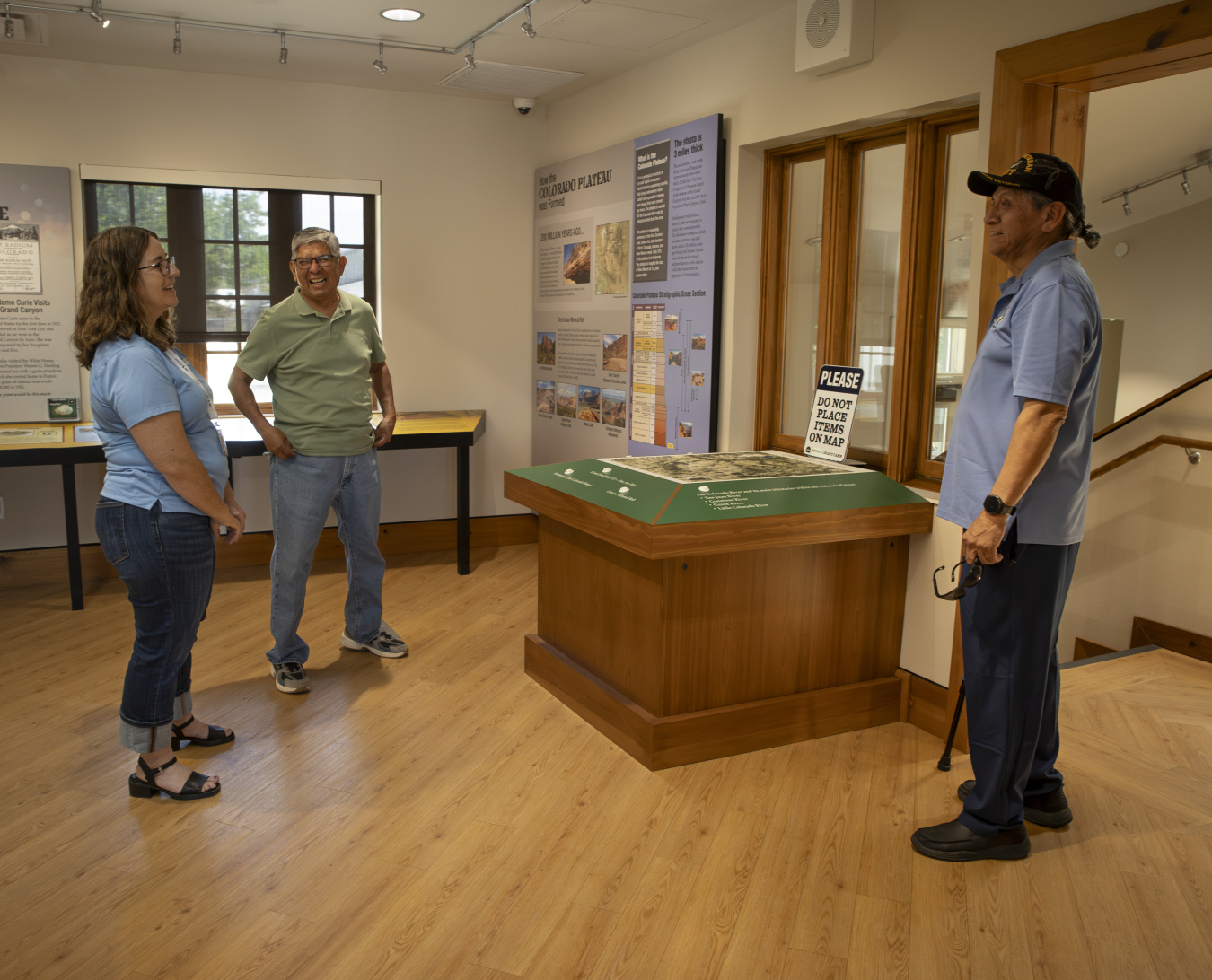
To strengthen the partnership, Talas recently visited LM’s Atomic Legacy Cabin in Grand Junction, Colorado to better understand LM’ s work and the exhibits at the cabin.
Talas also toured the mill-tailings disposal site southeast of Grand Junction and the former Climax uranium-processing site that is now Las Colonias Park. The tour of Grand Junction sites gave Talas an understanding of the cleanup process, transfer of uranium mill tailings to a disposal site, and beneficial reuse.
Talas said it was interesting to learn the history of uranium mining, to see mill-tailings disposal facility functions, and to explore community reclamation projects. He said his tour of the Atomic Legacy Cabin gave him excellent ideas to recommend to the Tuuvi Travel Center project committee.
“With the combined partnership of the Hopi Tribe, Moenkopi Developers Corporation, Hopi DNR and LM, our efforts will showcase the historical legacy of the Hopi Code Talkers to a wider traveling audience,” Talas said. “My sincere compliments to Legacy Management and the friendly staff I met, who treated me as a distinguished visitor. Each conducted superb presentations and displayed utmost professional courtesy.”