



For the first time since February, the Hanford Site’s Tank-Side Cesium Removal System is back in operation, pretreating radioactive tank waste.
Office of Environmental Management
September 15, 2026 Estimated Read Time min
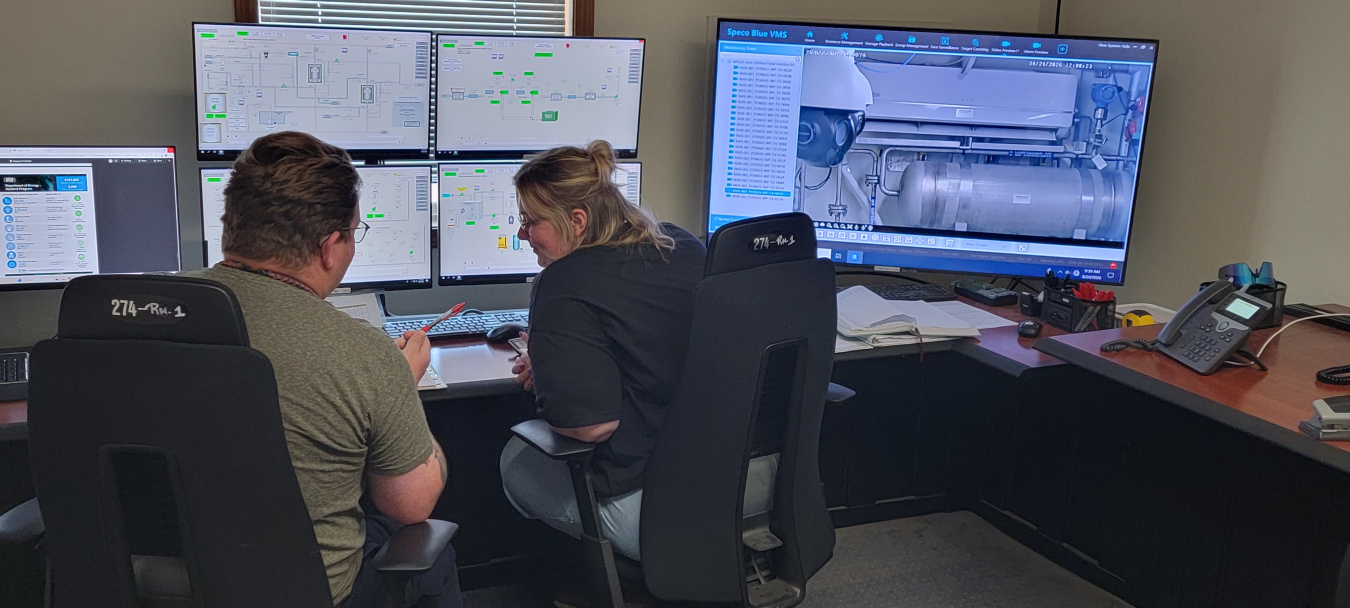
Hanford Tank Waste Operations & Closure Nuclear Chemical Operators James Sachse and Sarah Arneson-Rock monitor operations in the Tank-Side Cesium Removal System control room as the system resumes waste pretreatment.
RICHLAND, Wash. — For the first time since February, the Hanford Site’s Tank-Side Cesium Removal (TSCR) System is back in operation, pretreating radioactive tank waste.
The system paused operations Feb. 25 after finishing its previous batch. Crews with Hanford Tank Waste Operations & Closure (H2C) can usually prepare the system for the next batch in about two weeks, but this restart was delayed because Tank AP-106 was too full to receive more pretreated waste. There are currently about 1 million gallons of TSCR pretreated waste stored in AP-106, staged there until it is sent to the Waste Treatment and Immobilization Plant (WTP) to be turned into glass for disposal.
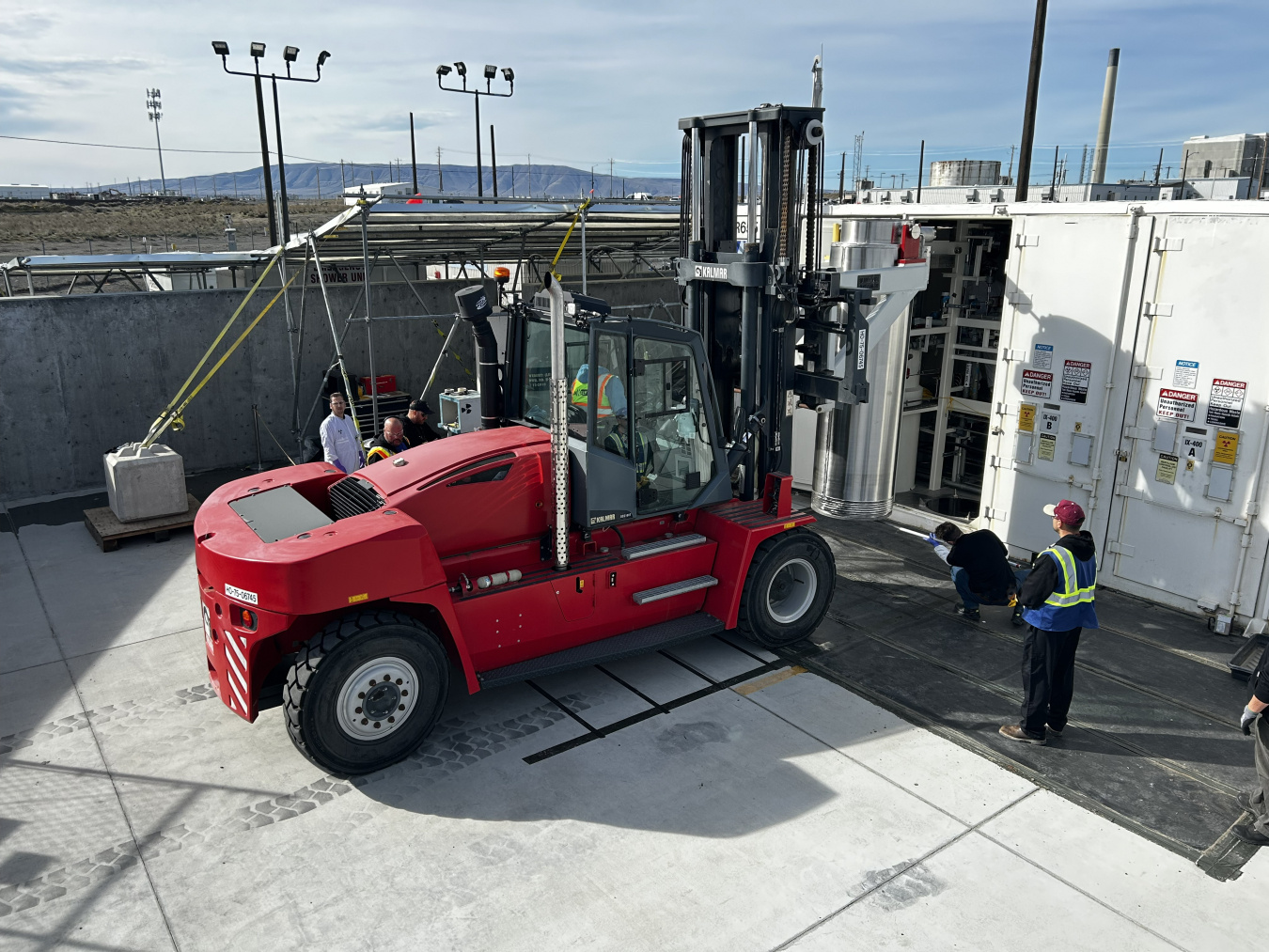
A used ion exchange column is removed from the Tank-Side Cesium Removal System process enclosure in March after completion of the last batch.
Since the plant began hot commissioning in October 2025, more than 242,000 gallons of TSCR pretreated waste have been transferred from AP-106 to WTP — about the amount TSCR processes in one batch. In hot commissioning, the waste combines with glass-forming materials and is heated to 2,100 degrees Fahrenheit. This process, called vitrification, transforms the waste into a stable glass form, which is then sealed in stainless steel containers for safe disposal.
“The restart underscores why Hanford is advancing a dual glass-plus-grout approach for appropriate treated waste streams,” said Mat Irwin, assistant manager for tank waste operations. “Glass remains central to the mission, while grout could add another disposal path to reduce bottlenecks and support continued cleanup progress.”
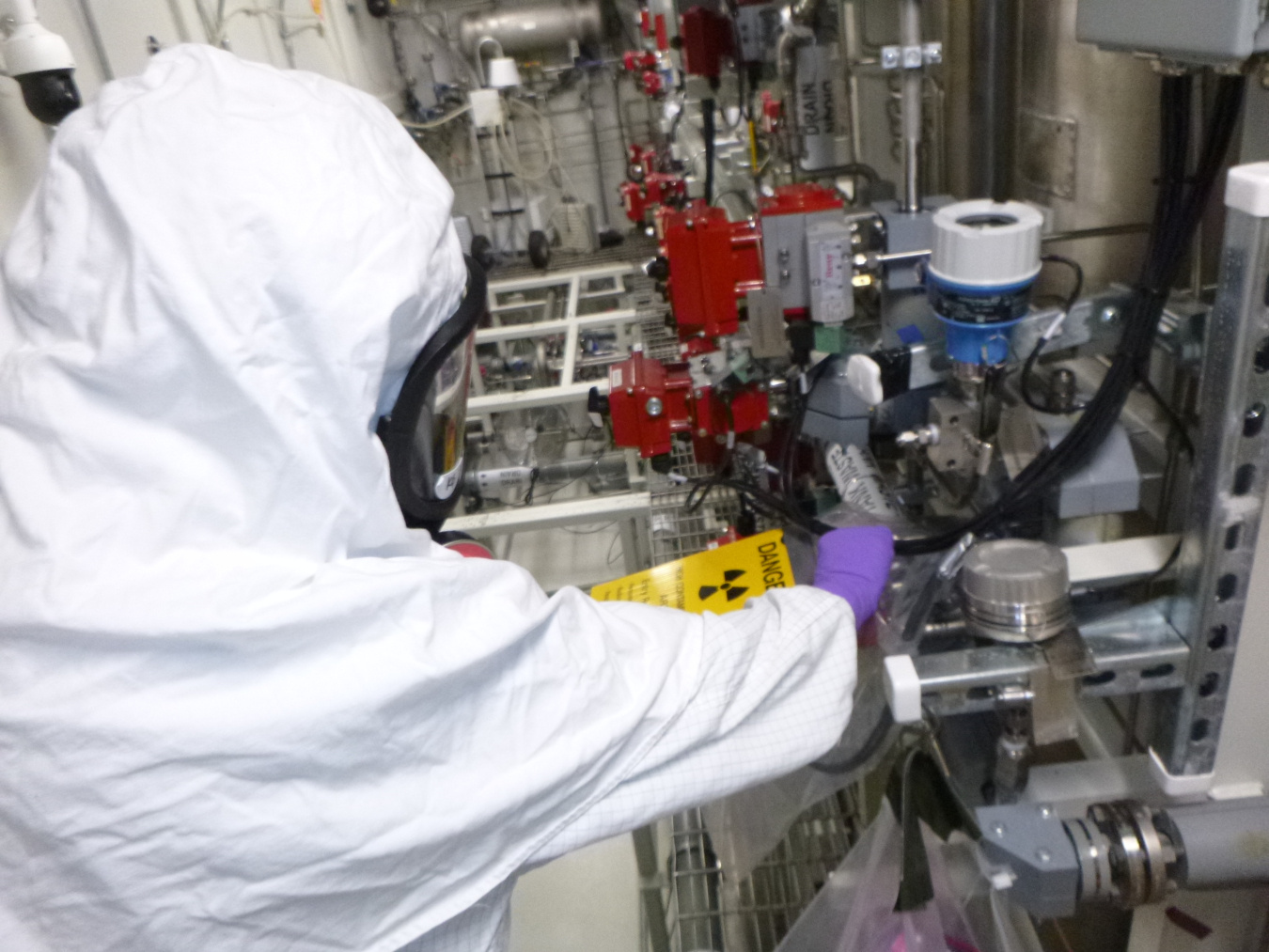
A worker performs maintenance inside the Hanford Site’s Tank-Side Cesium Removal System.
That added flexibility could also help reduce costs over time by shortening schedules and improving operational efficiency.
“The One Hanford team is doing something never done before — reducing the amount of waste in underground tanks through vitrification,” said Ken Langdon, H2C president and program manager. “We are retrieving and pretreating waste faster than it can be immobilized through vitrification alone, so we are focused on supporting DFLAW’s path of continuous improvement plus grouting low-activity waste to accelerate progress on our mission.”
During the extended pause, H2C workers completed maintenance, equipment upgrades, training and other project work, including installing a new weather enclosure to better protect workers and equipment.
The current batch is expected to run through September and produce about 230,000 gallons of pretreated waste destined for treatment and disposal.
To receive the latest news and updates about the Office of Environmental Management, submit your e-mail address.