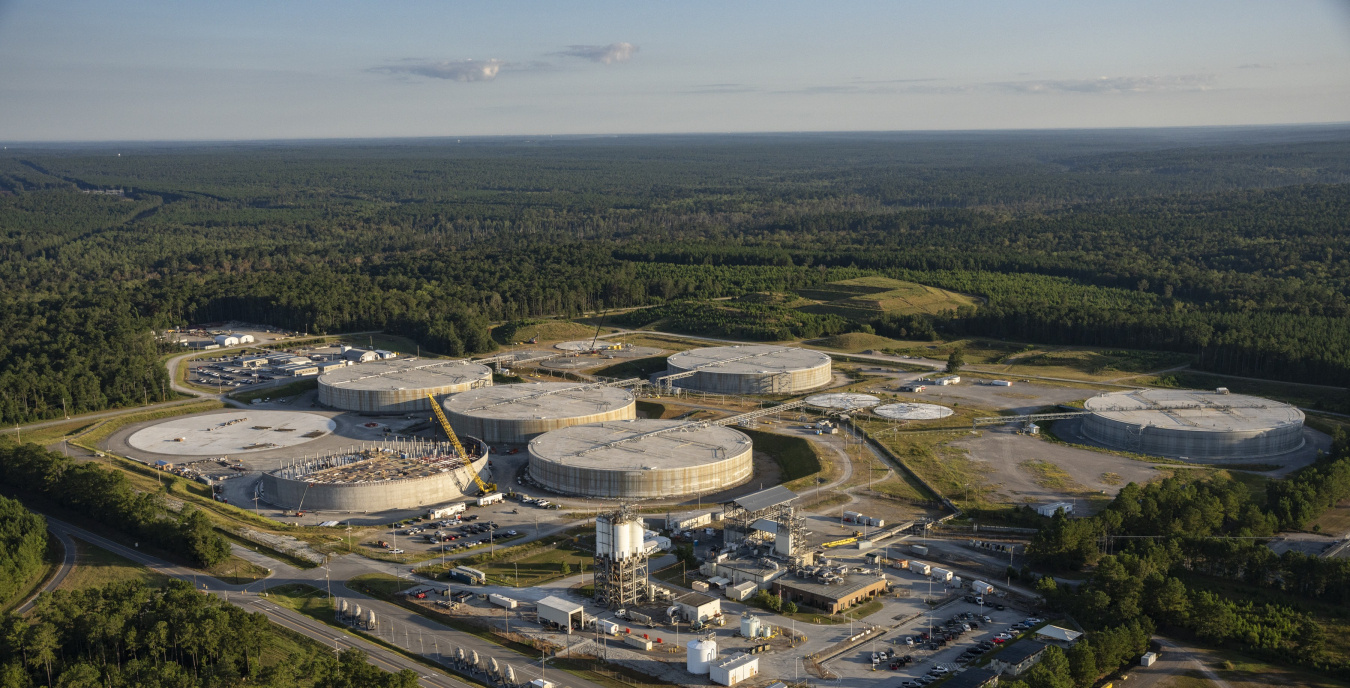
Savannah River Fact Sheet on Saltstone Disposal Units
July 16, 2026 Estimated Read Time min
The U.S. Department of Energy’s Savannah River Site (SRS) has 51 underground carbon-steel waste storage tanks, located in its two tank farms. These tanks were built to hold radioactive liquid waste from Cold War-era nuclear weapons production. Approximately 32 million gallons of radioactive liquid waste remains in 43 waste operational tanks. Eight of the 51 tanks have been operationally closed. Operational closure includes emptying the tank and processing its contents, isolating the tank from other facilities, cleaning its interior and annulus, and filling with grout to permanently remove the tank from service.
Tank waste takes two forms: sludge and salt waste. Sludge at the bottom of the waste tanks is treated at the Defense Waste Processing Facility (DWPF), where the waste is converted into a solid glass form suitable for long-term storage and disposal in a process known as “vitrification.” The Salt Waste Processing Facility (SWPF) is processing the remaining salt waste inventory at SRS.
The SWPF forwards the high-activity radionuclides separated from salt waste to DWPF for vitrification, while the resulting decontaminated salt solution (DSS) is sent to the Saltstone Production Facility (SPF) for treatment into grout for permanent on-site disposal.
The SPF contains tanks and equipment necessary to receive the large DSS stream from SWPF. Saltstone grout is made by mixing DSS with fly ash and slag. The grout is pumped into Saltstone Disposal Units (SDU), where it solidifies into a monolithic, non hazardous, solid form.
SDUs are large concrete units used for permanent disposal of saltstone. Generally, there are two types of SDUs that have been utilized at SRS. The early units were rectangular in shape. Con struction of those first two units (SDUs 1 and 4) was completed between February 1986 and July 1988. No more waste disposal is planned for these SDUs. Subsequent SDUs are cylindrical and based on a design used commercially for storage of water and other liquids. The early cylindrical SDUs hold approximately three million gallons of saltstone. SDU 2 construction was completed in June 2012 and began filling in September 2012 and completed filling in July 2014. SDU 3 and SDU 5 were construction-complete in September 2013. SDU 5 completed filling in February 2017. SDU 3 began filling in February 2017.
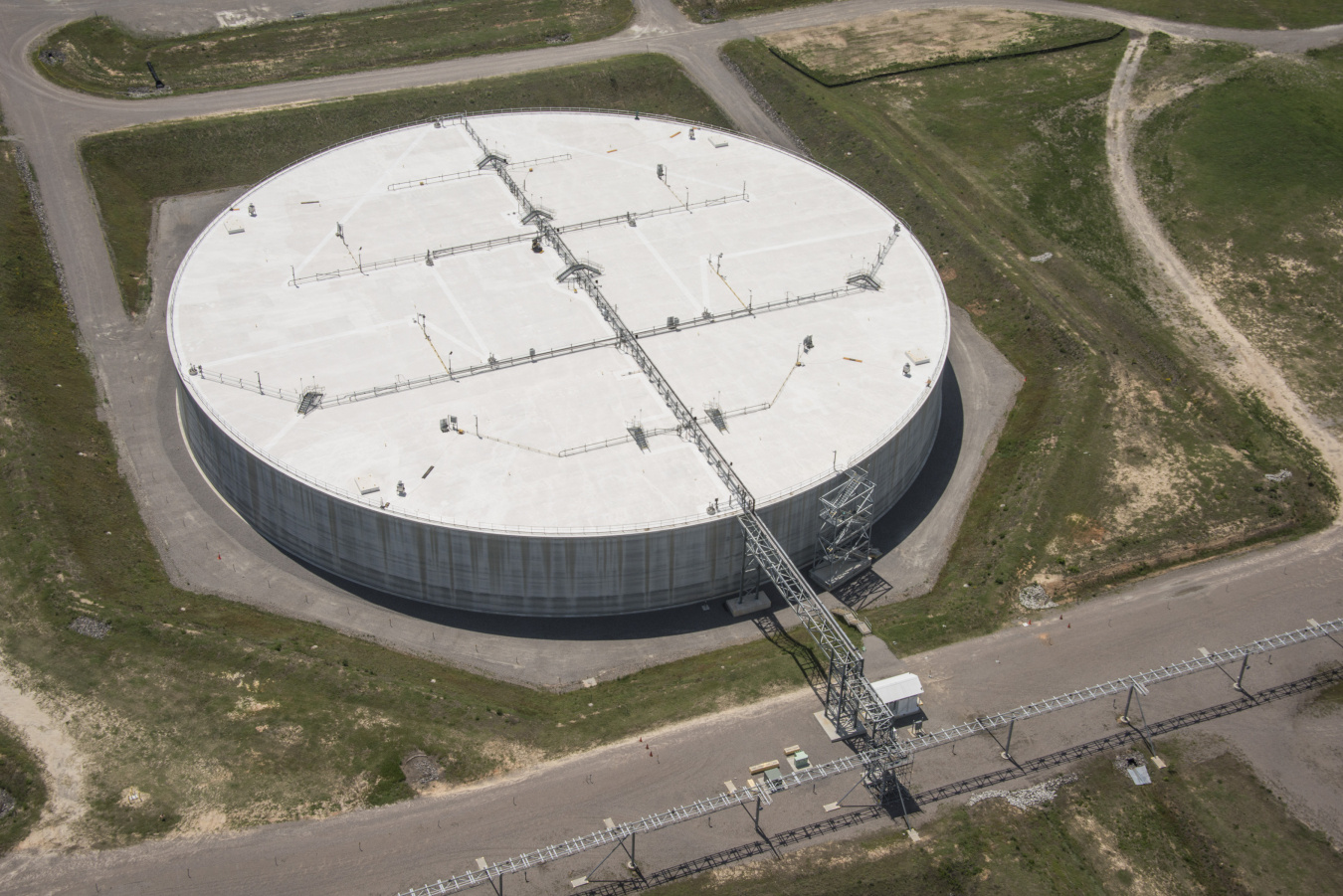
In 2012, DOE approved the design for mega-volume units that are 10 times larger than the previous SDUs. The mega-volume units are 375 feet in diameter, 43 feet high, and can hold approximately 33 million gallons of saltstone. They are designed for the larger quantities of DSS that will be produced by the site’s SWPF. SDU 6, SRS’s first mega-volume SDU, was completed in May 2017, and it began receiving low-activity waste grout in August 2018. The second mega-volume SDU, SDU 7, is operational. SDUs 8 and 9 were approved for operations in 2023 and 2024, respectively. SDU 10 construction is complete and will be deemed ready for operations in 2026. SDU 11 is under construction, and SDU 12 has been approved for construction. The larger SDU design will result in substantial cost savings over the life of the project because of economies of scale, requiring less infrastructure and materials to design and build.
Construction materials to build a mega-volume SDU by the numbers:
- Nearly 17,000 cubic yards of concrete
- 25 wall sections
- 7 roof sections
- 208 reinforced concrete columns
- 425 post tension vertical tendons
- More than 7,000 panels of rubber liner