



Office of Environmental Management experts were essential to four recent criticality milestones for advanced reactors, helping the U.S. Department of Energy surpass a July 4th goal outlined by President Trump in a May 2025 executive order. July 14, 2026
Office of Environmental Management
July 14, 2026 Estimated Read Time min
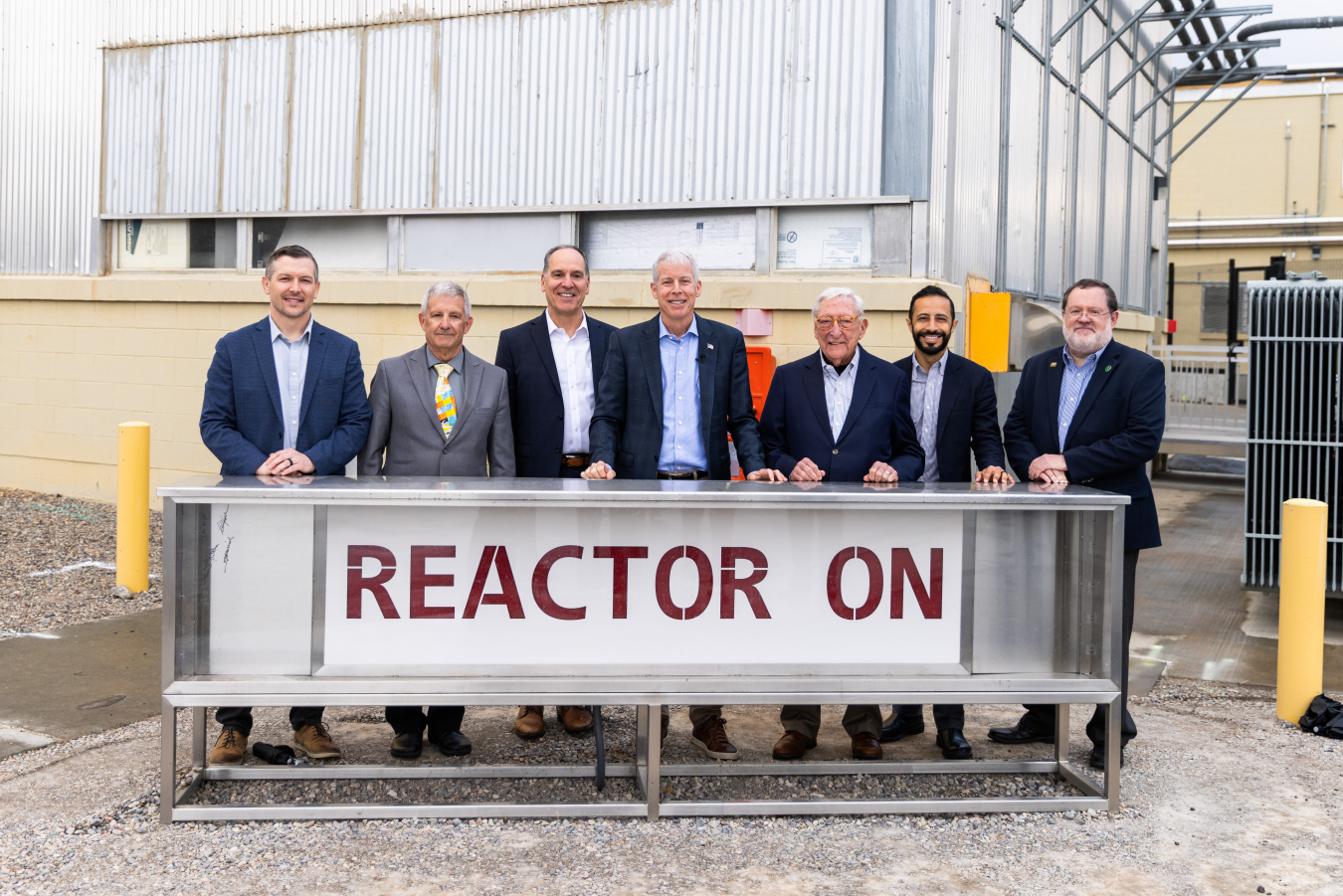
From left, Under Secretary of Energy Kyle Haustveit; U.S. Department of Energy (DOE) Idaho Operations Office Manager Bob Boston; Idaho National Laboratory (INL) Director John Wagner; Secretary of Energy Chris Wright; Assistant Secretary of Nuclear Energy Ted Garrish; Deputy Assistant Secretary of Nuclear Reactors Rian Bahran; and Principal Deputy Assistant Secretary of Nuclear Energy Mike Goff are pictured at INL on June 25. During their visit, DOE leadership met with Reactor Pilot Program and Nuclear Energy Launch Pad participants and toured advanced reactor demonstration projects located at INL.
Office of Environmental Management (EM) experts were essential to four recent criticality milestones for advanced reactors, helping the U.S. Department of Energy (DOE) surpass a July 4th goal outlined by President Trump in a May 2025 executive order.
As EM’s mission expands from legacy cleanup to laying the foundation for America’s new nuclear energy era, the support from EM team members in the zero-power fueled criticality demonstrations highlights EM’s role beyond cleanup in the nuclear lifecycle.
“I’m very proud and thankful of our EM team members from across our complex," EM Associate Principal Deputy Assistant Secretary Greg Sosson said. "We have a wealth of talent in our program in many areas that were able to directly support this presidential goal. I’m optimistic that this is only the first step in helping America achieve the next big steps in nuclear energy.”
Several EM employees supported DOE Office of Nuclear Energy (NE) reviews of reactors in the DOE’s Reactor Pilot Program. And three EM leaders — two at EM headquarters in the Washington, D.C., area and a third at the Carlsbad Field Office (CBFO), which oversees the Waste Isolation Pilot Plant in New Mexico — oversaw teams with members from across the DOE complex that conducted readiness assessments for multiple reactors. The assessments are necessary for NE to authorize startup for the reactors.
A nuclear reactor is critical when it is perfectly stable. That happens when each uranium atom that splits via fission releases enough neutrons to cause one additional atom to split. A stable chain reaction keeps nuclear power plants generating electricity around the clock.
EM personnel participated in the DOE review process for advanced microreactor designs from preliminary to final design. They included Kevin Witt, director of EM’s Office of Safety Management; Kyle Song with EM’s Office of Nuclear Materials; Tim Noe with the Oak Ridge Office of Environmental Management (OREM) in Tennessee; and Adam Bradley with the Portsmouth Paducah Project Office in Ohio.
Employees taking part in the review process ensured contractor submittals were technically sufficient and provided comments for resolution prior to recommendation to the safety basis approval authority for approval.
A total of 17 EM team members took part in DOE’s readiness review process for facility startup and transition to operations for microreactor designs, including the Aalo Atomics’ test reactor, Aalo-X, Antares Nuclear’s Mark-0 reactor, Valar Atomics’ Ward 250 and Deployable Energy’s demonstration reactor, Unity — the four reactors that achieved criticality under the DOE’s Reactor Pilot Program by the July 4th deadline. The team members came from several EM headquarters offices and the CBFO, OREM, Hanford Field Office in Washington state, and the Idaho Cleanup Project at the Idaho National Laboratory (INL) Site.
Readiness review team members reviewed documents, took part in onsite interviews and performance demonstrations, and prepared the final report with recommendation to the startup authorization authority for approval to proceed with nuclear operations. They also reviewed corrective action plans and closure documentation in response to DOE-identified pre- and post-start findings.
Read more about the reactor criticalities here.
-Contributor: David Sheeley
To receive the latest news and updates about the Office of Environmental Management, submit your e-mail address.