



The U.S. Department of Energy Office of Environmental Management is launching a new pilot program at the Savannah River Site that shifts maintenance work planning and control processes from a one-size-fits-all nuclear standard to a graded, risk-based approach. June 30, 2026
Office of Environmental Management
June 30, 2026 Estimated Read Time min
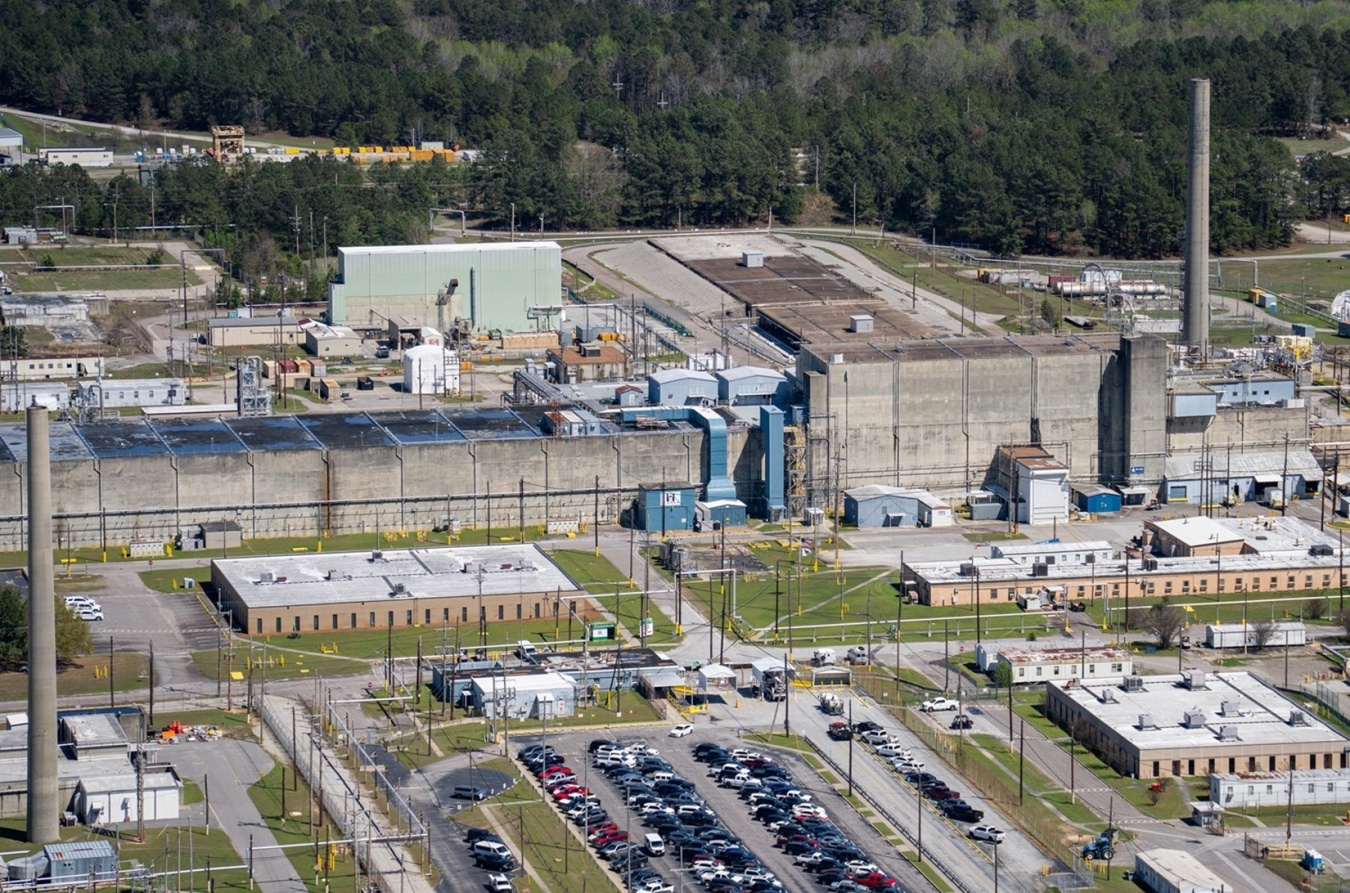
The Savannah River Site’s H Canyon facility.
AIKEN, S.C. — The U.S. Department of Energy (DOE) Office of Environmental Management (EM) is launching a new pilot program at the Savannah River Site (SRS) that shifts maintenance work planning and control processes from a one-size-fits-all nuclear standard to a graded, risk-based approach.
The pilot is in step with a DOE and National Nuclear Security Administration (NNSA) emphasis on urgency and acceleration of work.
It also follows a broader modernization effort to advance non-nuclear, non-complex construction projects by adopting commercial requirements paired with safety standards of Occupational Safety and Health Administration+. That framework is a graded and tailored approach authorized by DOE to align requirements of a federal regulation focused on worker safety and health with commercial construction practices.
EM and SRS contractor Savannah River Nuclear Solutions (SRNS) are working to streamline maintenance and construction requirements while reducing cost and schedule impacts.
For decades, SRS maintenance activities have operated under a work-control procedure that applied uniform, rigorous nuclear-facility standards to every job, no matter how small or regardless of risk. The newly issued procedure addendum introduces fit-for-purpose work packages based on whether a job is classified as low, medium or high risk.
The new approach is projected to cut work package planning cycle times by 65% to 75%, enabling maintenance teams to respond with greater speed and precision, according to Andy Tisler, SRNS senior vice president of Infrastructure Modernization and Sustainment.
“NNSA has emphasized responsiveness and proactive solutions across the Nuclear Security Enterprise, urging teams to anticipate needs and act swiftly,” Tisler said. “With the expected reductions in planning cycle times, this means increasing efficiency where it matters most — supporting mission operations safely and without delay.”
The pilot will initially focus on maintenance activities at the site’s H Canyon, the nation’s only operating, production‑scale, radiologically shielded chemical separations facility. Earlier this year, EM announced the decision to restart operations at the site’s HB Line, which is integral to H Canyon.
“Implementing these new processes will significantly improve our efficiency and effectiveness,” said Kevin Moeller, SRNS H Canyon Facility manager. “In H Canyon, where operational tempo is high and legacy infrastructure requires constant attention, the ability to streamline work preparation without compromising safety is a major step forward for mission readiness.”
-Contributor: Mackenzie McNabb
To receive the latest news and updates about the Office of Environmental Management, submit your e-mail address.