



Workers with U.S. Department of Energy contractor Central Plateau Cleanup Company recently checked a critical box, actually four of them, completing stabilization of contaminated hot cells in the 324 Building, reducing a significant risk at the Hanford Site. June 23, 2026
Office of Environmental Management
June 23, 2026 Estimated Read Time min
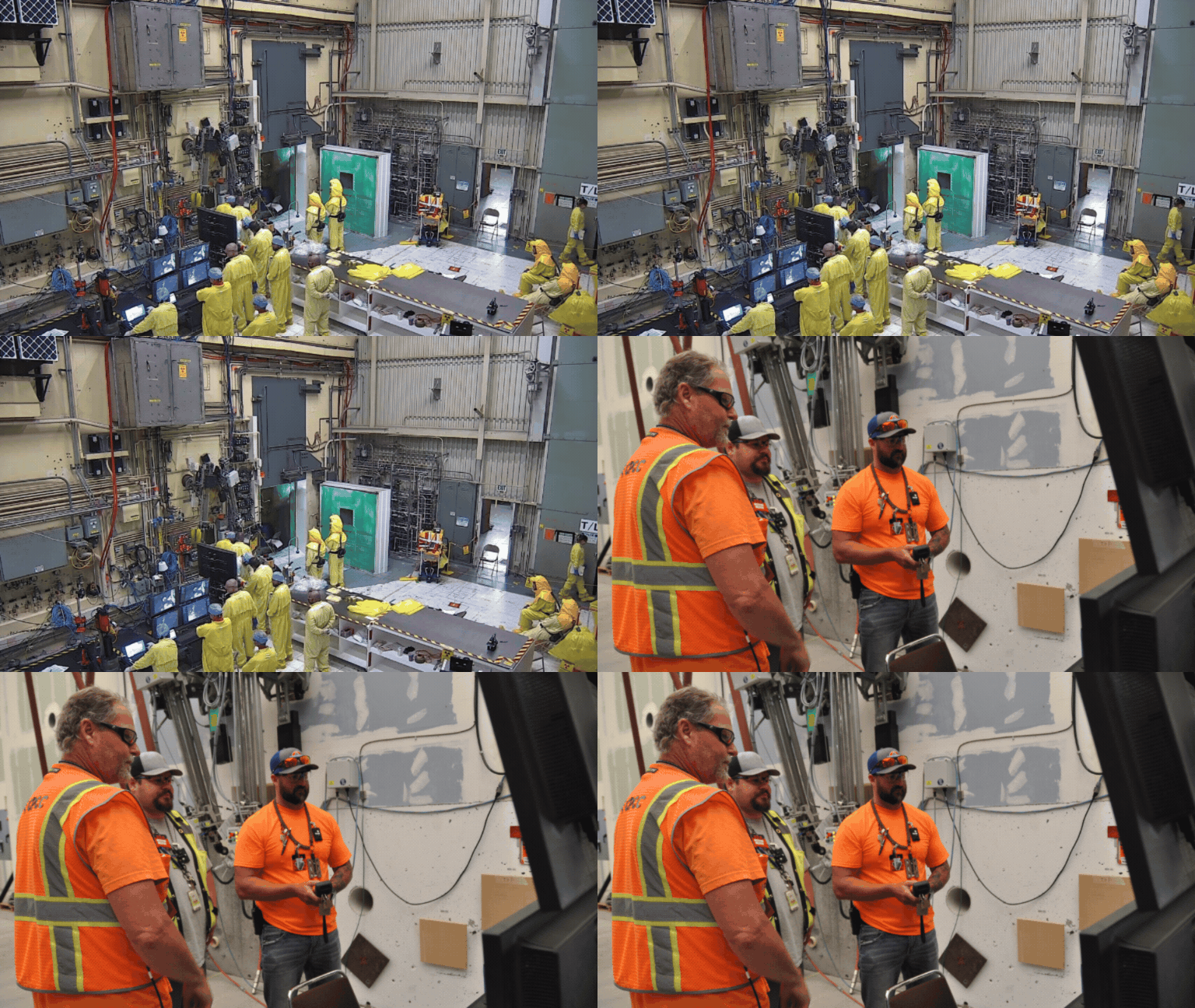
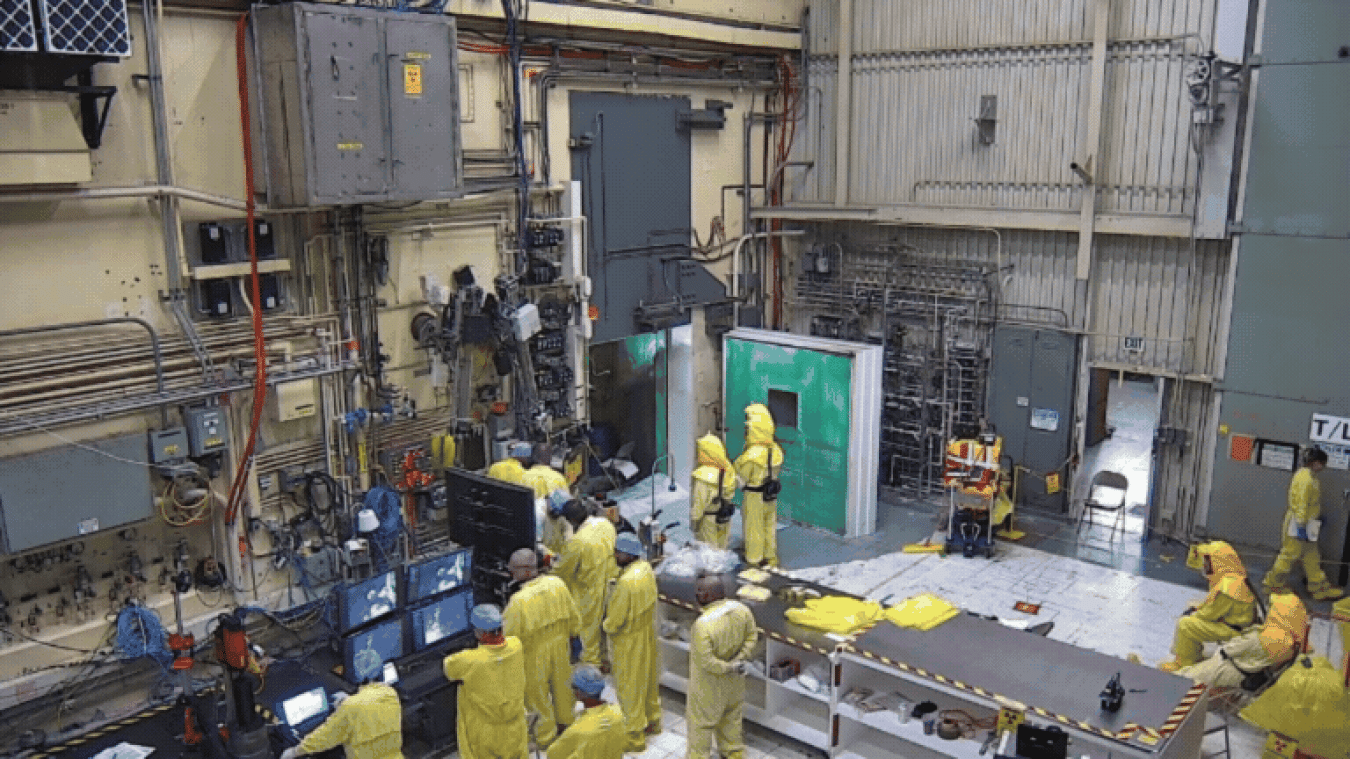
Crews with Hanford Site contractor Central Plateau Cleanup Company recently stabilized four radioactive hot cells in the 324 Building. The work is a significant step in a critical risk-reduction project that will include eventual demolition of the building and remediation of contaminated soil underneath the structure.
RICHLAND, Wash. — Workers with U.S. Department of Energy contractor Central Plateau Cleanup Company (CPCCo) recently checked a critical box, actually four of them, completing stabilization of contaminated hot cells in the 324 Building, reducing a significant risk at the Hanford Site.
The four heavily shielded cells, A, B, C and D, protected workers while they used remotely operated equipment to conduct research on radioactive materials during the facility’s operations from 1966 to 1996.
The stabilization process, which began last year, involved grouting old equipment and debris in the hot cells. Crews also prevented the spread of contamination by applying a fixative agent to the interior walls of the cells, a pipe trench and exhaust ventilation ducting.
“Stabilization of these cells is a significant step in preparing the 324 Building for demolition,” said Kelly Ebert, director of the Hanford Field Office Projects and Facilities Division. “The project also further reduces risk to the environment, including the nearby Columbia River.”
Stabilizing the hot cells required workers to master the use of manipulators and the remote-operated crane system in the 324 Building. To enhance their expertise, operators trained on a similar system at the nearby 324 Mock-up Facility. Mock-ups are used frequently at Hanford to allow employees to safely train and test equipment and procedures before performing work in a radiological environment.
“I’m extremely proud of our team for the safe completion of this key phase of the project,” said Randy Hermann, CPCCo 300 Area End States manager. “This work not only greatly reduces the building’s inventory of radioactive and hazardous material, but it also creates a safer environment for our crews as we tackle additional high-hazard activities at the facility.”
To receive the latest news and updates about the Office of Environmental Management, submit your e-mail address.