



Teams are expanding use of drones to enhance Savannah River Site infrastructure inspections — improving safety, reducing labor needs and delivering measurable cost savings. June 23, 2026
Office of Environmental Management
June 23, 2026 Estimated Read Time min
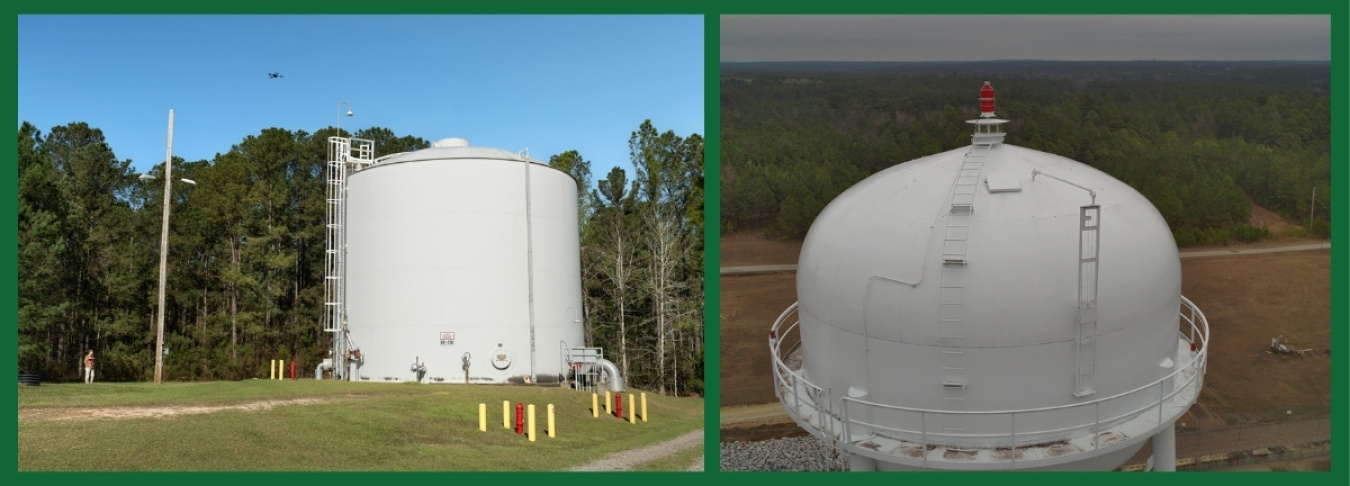
At left, a drone performs a fire water tank inspection at the Savannah River Site, evaluating components such as hatches, aviation warning lighting systems, vent screens and additional hardware. At right, drone footage captures comprehensive visual imagery of a water tower at the site.
AIKEN, S.C. — Teams are expanding use of drones to enhance Savannah River Site (SRS) infrastructure inspections — improving safety, reducing labor needs and delivering measurable cost savings.
U.S. Department of Energy Office of Environmental Management contractor Savannah River Nuclear Solutions (SRNS) and Savannah River National Laboratory (SRNL) agreed to support aerial inspections of key structures and systems, including water storage tanks, river water piping corridors, fire water tanks, roof systems, power distribution, steam pipelines and other critical assets that support ongoing operations. Personnel collaborate to review real‑time imagery from the drone controller interface.
“By integrating drone technology onsite, we are redefining how maintenance inspections are performed, especially for elevated and remote assets,” said Dawson Oglesby with SRNS. “In scenarios where safety is a concern, drones allow us to assess hard-to-reach areas without placing personnel at risk. Not only does this improve safety, but it also streamlines the inspection process, saving both time and costs while delivering accurate, real-time results.”
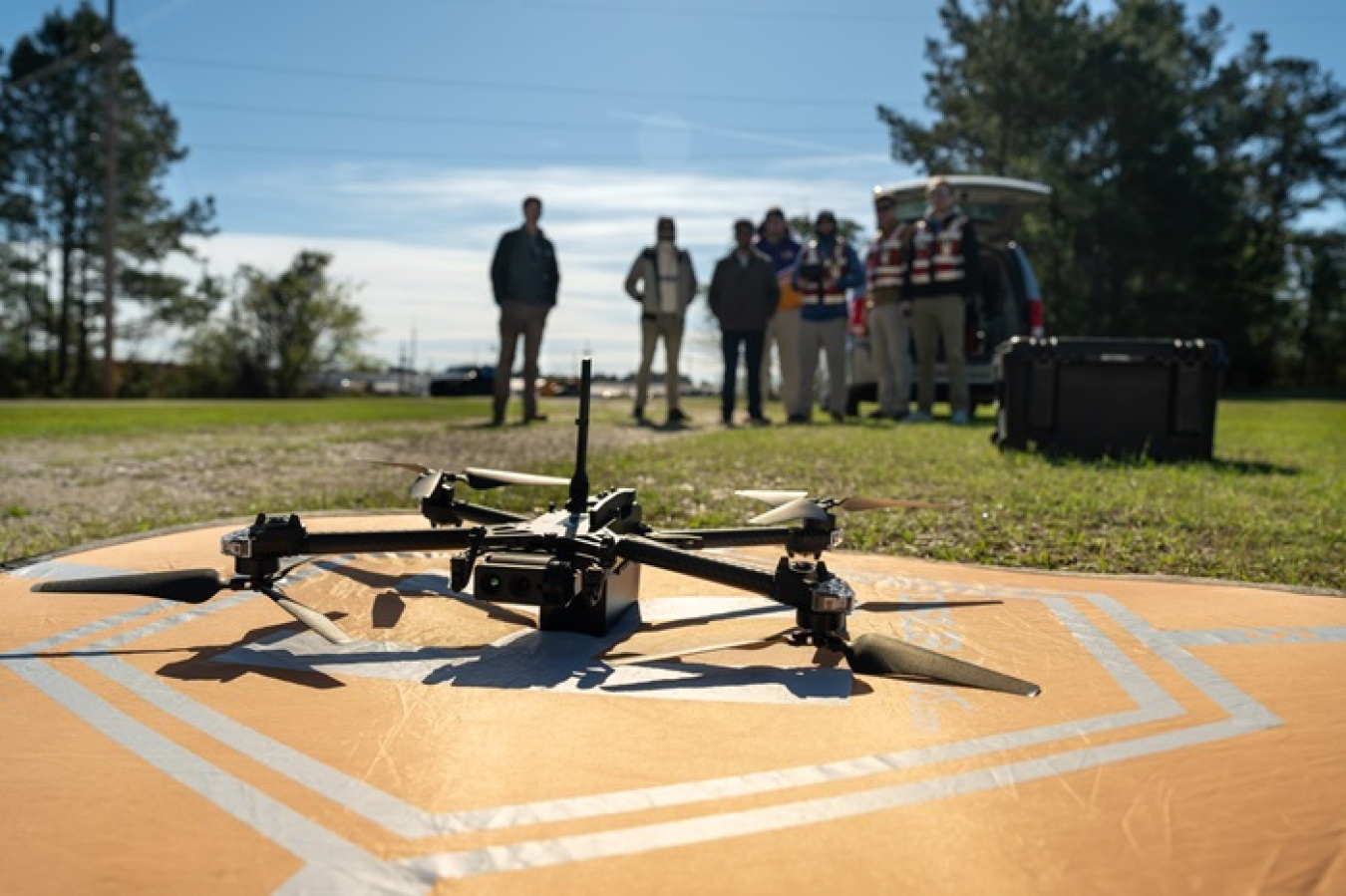
Savannah River Nuclear Solutions and Savannah River National Laboratory have worked together to complete over 50 drone flights since 2023.
Traditional inspections of certain areas require substantial manpower and physical access. For example, inspecting river water piping in wetland terrain previously required two to six workers to cut access paths, haul equipment and navigate challenging ground conditions.
Drone inspections eliminate land disturbances, reduce labor requirements, improve safety and accelerate assessment timelines. In one case, transitioning to drone inspections resulted in more than $43,000 in savings.
“We’re always looking for safer, more efficient ways to verify that our systems meet regulatory standards and are operating as designed,” said Randy Keenan, SRNS director of Site Services. “Using unmanned aircraft systems, our personnel can evaluate conditions in a fraction of the time it takes to walk or climb an inspection route, while quickly identifying erosion concerns, equipment issues or structural wear.”
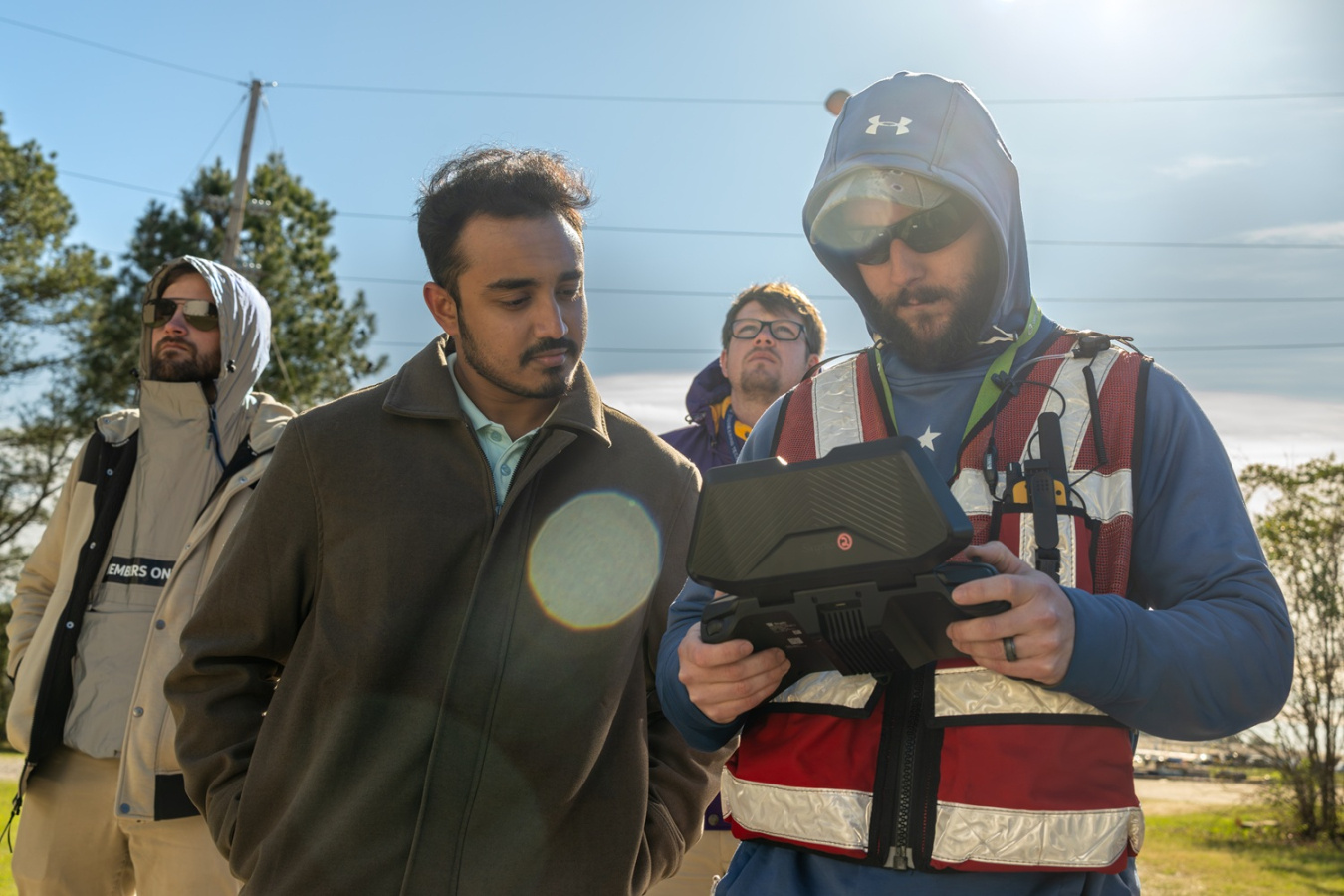
From left, Savannah River Nuclear Solutions Fire Protection engineers Aaron Splitter, Parth Patel and Zachery Wilson, and Savannah River National Laboratory unmanned aircraft system pilot Jeffrey Steedley, inspect a fire water tank at the Savannah River Site.
Drone technology has also proven to be safer and more effective for regulatory inspections, once performed by staff climbing elevated structures. Assessments of water storage tanks can verify hatch locks, aviation warning lights, vent screens and other compliance‑related components without requiring personnel to scale the towers.
The site’s drone program began in 2017, supporting SRNL, SRS contractors, and research and development efforts, later expanding to serve U.S. armed forces, federal agencies, law enforcement and the intelligence community. The team has conducted hundreds of flights supporting infrastructure inspections, emergency response exercises, radiation detection, aerial photography, training events and surveys using imaging technology.
DOE honored the SRS team with its Innovative Approach to Sustainability Award for the use of drones to control the growth of vegetation atop two closed reactor buildings, saving more than $170,000 a year.
Drones have also been used at SRS to inspect covered waste sites and radioactive liquid waste tanks.
“Unmanned aircraft system technology has become a powerful asset for SRS,” said Troy Lorier, SRNL unmanned aircraft systems operations manager and aviation safety officer.
-Contributor: Mackenzie McNabb
To receive the latest news and updates about the Office of Environmental Management, submit your e-mail address.