



AIKEN, S.C. – The management and operations contractor for EM’s Savannah River Site cleanup is reducing attrition and improving workforce knowledge transfer by developing the next generation of criticality engineers.
December 15, 2016 Estimated Read Time min
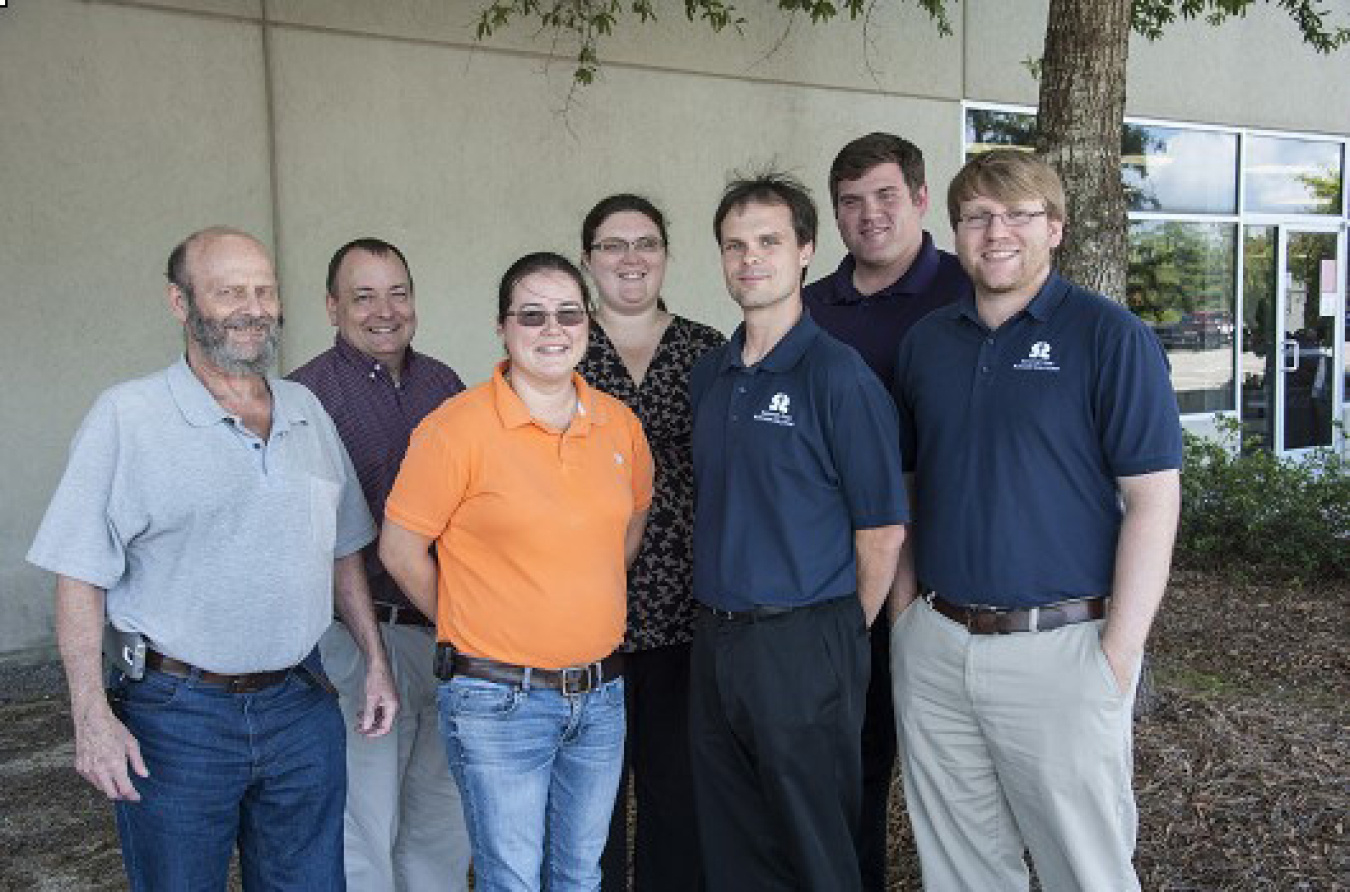
Nuclear criticality safety engineers have worked to improve criticality safety. Back row, left to right, John Lint, Brittany Williamson and Austin Meredith; front row, left to right, Steve Kessler, Meagan Strachan, Tracy Stover, Michael Ratliff and Jim Baker (not pictured).
AIKEN, S.C. – The management and operations contractor for EM’s Savannah River Site cleanup is reducing attrition and improving workforce knowledge transfer by developing the next generation of criticality engineers.
The Savannah River Nuclear Solutions (SRNS) nuclear and criticality safety engineers work to prevent a nuclear criticality accident, which is an inadvertent, self-sustaining nuclear chain reaction. The engineers ensure compliance with DOE regulations by identifying, analyzing and documenting potential nuclear and criticality safety hazards and specifying controls to mitigate or prevent them.
With nearly half of its senior criticality engineers eligible to retire within the next five years, SRNS has hired nine engineers in its criticality safety program since 2012.
“An important part of the development process is to have the new hires work with our senior engineers to improve their site experience and to transfer knowledge,” SRNS Nuclear and Criticality Safety Engineering Criticality Safety Program Manager Mike Low said. “The new engineers come into the group with lots of energy and a great questioning attitude. Their fresh look can help the department see our existing processes in new and different ways and suggest improvements that have not been previously considered.”
The new hires work with senior engineers, helping identify criticality safety improvements and initiatives for implementation.
“It’s rewarding to come into a job like this and feel like you’re making an impact,” said Michael Ratliff, an engineer. “I’ve really benefited from the time I’ve been able to spend with the more senior engineers and I’m excited about my future here.”
Significant site resources support criticality limits and controls. With the newer engineers in tow, the criticality safety group reviewed criticality evaluations that use conservative assumptions and process conditions. The engineers left evaluations untouched if deemed acceptable. They changed others that didn’t reflect normal, credible conditions, or could lead to unnecessarily restrictive operational controls. The group now performs realistic — and still conservative — evaluations to identify limits and controls commensurate with hazard risk.
The engineers’ achievements include:
- New analyses that redefine limits for plutonium solution transfers from HB Line to H Canyon using realistic process conditions. The analyses demonstrate that several credible criticality events are safe without credited controls, an approach that conserves site resources.
- New HB Line studies that shows the amount of plutonium oxide can be tripled for packages shipped between HB Line and K Area storage. This efficiency also applies to disposition of legacy surplus plutonium.
- A review of the chemistry and physics of the H Canyon dissolution process with High Flux Isotope Reactor fuel and the application of more realistic modeling has shown that dissolution can be performed safely without the need for credited controls to limit concentration or mass.
- New analyses that demonstrate that spacing controls for side-by-side storage of waste containers and product shipping packages is safe in the site’s K Area, allowing for more efficient storage of containers.
“The approach to hiring and developing new criticality engineers is now starting to bear fruit,” Low said. “Most of the improvement initiatives have been worked over the last couple of years and are on the verge of being implemented.”