



Westinghouse Electric Company reached a key milestone earlier this month when it successfully completed criticality testing for its eVinci microreactor.
September 16, 2026 Estimated Read Time min
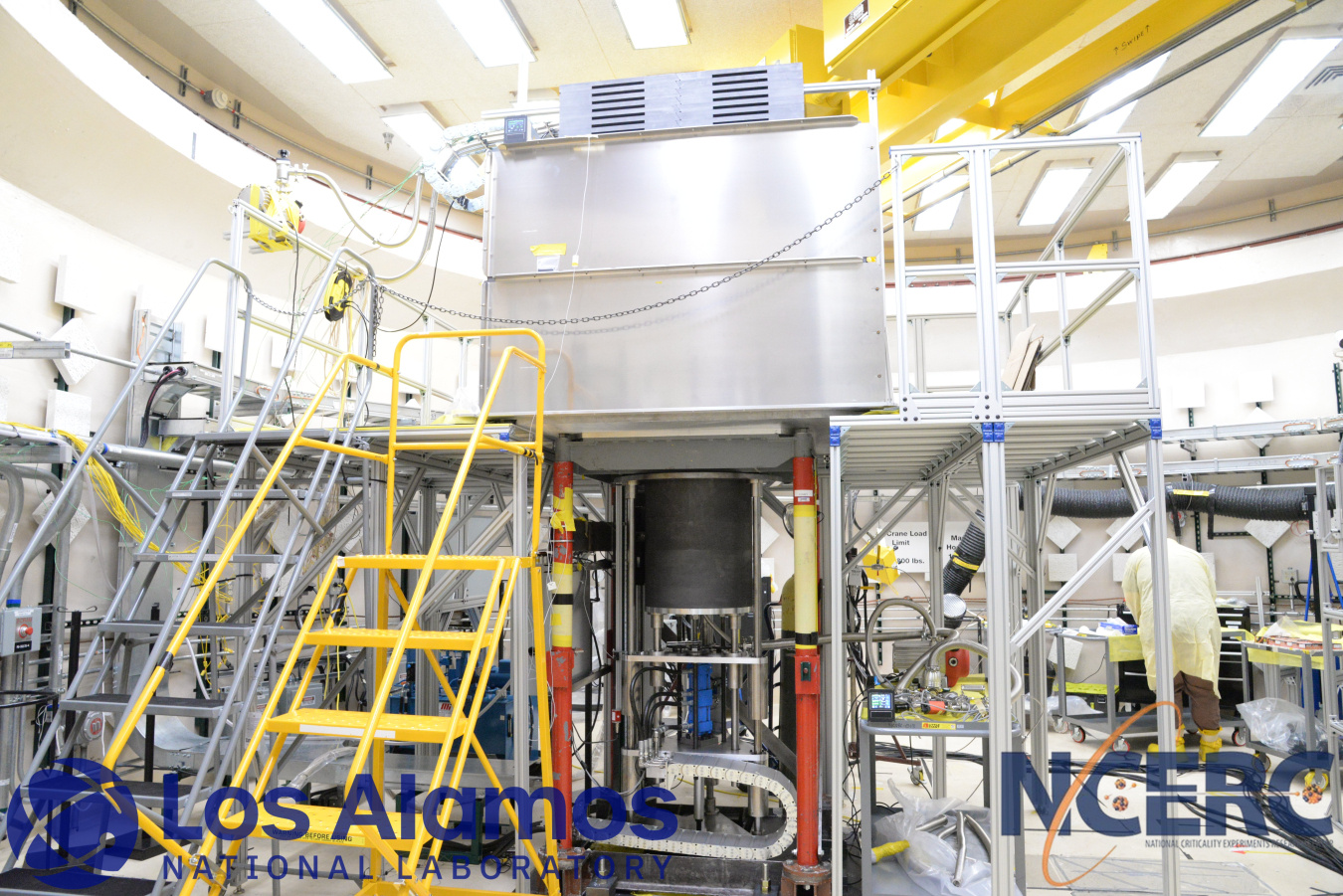
Westinghouse Electric Company reached a key milestone earlier this month when it successfully completed criticality testing for its eVinci microreactor.
The work was completed by Los Alamos National Laboratory in collaboration with Idaho National Laboratory, the Nevada National Security Site, and the DOE/NRC Collaboration for Criticality Safety Support for Commercial-Scale HALEU Fuel Cycles and Transportation. The eVinci microreactor criticality testing was conducted at the National Critical Experiments Research Center (NCERC), a National Nuclear Security Administration facility located in Nevada.
Testing eVinci at core temperatures upward of 1,000 degrees Celsius yielded invaluable data about the reactor’s performance as Westinghouse works to move this advanced nuclear design toward commercialization.
The Heat is On
On September 3, 2026, the eVinci test reached criticality at 663 degrees Celsius. Westinghouse researchers measured a peak core temperature of 1,011 degrees Celsius, a record-high temperature for a reactivity measurement at NCERC.
The tests generated high-quality temperature data that Westinghouse will use to strengthen its analytical models and accelerate the eVinci reactor prototype design. This continues the experimental work started with eVinci’s recent zero-power criticality testing and advances the understanding of how the design will behave under real-world conditions.
“Our teams are building, testing, learning and improving at every step, turning uncertainty into validated evidence and strengthening the design for a highly deployable advanced nuclear solution for our customers,” said Dan Sumner, Westinghouse president and chief executive officer. “We appreciate the strong support of the U.S. Department of Energy and our National Laboratory partners in helping us advance this important work.”
Inside eVinci
The eVinci microreactor is one of several designs that received funding from the U.S. Department of Energy’s Advanced Reactor Demonstration Program.
It uses a transportable, heat-pipe-cooled design that runs on TRISO fuel and is designed to produce 5 megawatts of electricity on sites as small as two acres of land.
Westinghouse expects the commercial version of eVinci to be able to operate for eight or more years before refueling, providing resilient energy around the clock in support of broad applications ranging from powering remote communities to mining operations and data centers.
“American innovation has always been the driving force behind American energy dominance,” said acting Deputy Assistant Secretary for Nuclear Energy Chimi Zacot. “Westinghouse’s progress on the eVinci microreactor is another great example of that ingenuity at work. Thanks to President Trump’s leadership, momentum around America’s nuclear renaissance continues to build.”
What’s Next?
In August 2026, eVinci was selected for the next phase of the Janus Program, the U.S. Department of the Army’s next-generation nuclear power initiative to power U.S. military installations with microreactors.
Westinghouse’s ongoing experimental testing of its microreactor design continues to increase certainty around its cost, manufacturability and schedule. Each milestone helps refine the design, provides evidence to support future licensing, and moves eVinci another step closer to real-world deployment.