



ALEXANDRIA, Va. – EM officials, contractor executives and local officials from communities near DOE sites discussed how successful partnering can help continue cleanup progress during a panel at the recent National Cleanup Workshop.
September 30, 2016 Estimated Read Time min
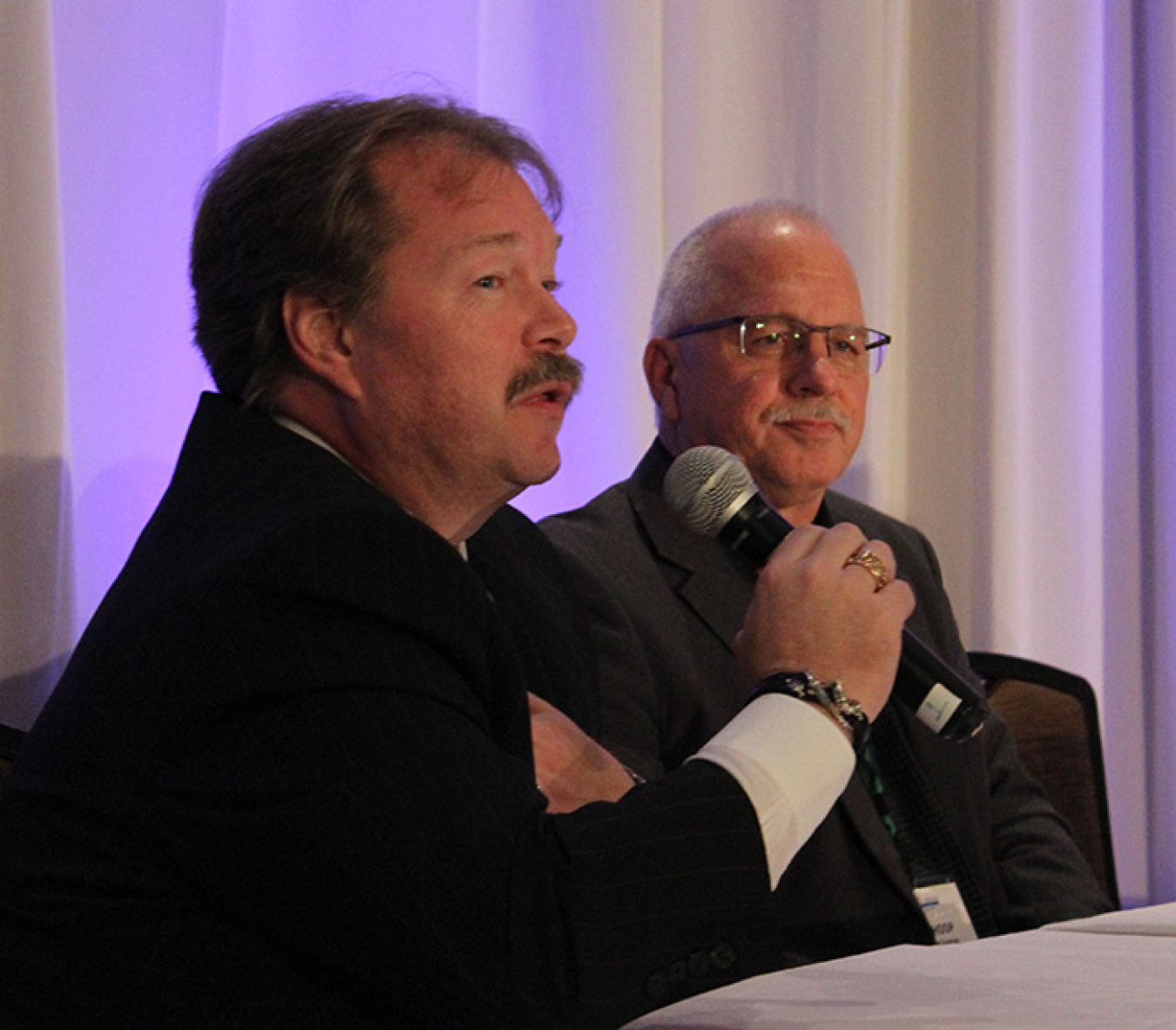
EM’s Portsmouth/Paducah Project Office Manager Robert Edwards talks during the panel on "Strengthening EM through Partnerships."
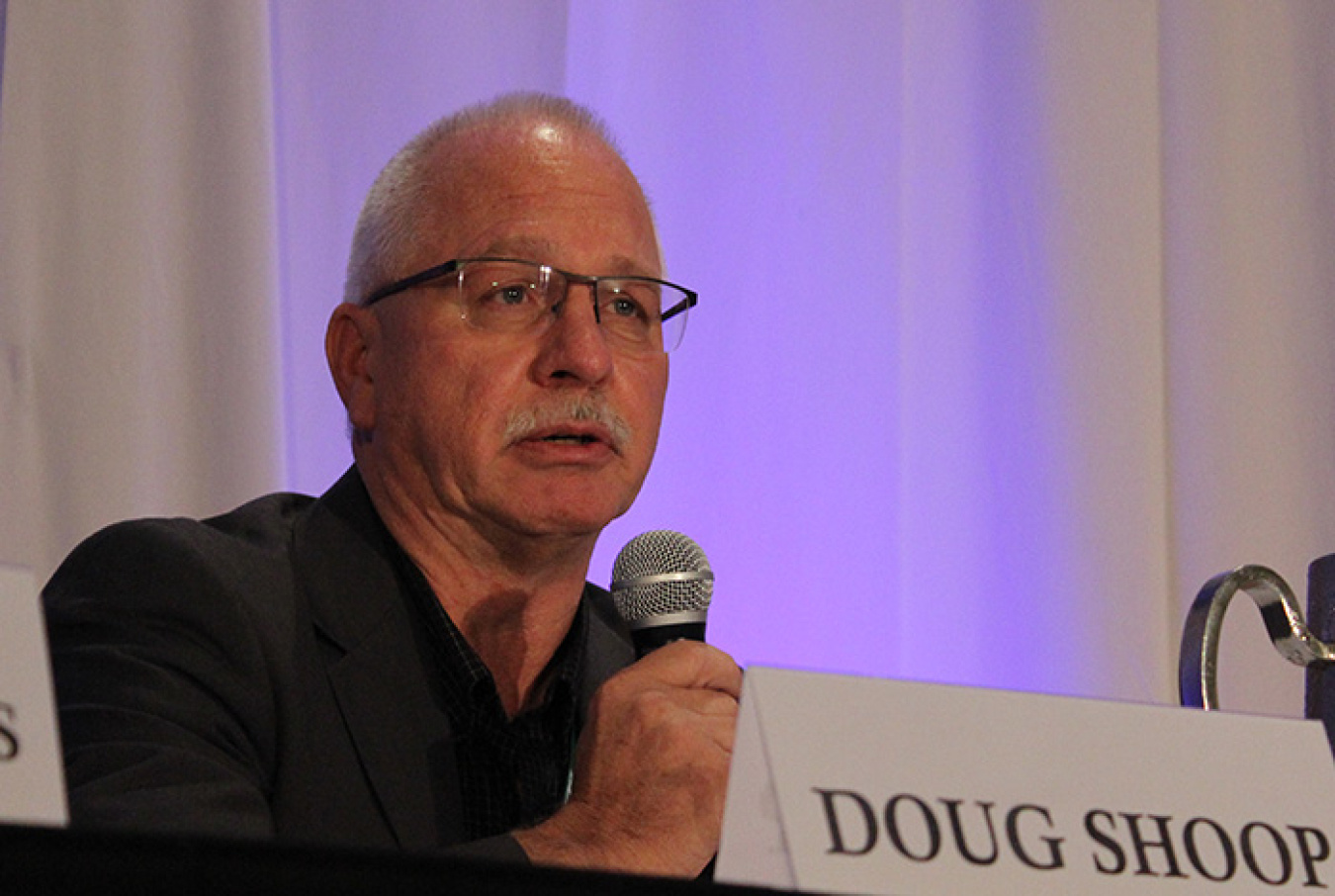
Speaking at the National Cleanup Workshop, EM Richland Operations Office Manager Doug Shoop credited much of the Hanford Site cleanup success to strong partnerships.
ALEXANDRIA, Va. – EM officials, contractor executives and local officials from communities near DOE sites discussed how successful partnering can help continue cleanup progress during a panel at the recent National Cleanup Workshop.
The panelists shared partnering strategies they used to help ensure successful cleanup contract acquisitions, performance and community and industry support.
Doug Shoop, manager of EM’s Richland Operations Office, credited much of the successful cleanup at the Hanford Site to strong partnerships with stakeholders that allowed the entities involved to align priorities.
“I do not believe we could have done what we did in the River Corridor without those three things,” he said. “We had great partners, we had great alignment and we knew what our priorities were.”
Several panelists cited the closure of the Rocky Flats site in Colorado in 2006 as a model for successful site cleanup.
“The initial alignment of the goals and the end state for the (Rocky Flats) site is truly the one thing I think was the basis for why it was a success,” said Jeff Stevens, deputy project manager for Fluor-BWXT Portsmouth, the EM Portsmouth Site’s deactivation and decommissioning contractor.
Robert Edwards, manager of EM’s Portsmouth/Paducah Project Office, added that it is important to get candid, open, frequent and continuing feedback from community partners to ensure alignment continues.
“You need to frequently go back and make sure everyone is still on the same page,” he said. “It seems easy, but it takes work.”
Energy Communities Alliance Treasurer and Los Alamos County Councilor Kristin Henderson cited the recent Waste Isolation Pilot Plant (WIPP) settlement and agreement to use fine revenues to pay for road improvements from Los Alamos to the WIPP facility as one good partnering outcome.
Idaho Falls Mayor Rebecca Casper outlined some of the city’s partnership programs that support the Idaho Operations Office and Idaho National Laboratory, including the ‘Community to Capital’ and Partnership for Science and Technology outreach programs.
“Locals have a responsibility to be engaged just as much as DOE or the contractor,” she said. “Bottom line is I am firmly convinced that an adversarial relationship is part and parcel of the old, tired model, and that partnering is a whole lot more productive.”