



NIAGARA FALLS, N.Y. – Principal Deputy Assistant Secretary Mark Whitney and other EM officials joined the State and Tribal Government Working Gro...
May 16, 2016 Estimated Read Time min
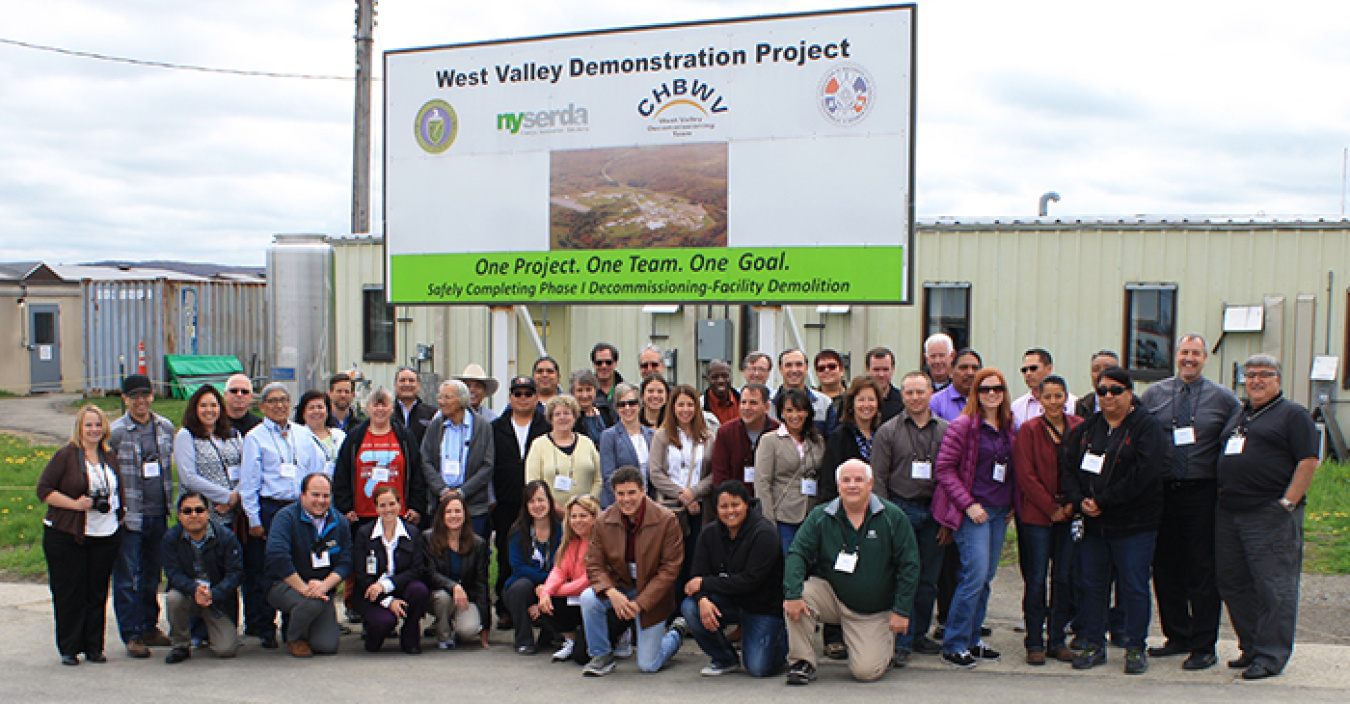
EM and STGWG officials and other participants in the WVDP tour gather for a photo.
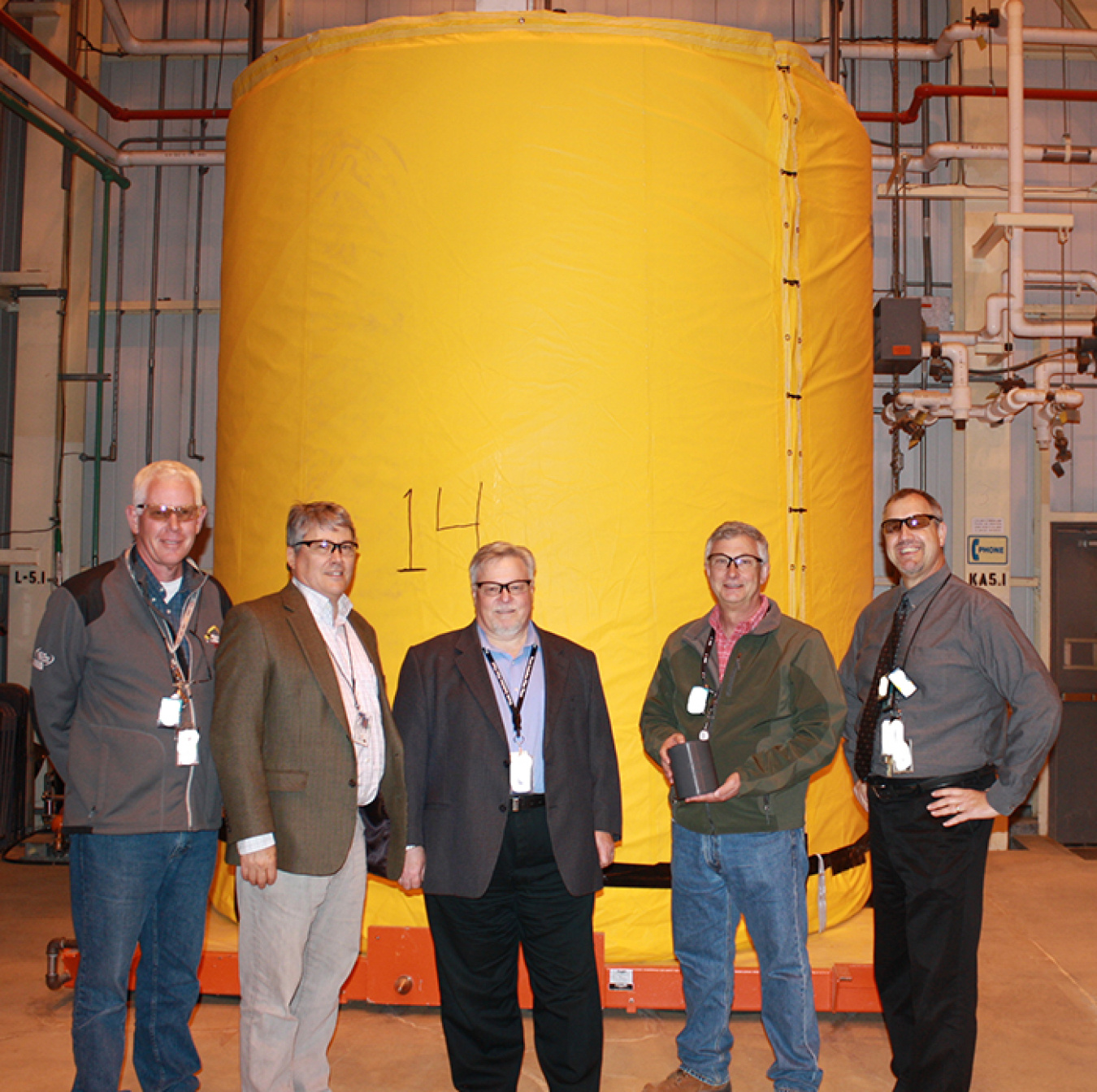
Left to right, CHBWV President Jeff Bradford, EM Site Restoration Deputy Assistant Secretary Mark Gilbertson, Acting EM Associate Principal Deputy Assistant Secretary Frank Marcinowski, CHBWV Project Manager Dave Brown, and EM WVDP Director Bryan Bower. Five HLW canisters will soon be placed in the storage cask, shown in the background, and relocated to an on-site interim storage pad.
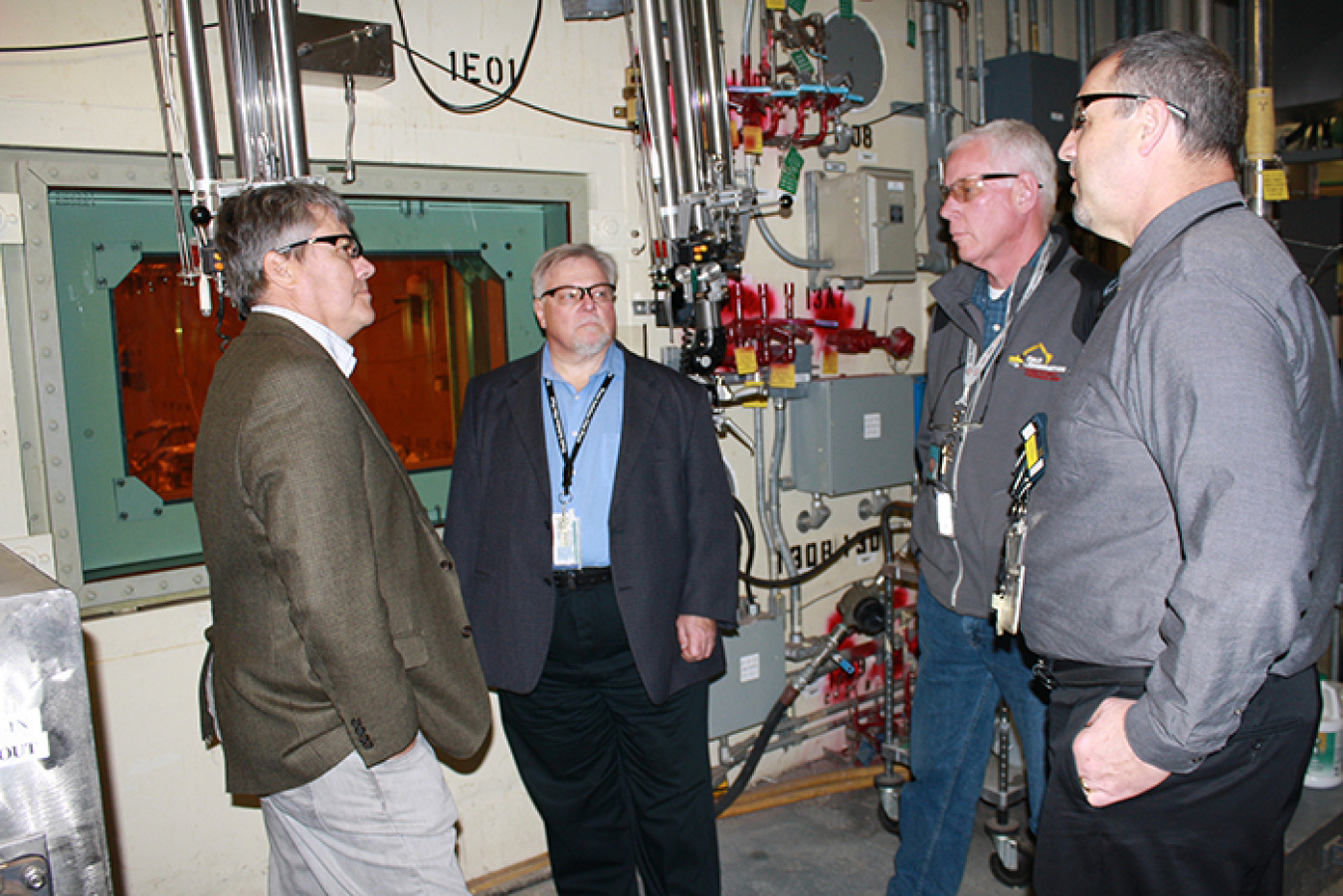
Pictured, left to right, are EM Site Restoration Deputy Assistant Secretary Mark Gilbertson, Acting EM Associate Principal Deputy Assistant Secretary Frank Marcinowski, CHBWV President Jeff Bradford, and EM WVDP Director Bryan Bower. The window behind them in the Vitrification Facility shows where remote-handled deactivation activities took place. Deactivation of the facility is more than 90 percent complete, and demolition is expected to begin in spring 2017.
NIAGARA FALLS, N.Y. – Principal Deputy Assistant Secretary Mark Whitney and other EM officials joined the State and Tribal Government Working Group (STGWG) here this month for meetings and visits to the Seneca Nation’s Allegany and Cattaraugus territories and the West Valley Demonstration Project (WVDP).
Representatives from Tribes, states, and organizations that host DOE facilities or are impacted by activities at them comprise STGWG. The working group is focused on key topics such as long-term stewardship, natural resource damages, and Tribal issues with additional interest in transportation planning, nuclear waste and materials disposition, and deactivation and decommissioning activities.
EM’s WVDP Director Bryan Bower and Paul Bembia, the West Valley program director for the New York State Energy and Research Development Authority (NYSERDA), presented the EM and STGWG officials with updates on environmental cleanup work at WVDP. Workers also showed cleanup progress during the tour.
“I could not be more proud of this team,” Bower said of site workers. “Keeping safety as their number one priority, workers continue to make progress in the cleanup mission of the site, reaching nearly 2 million safe work hours.”
Once the site of the first and only commercial nuclear fuel reprocessing plant in the U.S., WVDP is now an environmental cleanup and waste management project, located about 35 miles south of Buffalo. The cleanup is conducted by EM in cooperation with NYSERDA.
WVDP was the first cleanup project to vitrify high-level waste (HLW) — or convert liquid waste into a glass substance — and place the stainless steel canisters of vitrified HLW into long-term, outdoor interim storage. Once all of the canisters of HLW are transferred from the Main Plant Process Building to on-site storage, demolition of the Vitrification Facility will begin as part of the decommissioning of WVDP facilities.
“The workers have dedicated the past four years working tirelessly to plan, construct, train, and operate the specialized equipment to complete the relocation and storage of the canisters of HLW,” said David Brown, project manager for the HLW Project with contractor CH2M HILL BWXT West Valley (CHBWV). “This project is called the West Valley Demonstration Project, and once again this workforce demonstrated a first-of-its-kind operation.”
The tour focused on another first — the shipment of the vitrification melter to an offsite low-level waste disposal facility. The U.S. Nuclear Regulatory Commission recently authorized the packaged waste, which weighs 190 tons, for shipment. The melter was decontaminated and placed into a steel container custom-designed and constructed to meet U.S. Department of Transportation requirements.
Bower and CHBWV President Jeff Bradford accompanied Acting EM Associate Principal Deputy Assistant Secretary Frank Marcinowski and Site Restoration Deputy Assistant Secretary Mark Gilbertson on the tour.
The tour was followed by a meeting with Citizen Task Force members, who discussed concerns about maintaining sufficient cleanup funding and transparency in decision-making.