



With just a tiny mechanical adjustment, the Salt Waste Processing Facility has achieved record-breaking production at the Savannah River Site.
Office of Environmental Management
September 8, 2026 Estimated Read Time min
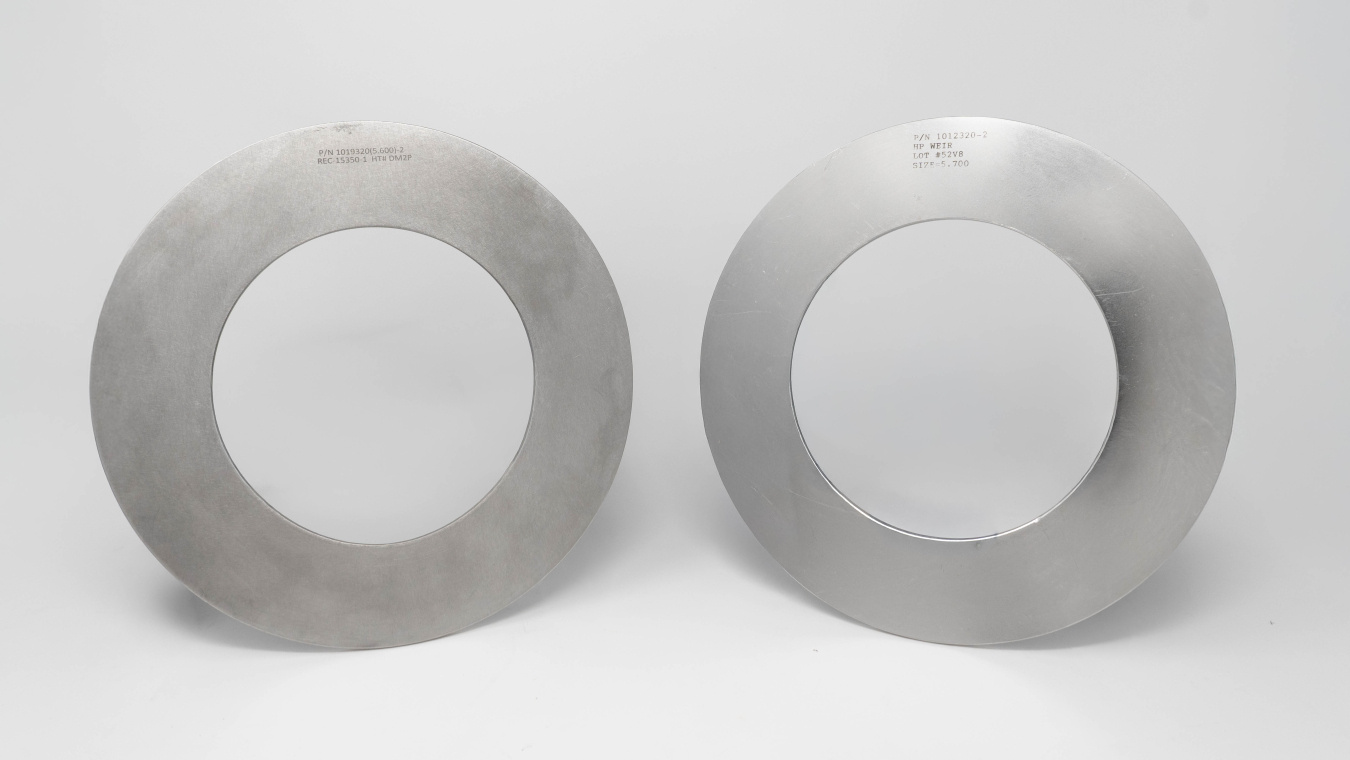
Tiny change, tremendous impact: A seemingly invisible difference in the size of the weirs used to control the liquids separation in the cesium-extraction process has enabled the Salt Waste Processing Facility to operate even higher than its nameplate rate. Pictured is the old weir design, right, next to the new weir — a difference of only one-tenth of an inch.
AIKEN, S.C. — With just a tiny mechanical adjustment, the Salt Waste Processing Facility (SWPF) has achieved record-breaking production at the Savannah River Site (SRS).
Harnessing the power of artificial intelligence (AI), engineers homed in on a part called a “weir” inside SWPF’s centrifugal contactors. The contactors are key components of the plant that mix and then separate the radioactive liquid waste from a special solvent that removes cesium, a highly radioactive material. The weir acts like a tiny internal dam that controls how the liquids separate and flow out of the contactor.
SWPF treats salt waste from the SRS waste tanks by removing cesium and other radionuclides. The facility is designed to process 21.6 gallons of salt waste per minute. Before adjusting the dimensions of the weirs, the facility could not sustain this rate without upsetting the system.
However, by increasing the inner diameter of this weir by just one-tenth of an inch, Savannah River Mission Completion (SRMC), the SRS liquid waste contractor, can better control the separation of the two liquids and the flow coming out of the contactors.
Now, not only can SWPF operate smoothly at its original throughput capacity of 21.6 gallons per minute, but it can operate at 23 gallons per minute — 106% of the original design.
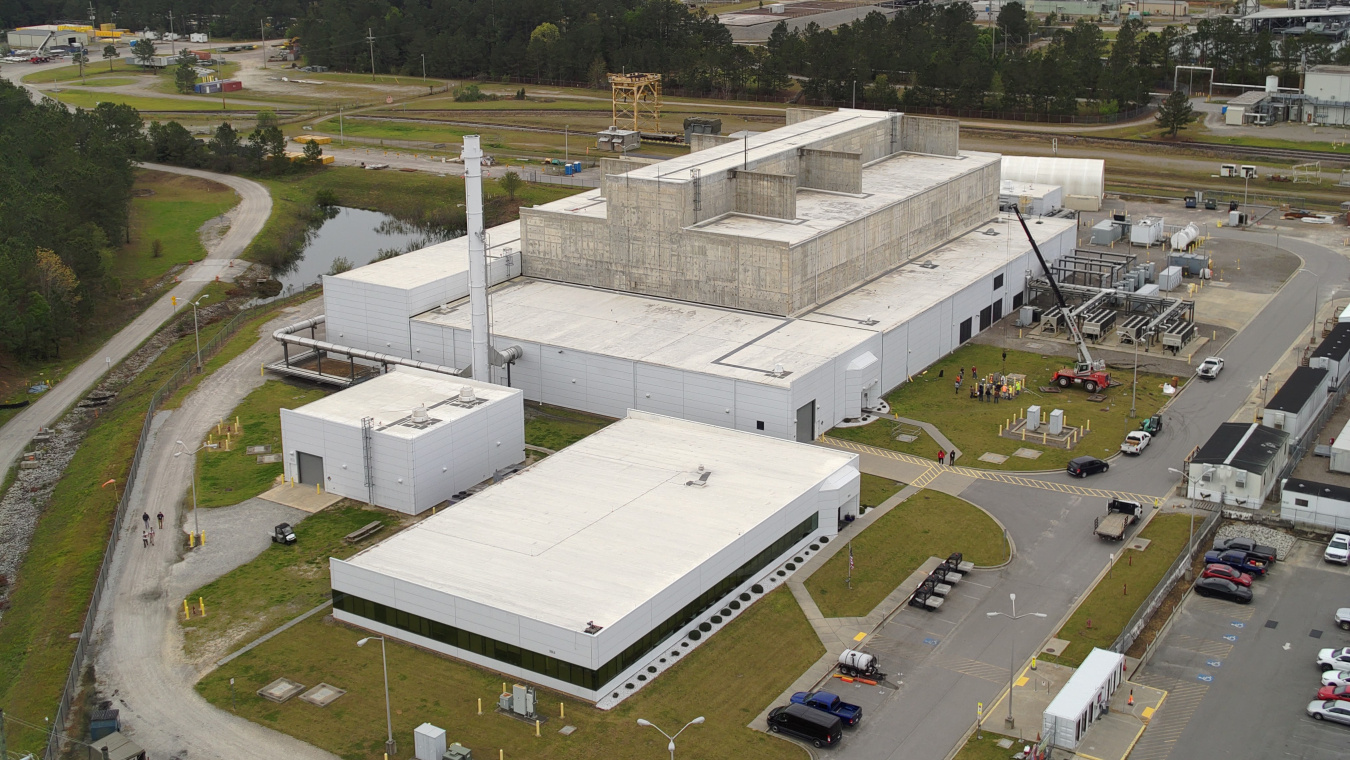
The Salt Waste Processing Facility at Savannah River Site.
Ryan Lentsch, senior director, SWPF and End Stream Delivery Facility Engineering, said this improvement has a direct impact on the mission to safely treat and reduce the volume of legacy radioactive waste at SRS.
“Prior to the weir adjustment, SWPF processed 17 million gallons of waste feed in almost six years of operation,” said Lentsch, who implemented this solution. “We’ve already processed more than 3 million gallons in only five months after the changeout, showing how a small mechanical change can make a big difference.”
SRMC President and Program Manager Thomas Burns Jr. said this outcome demonstrates the exponential success you get when you combine effort of engineers, advanced data analytics tools and AI.
“The amount of data and permutations we have involved in this throughput problem is almost infinite, and it is really like finding a needle in the haystack,” Burns said.
But with the help of AI, SRMC engineers found that needle in the form a weir. And now, SRMC is moving the needle when it comes to advancing the mission.
“This is something that would have taken five years to even discover, and it was put into place in the facility in mere months,” Burns said. “A seemingly miniscule change is helping us move millions of additional gallons of waste through the system safely and efficiently, which is bringing us closer to completing the liquid waste mission at SRS.”
-Contributor: Colleen Hart
To receive the latest news and updates about the Office of Environmental Management, submit your e-mail address.