



Emergency preparedness teams recently participated in an annual graded exercise at the U.S. Department of Energy’s Paducah Site but staying ready is something they practice all year long.
Office of Environmental Management
October 27, 2026 Estimated Read Time min
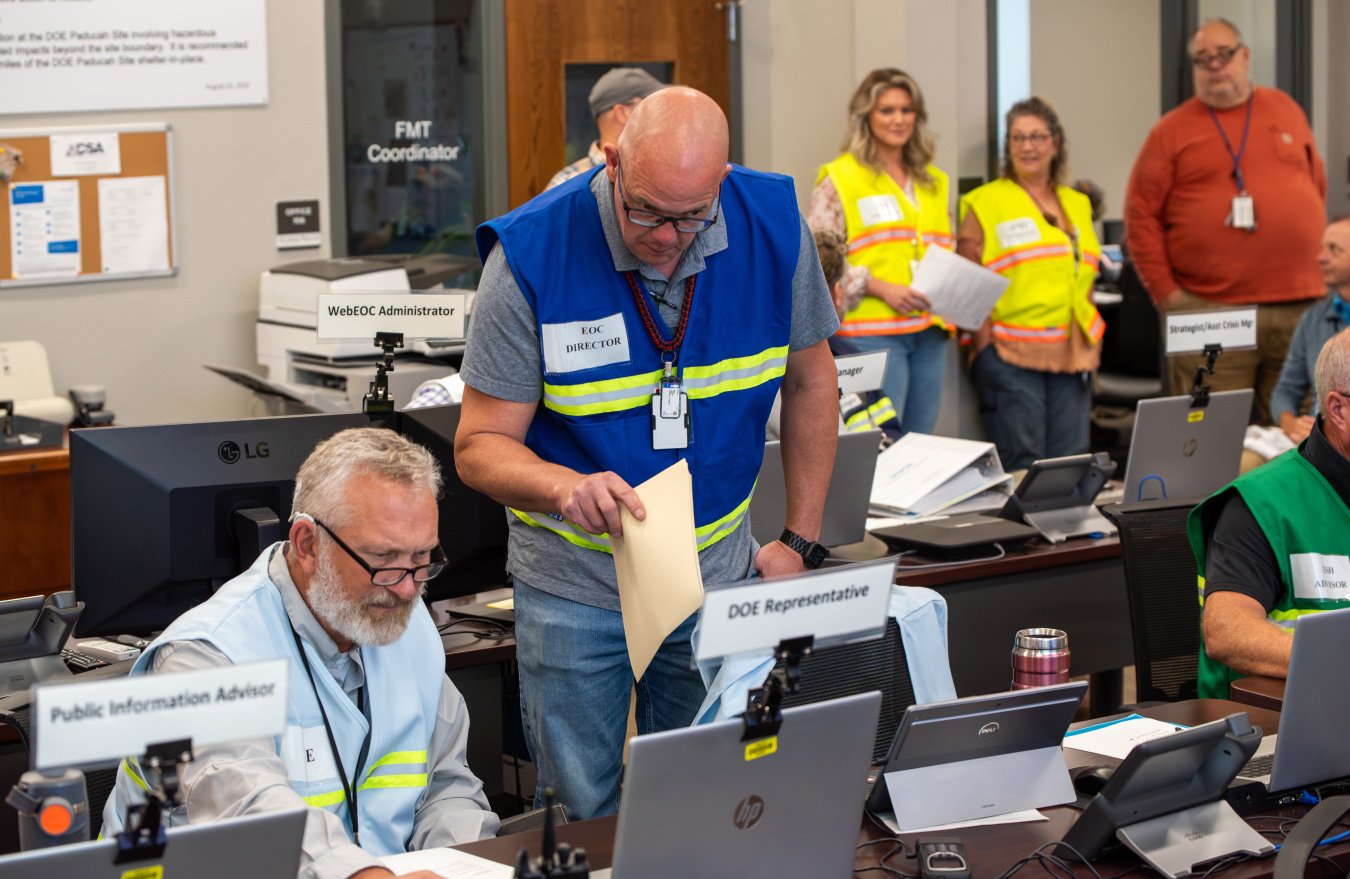
Facility Representative Max Woods, left, and Emergency Operations Center (EOC) Director Robby Purcell track incident data at the Paducah C-105 EOC during a graded emergency management exercise.
PADUCAH, Ky. — Emergency preparedness teams recently participated in an annual graded exercise at the U.S. Department of Energy’s (DOE) Paducah Site but staying ready is something they practice all year long.
“Annual exercises put our preparedness to the test, as challenging scenarios are developed. The exercises test our skills and capabilities, and our emergency response organization answers the call for help every day, night, weekend and holiday,” Portsmouth Paducah Project Office (PPPO) Safety System Oversight Brad Pont said. “Thanks to the dedicated emergency planners and responders for being prepared for the day we all hope never happens.”
Emergency preparedness is based on an approach to all hazards, addressing potential fires, hazardous-material incidents, severe weather, earthquakes and radiological emergencies.
“Emergency preparedness is measured not only by how we respond when something goes wrong, but by the work performed every day to ensure we are ready when it matters most,” Mission Conversion Services Alliance (MCSA) Safeguards and Security Director Shawn Ramage said. “The dedication, professionalism and teamwork of the Paducah Site emergency services organization instill confidence that the site workforce, our DOE customer and our community are protected.”
MCSA is the operations and site mission support contractor for PPPO, and a portion of its scope is emergency services.
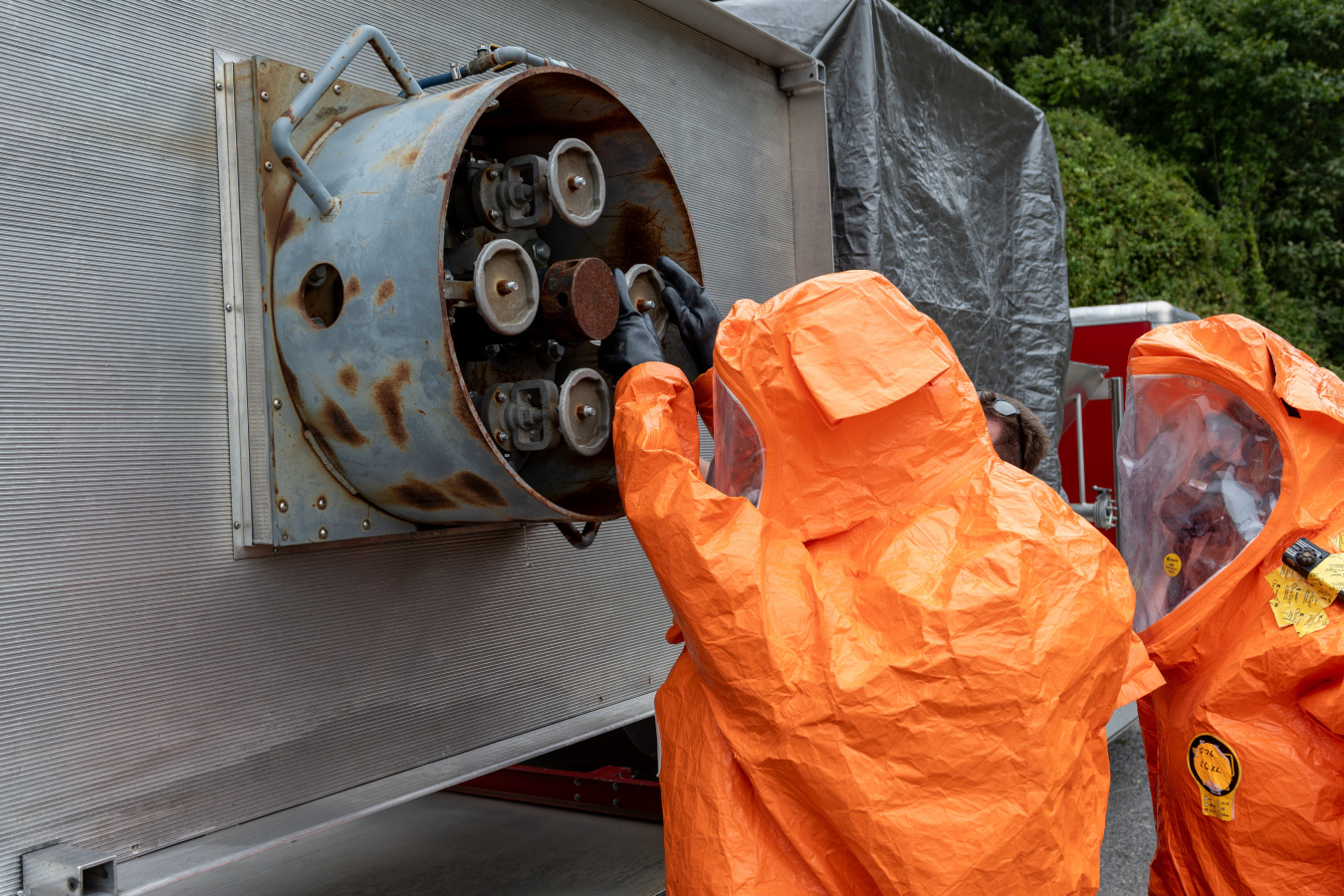
Decontamination specialists respond to a simulated vehicle rollover to secure a leaking tanker valve during a Paducah Site graded emergency management exercise.
Each operating shift at the Paducah Site includes a fire commander, eight firefighter/emergency medical technicians, a paramedic, plant shift superintendent and shift coordinator. They maintain Kentucky certifications and specialized training in hazardous-material response, technical rescue, incident command and emergency medical care.
The plant shift superintendent monitors site alarms and dispatches emergency resources from the Central Control Facility. There, the shift coordinator manages emergency communications, dispatches the emergency response organization as directed, requests mutual aid or other offsite assistance when needed and makes emergency announcements over the site’s public address system.
The site also maintains agreements with local and regional agencies, including fire, emergency management, law enforcement, ground and air ambulance and hospital partners. The agreements provide additional resources in the unlikely event an incident requires offsite assistance.
An onsite medical facility provides support and is staffed by a nurse practitioner, physician’s assistant and/or medical physician and two registered nurses.
Keeping track of the weather is also part of emergency preparedness. Severe weather preparedness includes monitoring an onsite weather station and lightning detection system. When such weather is expected, the plant shift superintendent and site emergency management participate in briefings with the National Weather Service in Paducah and recommend potential site closures or delayed worker arrivals.
“Emergency preparedness is a continuous practice, not a one-time effort,” MCSA Emergency Management Director Wes Hodges said. “Preparedness is both a mindset and a set of actions that we as DOE site contractors take to heart to protect lives, property and the environment.”
-Contributor: Katherine Mueller-White
To receive the latest news and updates about the Office of Environmental Management, submit your e-mail address.