



Idaho Cleanup Project workers are making final preparations to begin building an engineered cap over a 97-acre Cold War-era landfill known as the Subsurface Disposal Area.
Office of Environmental Management
September 22, 2026 Estimated Read Time min
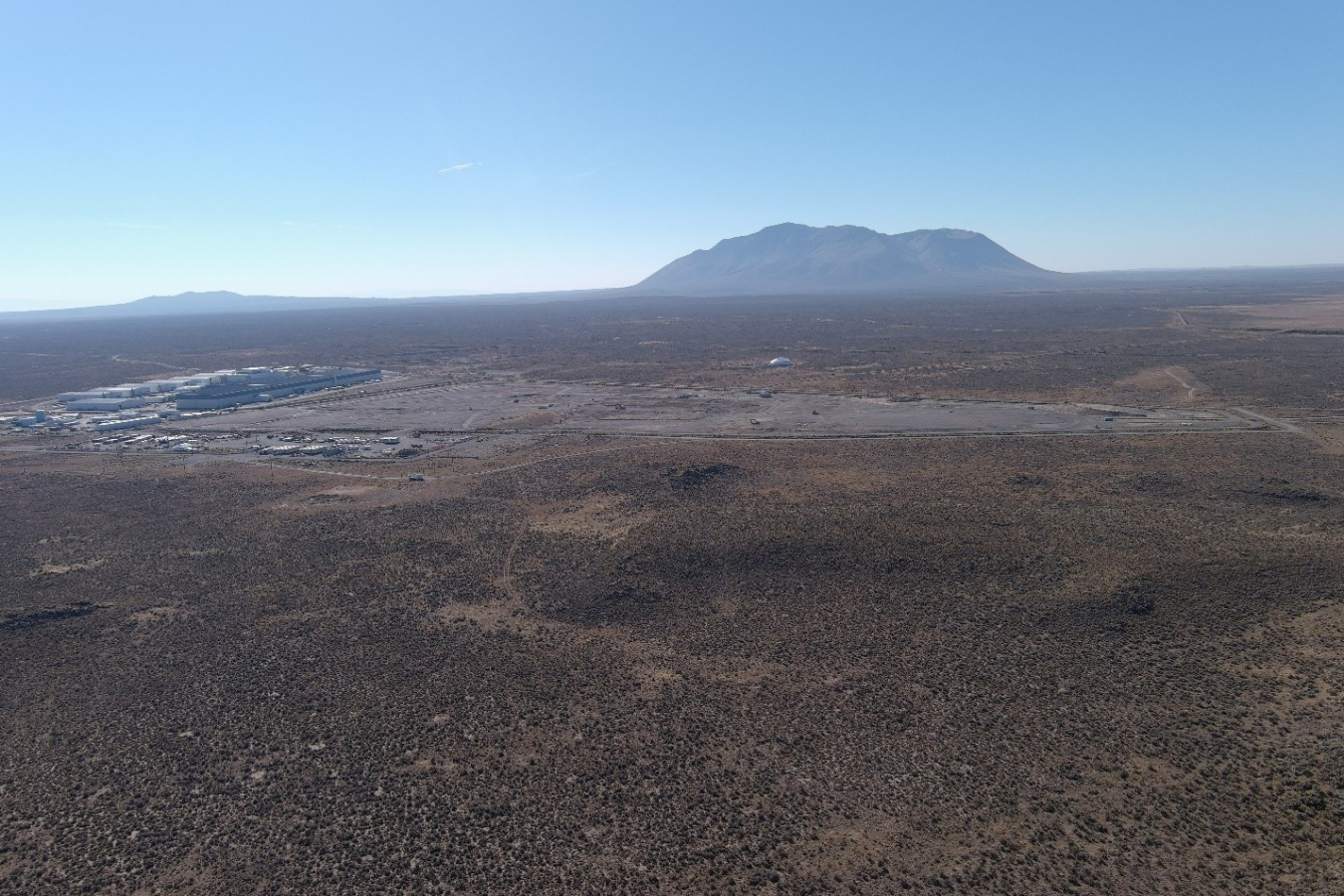
An aerial view of the future Subsurface Disposal Area cap location, foreground, within the surrounding landscape of the Idaho National Laboratory Site.
IDAHO FALLS, Idaho — Idaho Cleanup Project (ICP) workers are making final preparations to begin building an engineered cap over a 97-acre Cold War-era landfill known as the Subsurface Disposal Area.
The multilayer evapotranspiration cap, designed to mimic natural soil and vegetation, will limit moisture infiltration into the landfill at the Idaho National Laboratory (INL) Site, minimize wind and water erosion and inhibit the transport of contamination. The long-term protective measure safeguards the Snake River Plain Aquifer beneath the site — an essential water source for communities and farms across the state of Idaho.
Crews are currently upgrading the roadways to ensure safe and efficient transportation of materials and equipment. Field preparations and cultural and environmental reviews are complete, and preconstruction documentation has been approved.
“The U.S. Department of Energy (DOE) is committed to fulfilling its agreement with the state of Idaho,” ICP Acting Manager Nick Balsmeier said. “This work reflects our mission to reduce risk, restore contaminated areas and ensure legacy nuclear sites remain safe for future generations.”
Crews completed significant work that sets the stage for cap construction to begin under 2008 regulatory agreements among the DOE, U.S. Environmental Protection Agency and state of Idaho.
That work included removing the highest-risk materials from select pits and trenches, packaging the materials for offsite disposal, and decontamination and demolition of 10 soft-sided buildings that supported the targeted buried waste exhumation. Crews demolished more than 520,000 square feet of building space, representing the single largest demolition project in ICP history.
“This cap represents a generational commitment to protecting the Snake River Plain Aquifer,” said Jason Chapple, director of Accelerated Retrieval Project Operations and Remediation at ICP cleanup contractor Idaho Environmental Coalition. “Our team has worked thoughtfully and deliberately to ensure we are ready to build the cap safely, efficiently and to the highest standard of long-term environmental stewardship.”
Construction of the cap is expected to take six years. Following completion, DOE’s Office of Environmental Management will conduct long-term operations and maintenance, including vegetation monitoring, lysimeter checks and subsidence monitoring. Lysimeter checks help measure water movement through the soil to ensure the cap stays protective, and subsidence monitoring watches for ground settling that could affect the cap’s performance.
The landfill accepted INL Site-generated radioactive and hazardous waste beginning in 1952, and waste from the former Rocky Flats Plant near Denver, Colorado, and other waste generator sites from 1954 to 1970.
-Contributor: Ryan Christensen
To receive the latest news and updates about the Office of Environmental Management, submit your e-mail address.