



In the latest major cleanup achievement for the U.S. Department of Energy’s Portsmouth Site, crews converted depleted uranium hexafluoride from 4,500 legacy cylinders into safer, more stable chemical forms, representing more than 20% of the site’s cylinder inventory and marking progress toward reducing material left from decades of uranium enrichment.
Office of Environmental Management
October 13, 2026 Estimated Read Time min
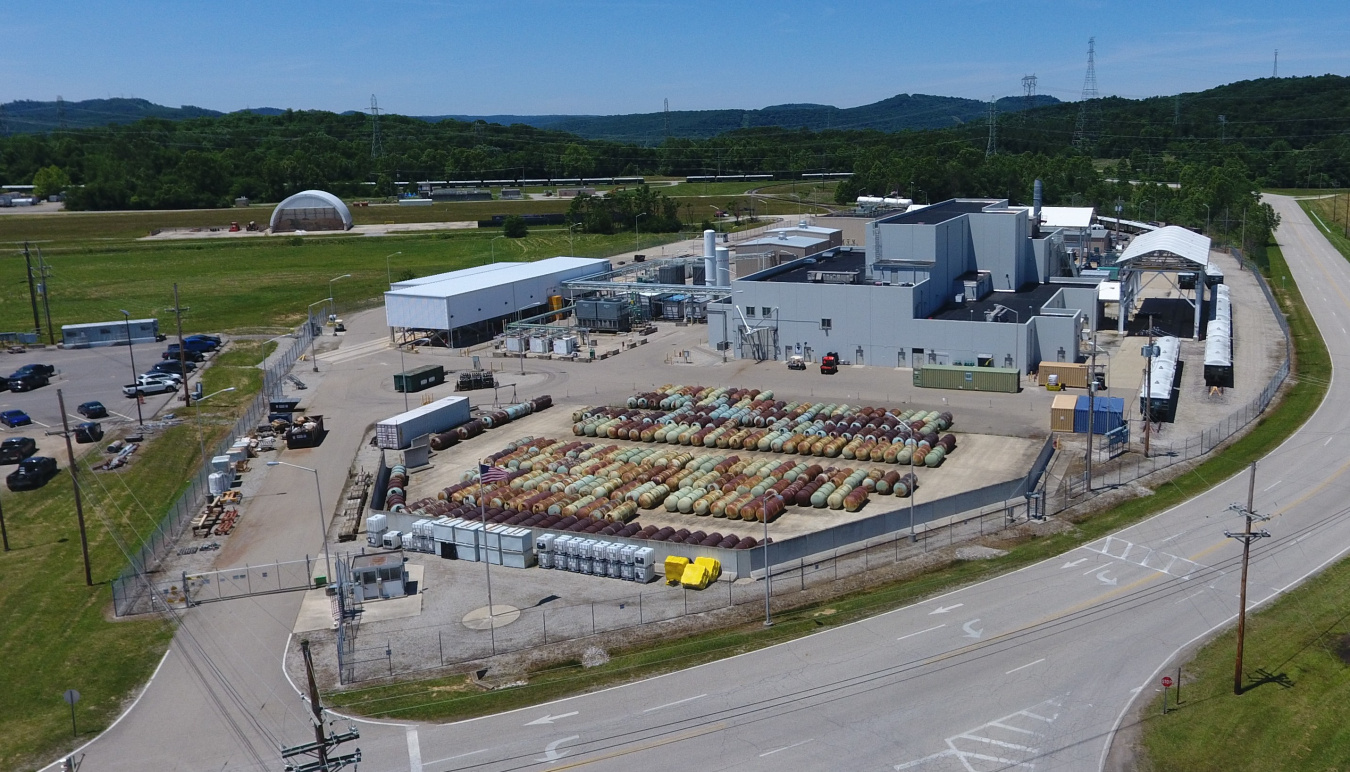
Depleted uranium hexafluoride cylinders are staged next to the conversion facility at the Portsmouth Site. The team recently reached a milestone of processing 4,500 cylinders.
PIKETON, Ohio — In the latest major cleanup achievement for the U.S. Department of Energy’s (DOE) Portsmouth Site, crews converted depleted uranium hexafluoride (DUF6) from 4,500 legacy cylinders into safer, more stable chemical forms, representing more than 20% of the site’s cylinder inventory and marking progress toward reducing material left from decades of uranium enrichment.
The Portsmouth team also exceeded its fiscal year 2026 production goal of converting DUF6 from 546 cylinders two months ahead of schedule, underscoring sustained advances in the DOE Office of Environmental Management (EM) cleanup mission. Meanwhile, opportunities to reuse the DUF6 material are on the horizon as EM supports the nation's nuclear renaissance.
“The Portsmouth conversion facility continues to do what it was built to do: decrease the DUF6 inventory,” DUF6 Program Manager Chris Richards said. “The team continues to steadily work through the legacy material.”
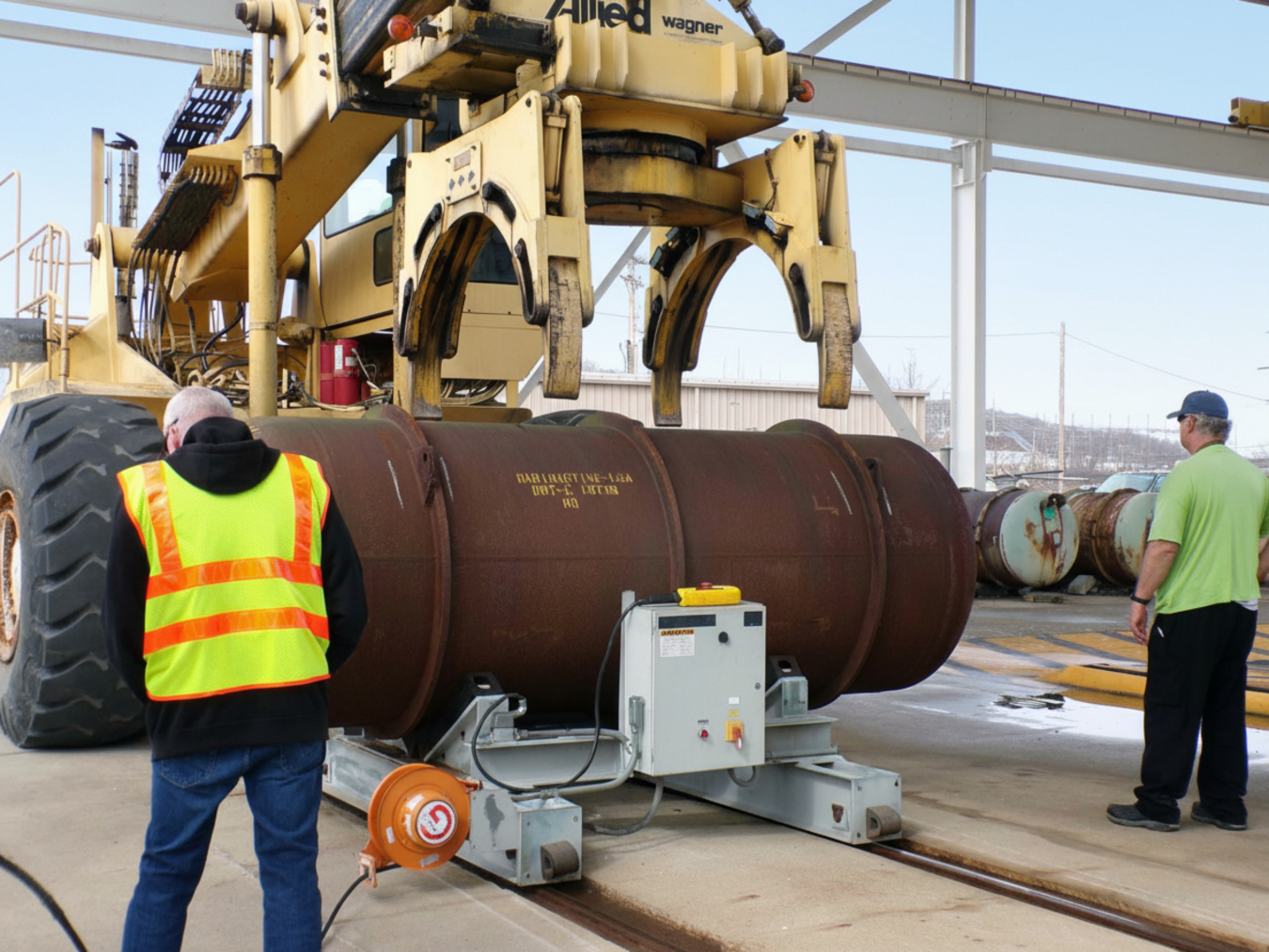
Cylinder Yard Facility Manager Cary Basye, left, and Cylinder Yard Operator Bill Bowen transport a cylinder to the cylinder yard cart in support of operations at the Portsmouth Site depleted uranium hexafluoride facility. This is one of 4,500 cylinders processed at the site.
The Portsmouth Paducah Project Office oversees DUF6 conversion facilities at the Portsmouth and Paducah sites, operated by contractor Mission Conversion Services Alliance (MCSA). The sites share lessons learned and develop improvements to strengthen equipment reliability, reduce downtime and increase processing efficiency.
MCSA Portsmouth Operations Manager Curtis Miller credited ongoing plant improvements with increasing reliability and uptime while making the facility easier to maintain and operate. The advancements helped the Portsmouth team achieve a record 60 days of continuous production across all three conversion lines.
“Feedback and lessons learned have resulted in safer, more efficient performance,” Miller said. “Working together is what made it all happen.”
Processing each cylinder requires approximately 10 hours of heating, followed by 18-20 hours in the conversion process. Reaching the 4,500-cylinder milestone reflects years of coordinated work by operations, maintenance and support personnel.
“That math works out to 135,000 hours to process all 4,500 cylinders,” MCSA Portsmouth Site Program Manager Tim Warren said. “That doesn’t include the personnel hours of transporting the cylinders from the cylinder yard, hooking up and unhooking cylinders, paperwork and more.”
The Portsmouth Site once stored more than 20,000 cylinders containing DUF6, a coproduct of decades of uranium enrichment for defense and commercial energy purposes.
The conversion process involves chemically transforming DUF6 into uranium oxide powder, which is significantly less reactive and safer to manage for reuse or disposal. The oxide is then packaged in robust containers and shipped to a licensed disposal facility.
“These recent accomplishments reflect the workforce’s dedication, professionalism and commitment to operational excellence,” DUF6 Plant Manager Pete Coutts said.
-Contributor: Katherine Mueller-White
To receive the latest news and updates about the Office of Environmental Management, submit your e-mail address.